🐀 Terms for Rat Variety Description
A full description of a rat’s variety often includes a term from each of these categories: Coat Type, Ear & Body Type, Markings, and Color.
1. Coat Type
These terms describe the texture and appearance of the rat’s fur.
- Standard: Short, smooth, and glossy, the most common or “wild type” coat.
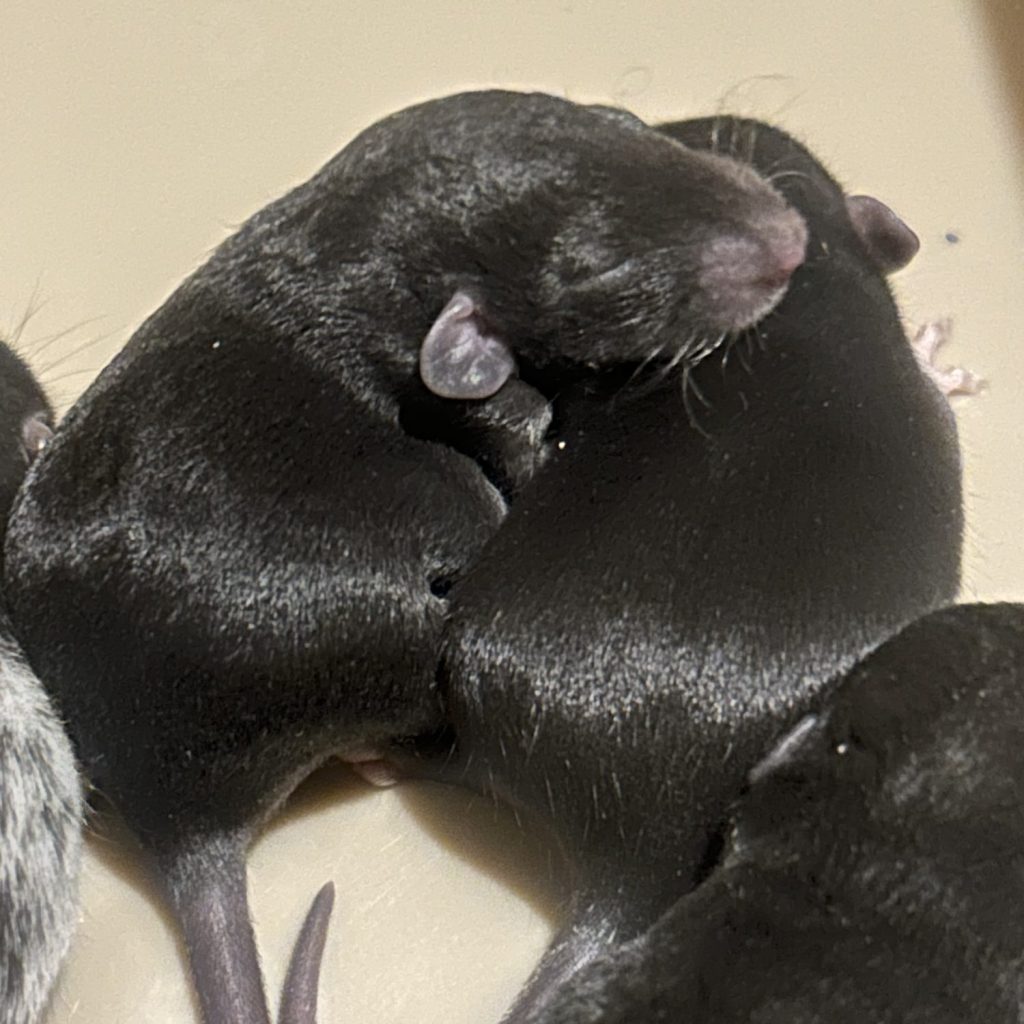
- Rex: Curly or crimped coat and whiskers. They may be described as Double Rex if they have a very sparse or partially hairless coat due to having two copies of the Rex gene.
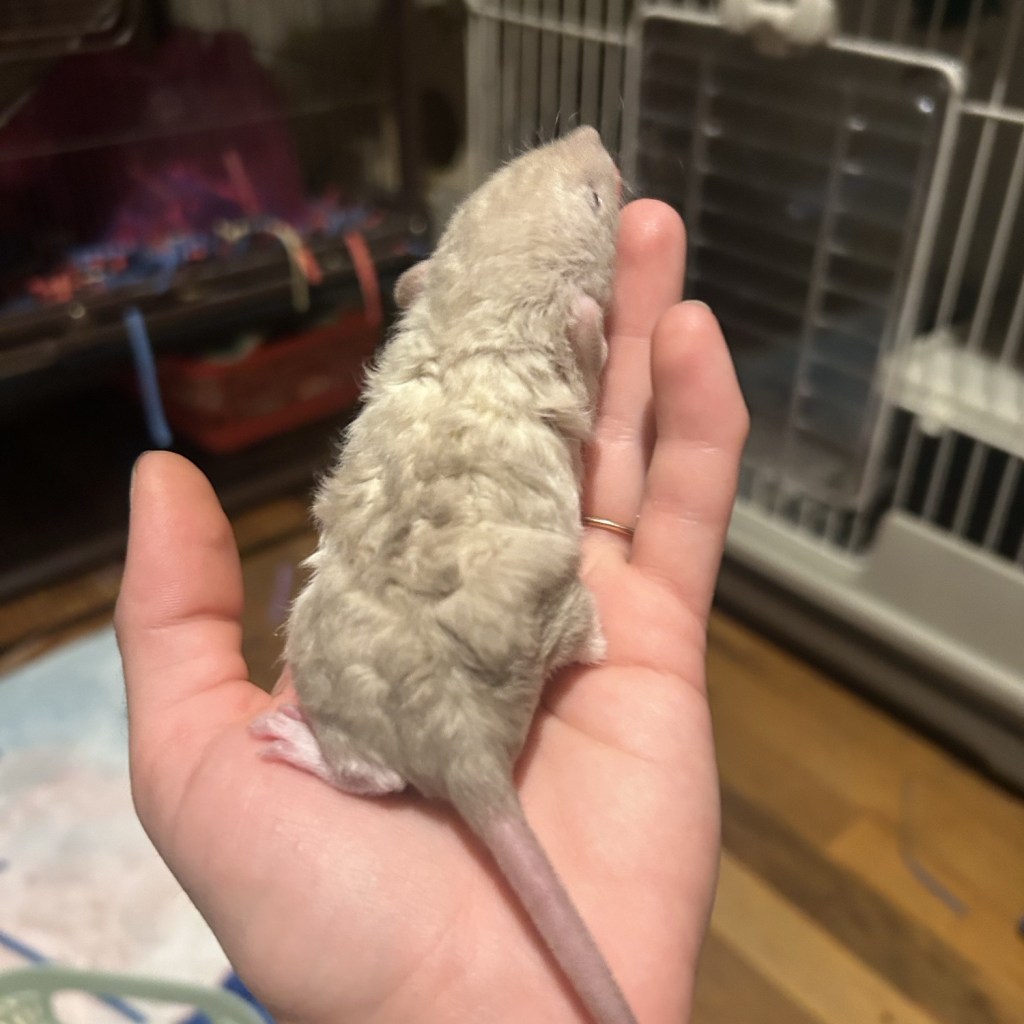
- Satin (or Silky): Thinner, longer, and very fine coat with a distinct lustrous sheen or “satin” look.
- Hairless (or Sphynx): Complete absence of hair (though may have a light fuzz). May also be referred to as a double Rex.
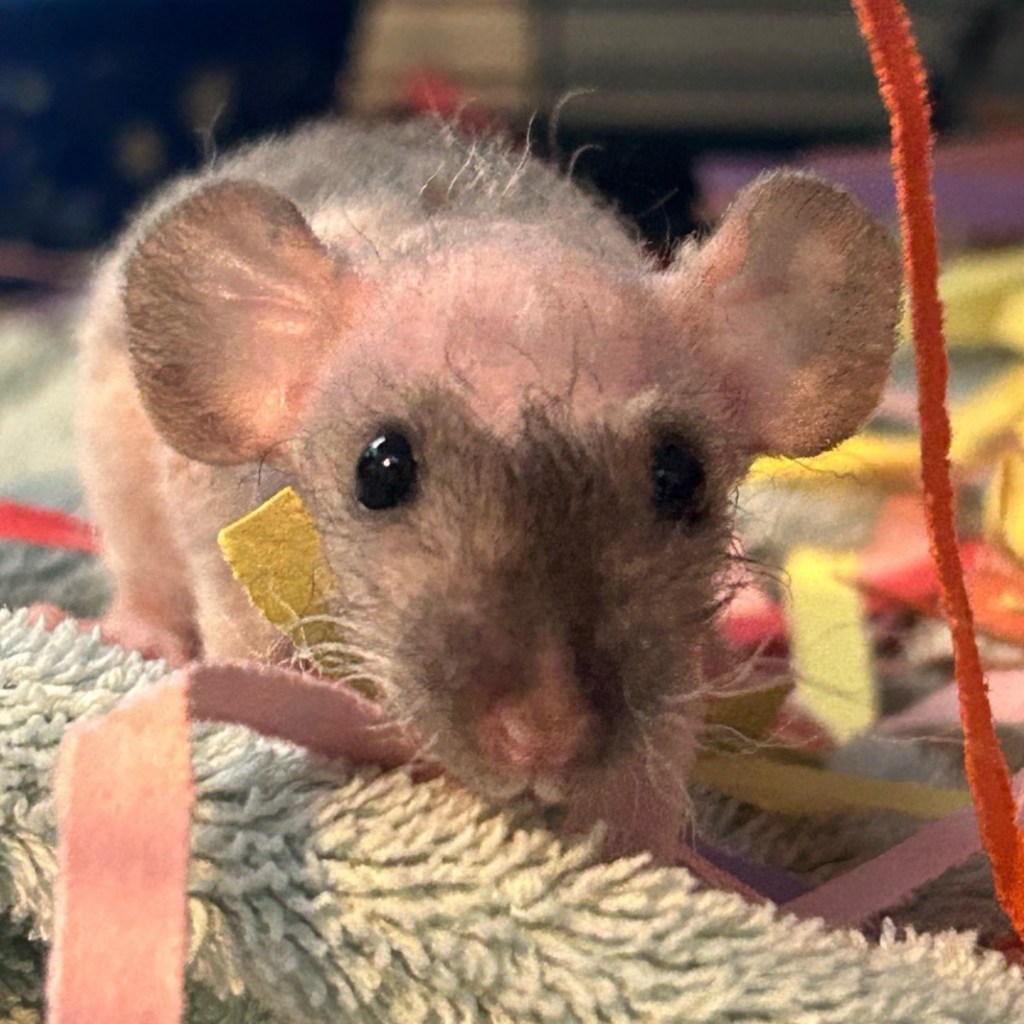
- Frizzie / Frizzled (FRZ): Another term for a curly-coated variety, sometimes used interchangeably with or in addition to Rex.
- Bristle Coat (BC): A stiff, coarse coat texture.
2. Ear & Body Type
These terms describe the shape, size, or placement of the ears, and other distinct body features.
- Standard: Normal, moderate-sized ears set on top of the head (the dominant trait).

- Dumbo: Ears are larger, rounder, and set lower on the side of the head, giving a “Dumbo” elephant-like appearance (a recessive trait).
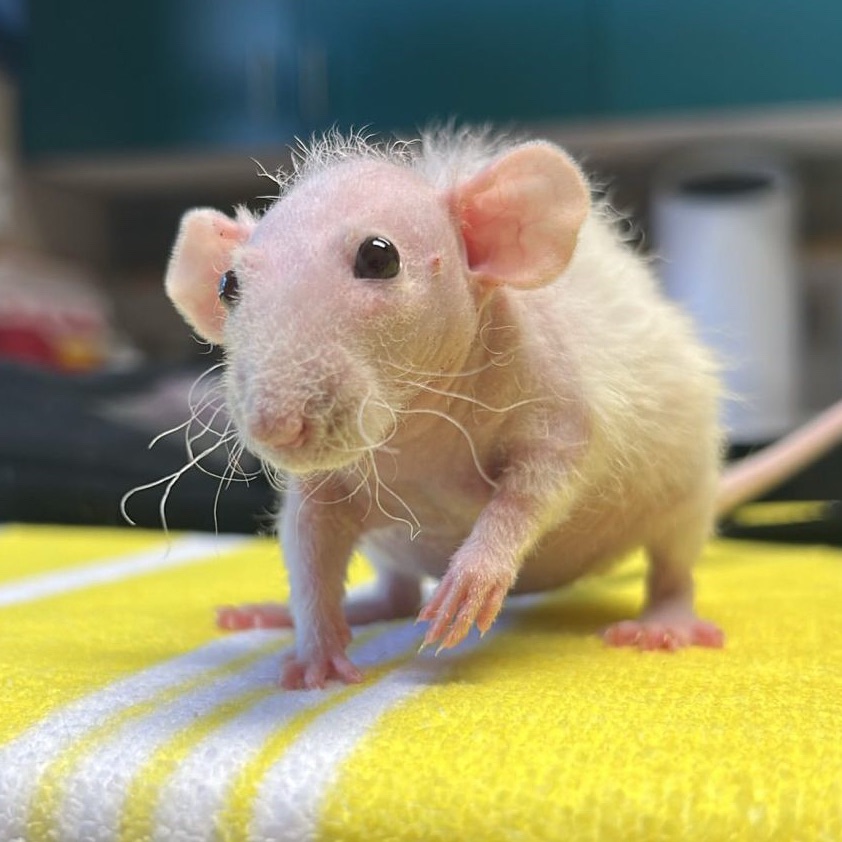
- Tailless (or Manx): Complete or near-complete absence of a tail. This is a variety that can sometimes come with ethical breeding concerns.
- Dwarf: A rat significantly smaller than a standard rat (about 1/3 the size).
- Markings
These terms describe the pattern of colored fur versus white fur on the rat’s body.
- Self: The entire body is one uniform color with no white markings.
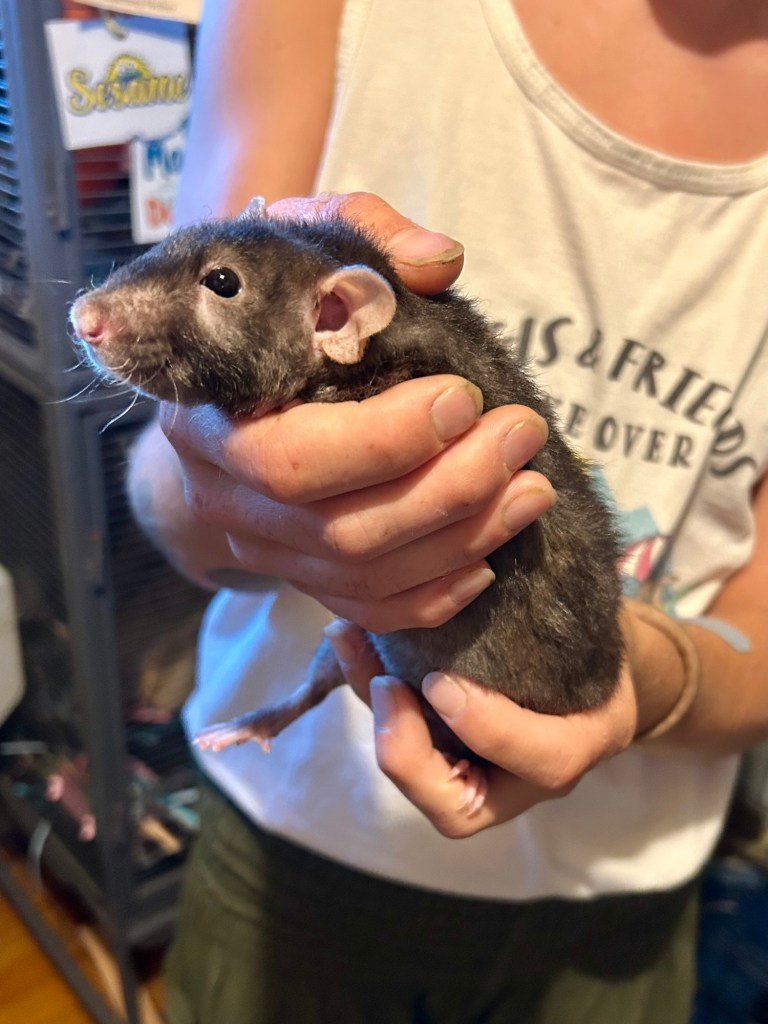
- Berkshire (Berk): A solid colored top with a white belly, white feet, and often a white tip on the tail.
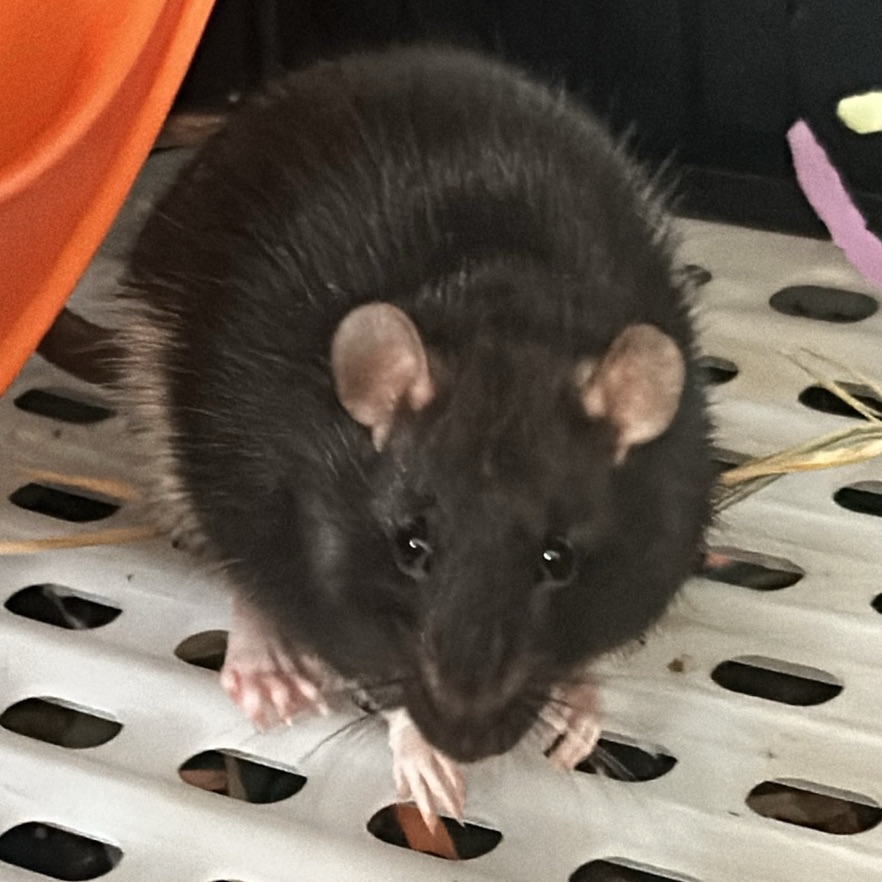
- Irish (EI): A solid colored rat with a distinct white triangle patch on the chest/belly.
- Hooded: A white body with a colored “hood” covering the head, neck, chest, and shoulders, with a solid, unbroken stripe of color running down the spine to the tail.

- Bareback (BB): Similar to Hooded, but the colored fur stops at the shoulders/chest, leaving the entire back white.

- Capped: A white body with a patch of color limited to the top of the head (a “cap”).
- Masked: A white body with a colored “mask” covering the area around the eyes and across the face.
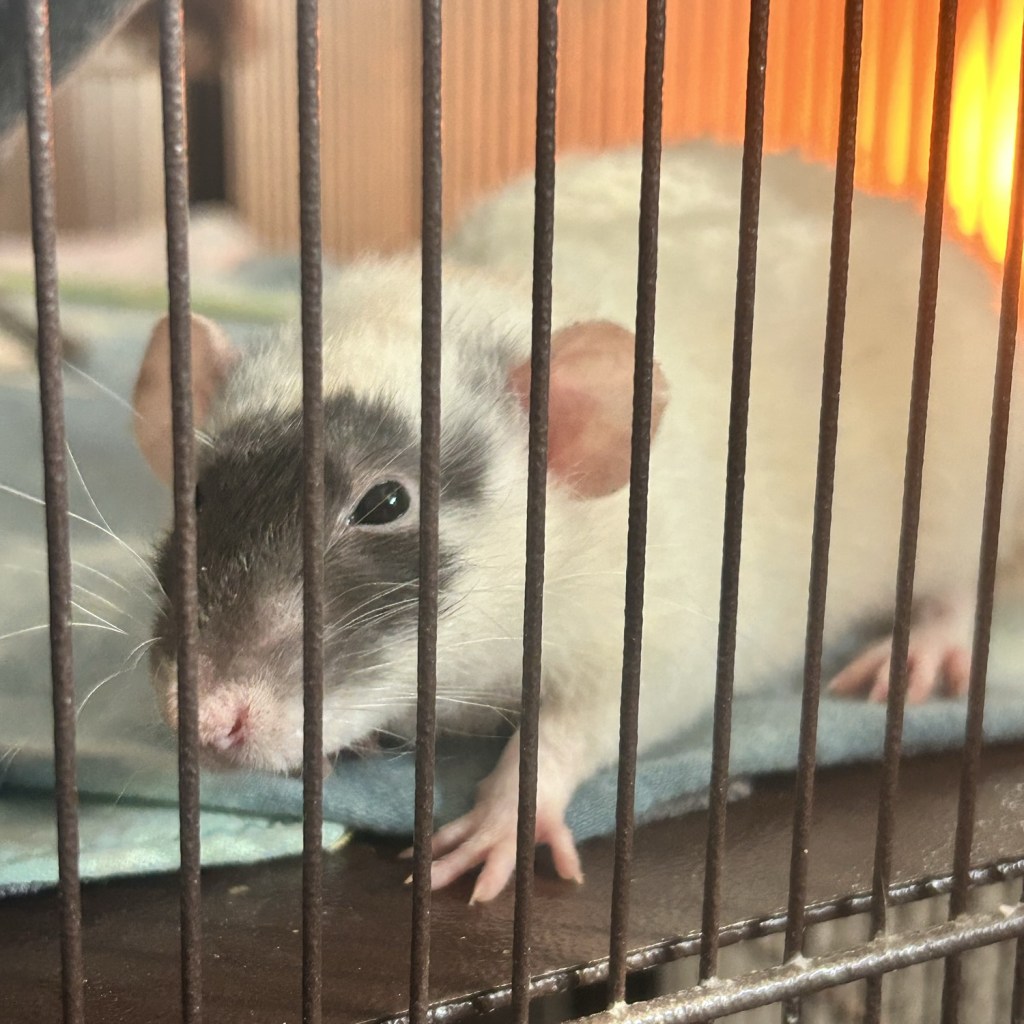
- Variegated (Var): A colored head/shoulders with a white blaze on the forehead, and numerous small, mismatched color splashes or spots from the shoulders to the tail on a white body.
- Blazed: Has a white, wedge-shaped blaze of fur on the face from the muzzle up to the ears, typically shown in conjunction with Berkshire or Variegated markings.
- Himalayan (Himi): White or very light body color with color concentrated on the “points” (nose, feet, tail), similar to a Himalayan cat.
3. Color
There are dozens of specific color names, but here are some of the common color groups and eye color terms:
Common Color Group
• Agouti (Wild Type) | Agouti, Cinnamon, Amber, Russian Blue Agouti (RBA) |
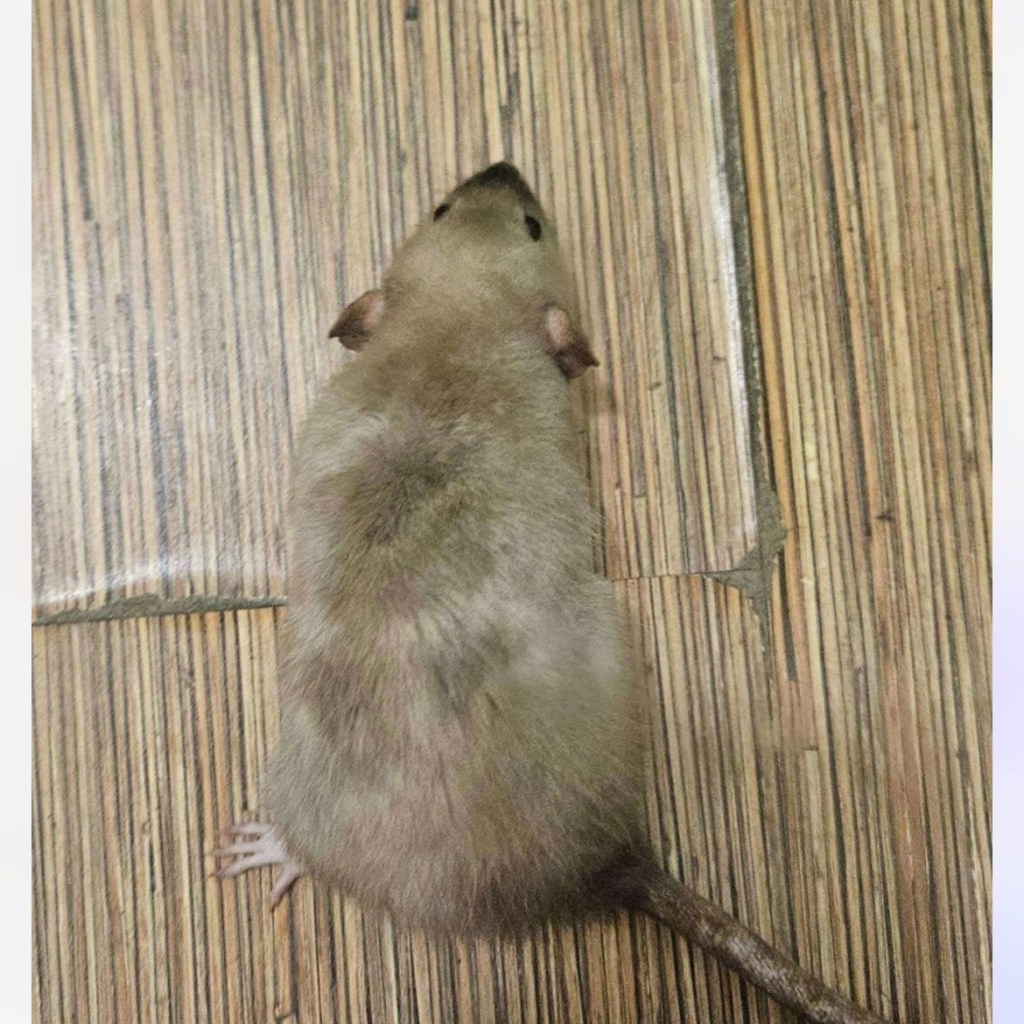
• Black/Self | Black, Blue, Russian Blue, Mink, Silvermane |
• Dilutes | Beige, Champagne, Lilac, Powder Blue, Sky Blue |
• Pointed/Shaded | Siamese, Himalayan, Burmese |
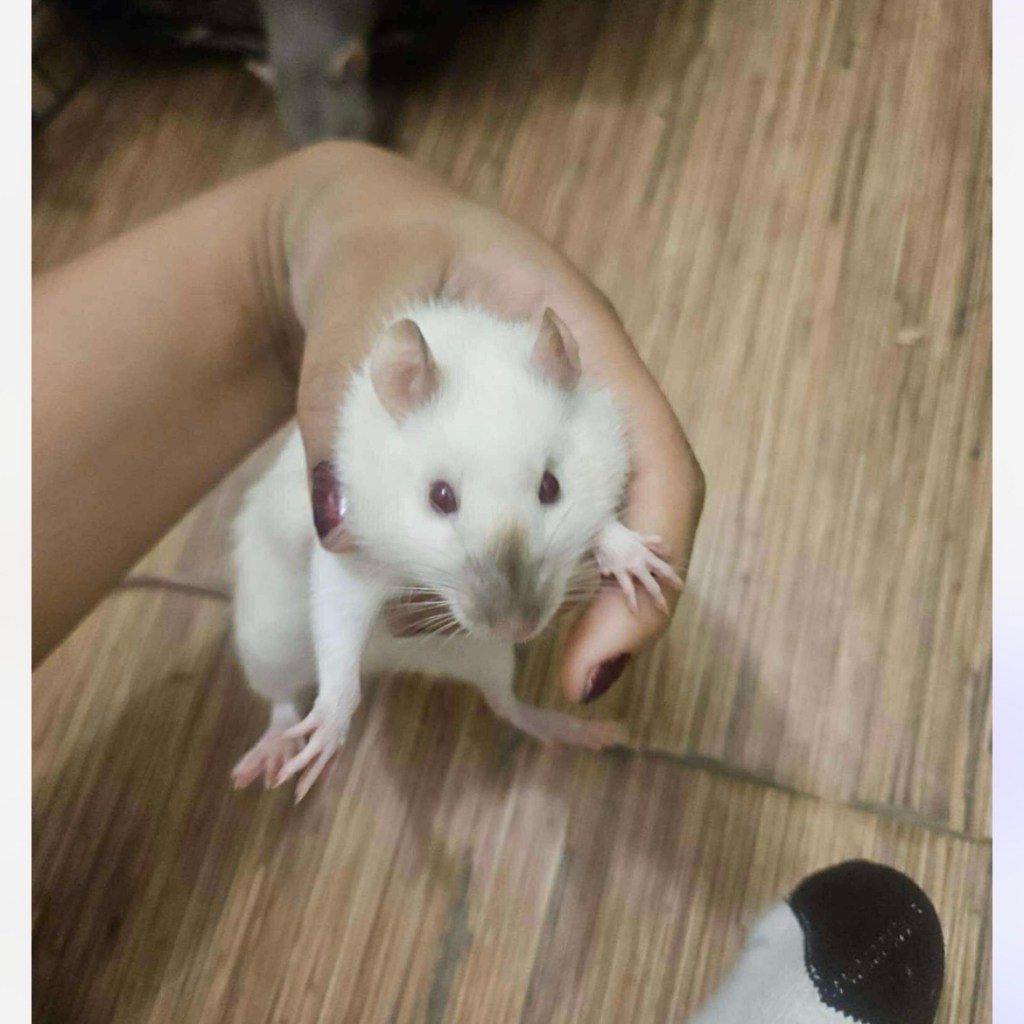
• Albino | Pink-Eyed White (PEW) |
4. Eye Color Term
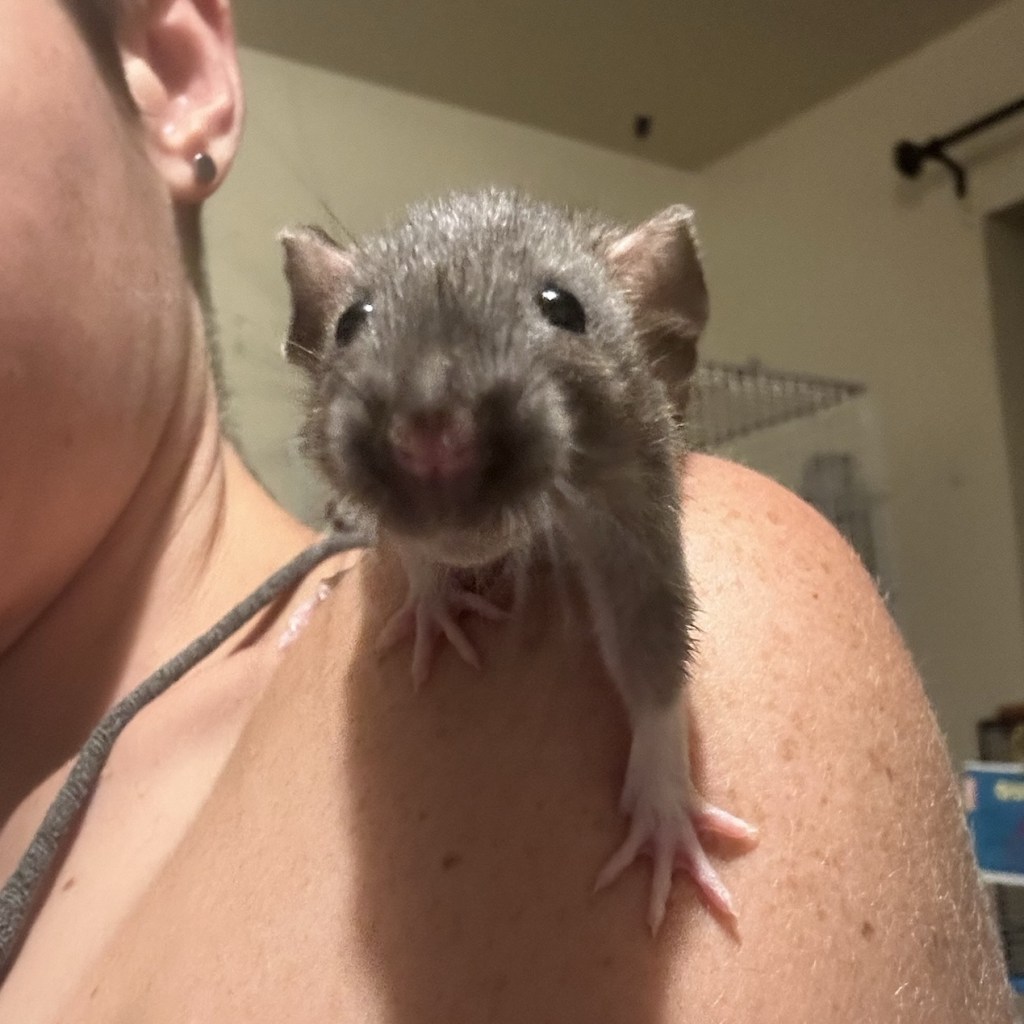
• Dark-Eyed (D.E.) | Eyes that appear black but may be a very dark ruby red up close. |
• Black-Eyed (B.E.) | True black eyes. |
• Pink-Eyed (P.E.) | Red/Pink eyes (common in white/albino rats). |
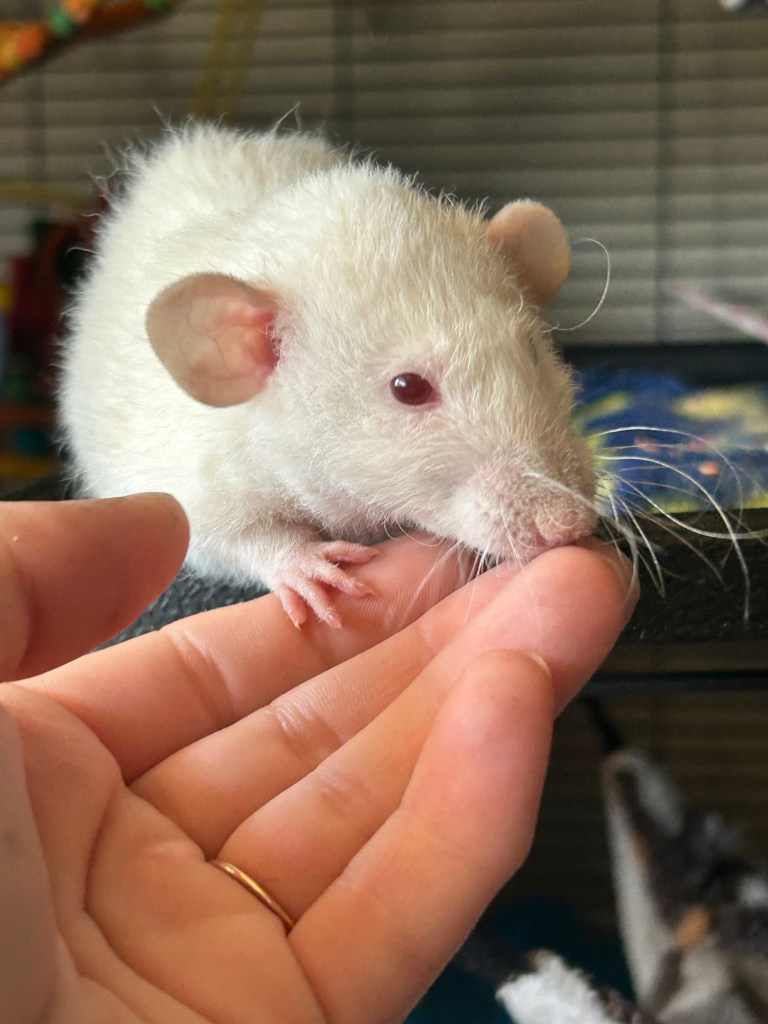
• Ruby-Eyed (R.E.) | Deep, dark red eyes; often appear almost black unless viewed in specific light. |

• Odd-Eye (O-E) | Two different colored eyes (e.g., one pink, one black). |
A full “breeding speech” description of a rat could combine these, for example: Ruby-Eyed Cinnamon Berkshire Rex Dumbo.

 The Rattery
Leave a comment