What is a Substrate Box for Rats and How to Use It
Recipe for Rat Treats
Rat of the Month
Is there a Personality Difference Between Dumbo and Standard Ear Rats?
Litter Box Training Tips for Rats
Featured Cage
MISCHIEFS MANAGED
LATEST ANNOUNCEMENT: We now adopt out our rats at 6 weeks of age, instead of 5 weeks. The extra week is to allow them to socially develop as well as build stronger immune systems. If you are adopting a single rat, we may request to keep them until 7 weeks of age.
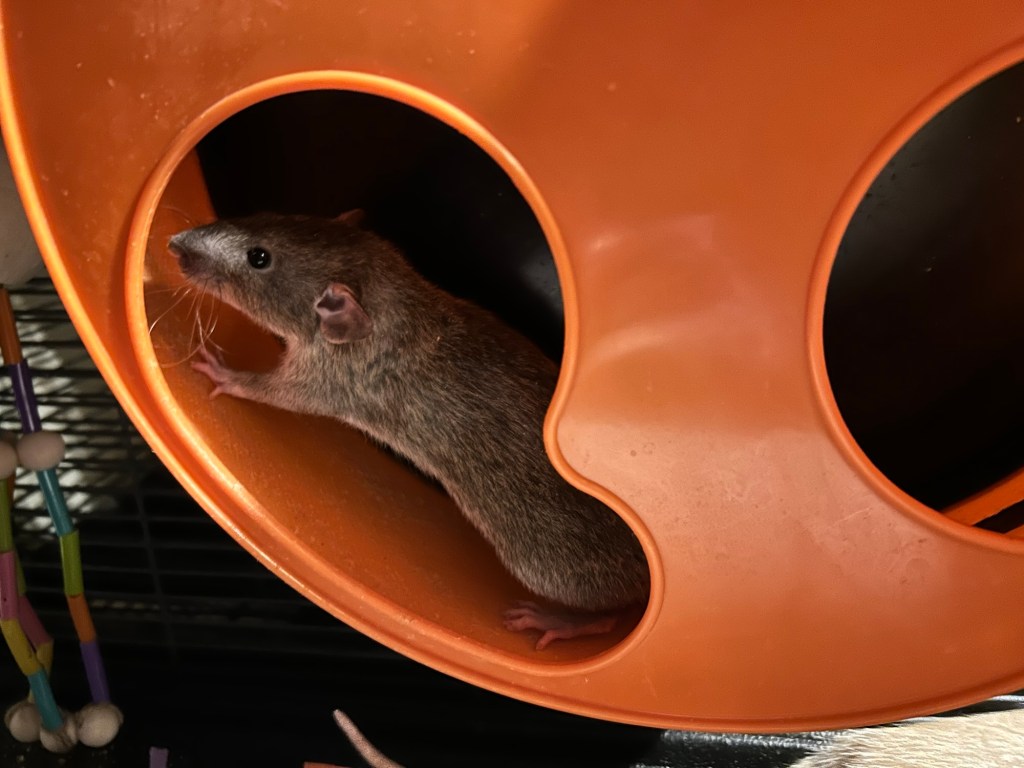
Mounika x Smudge
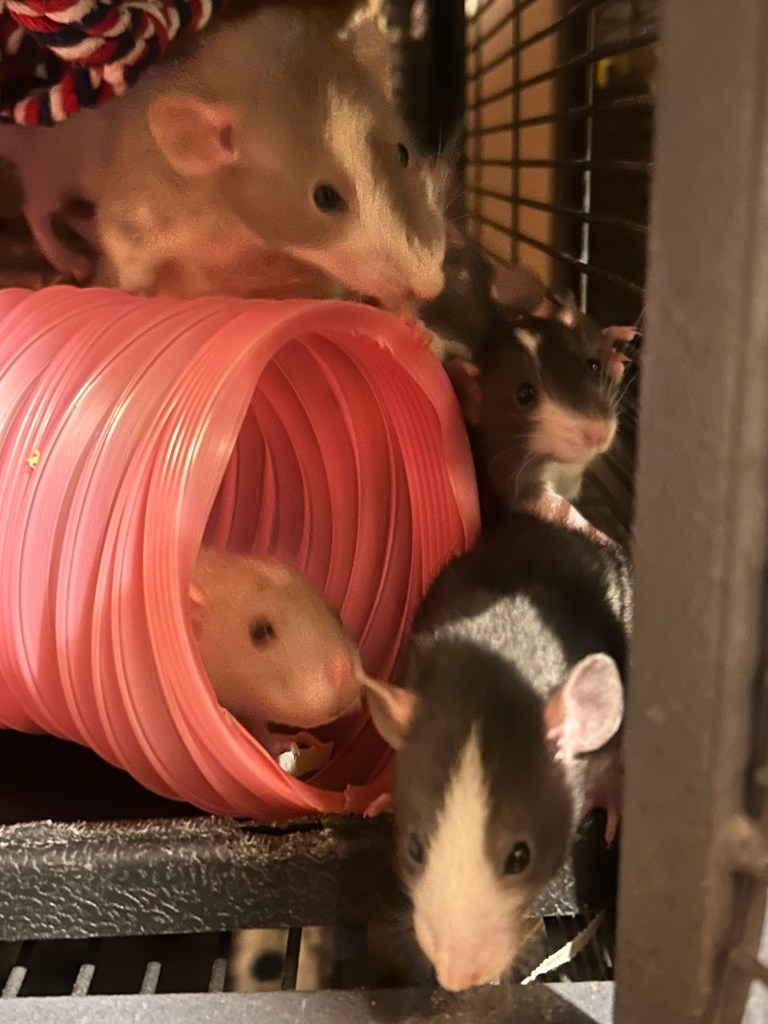
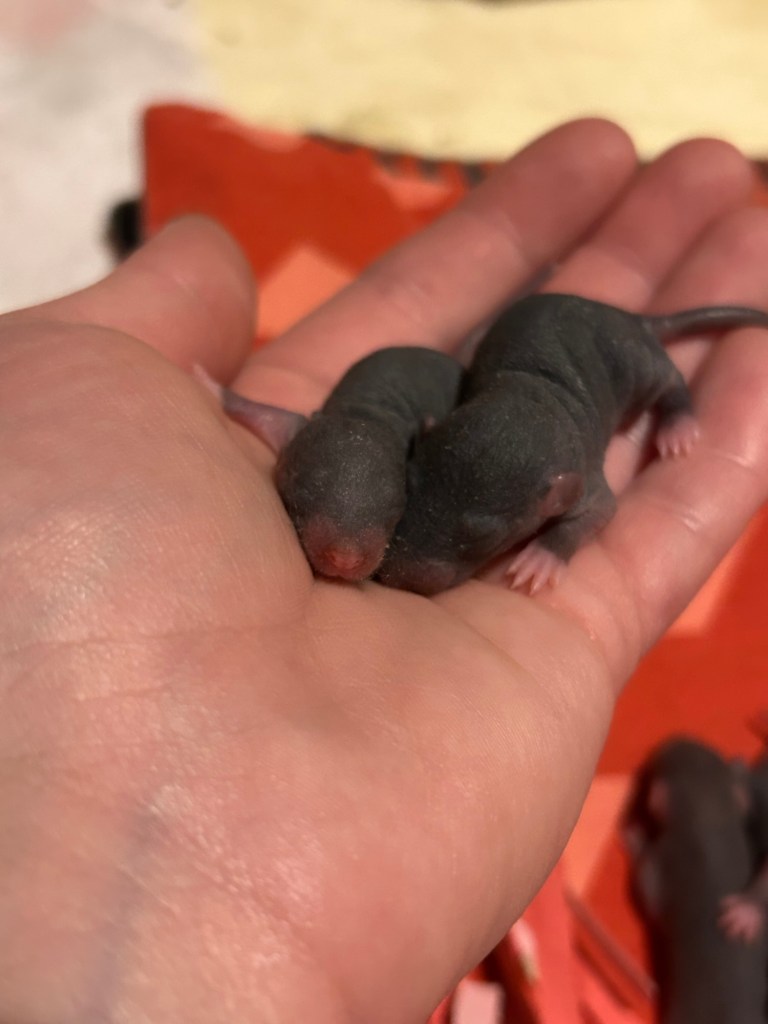
Her babies finally flew the coop around December 7th-14th. You can read more about them in our December Newsletter.
Mounika and Babies at 4 weeks
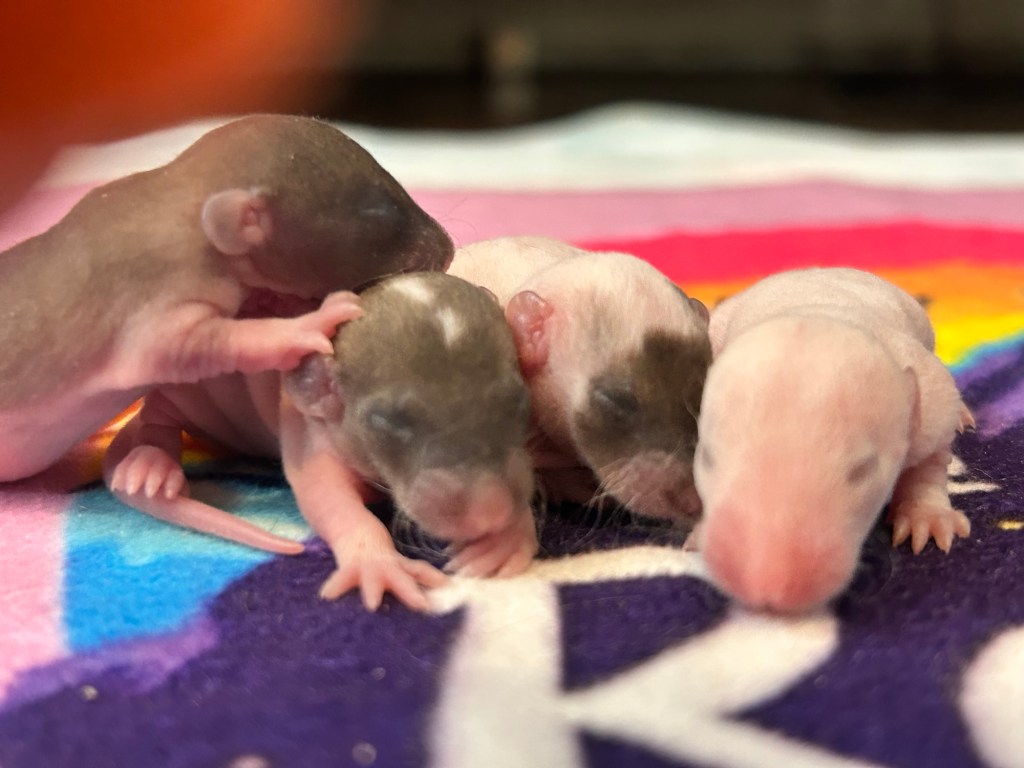
Parker x Poe
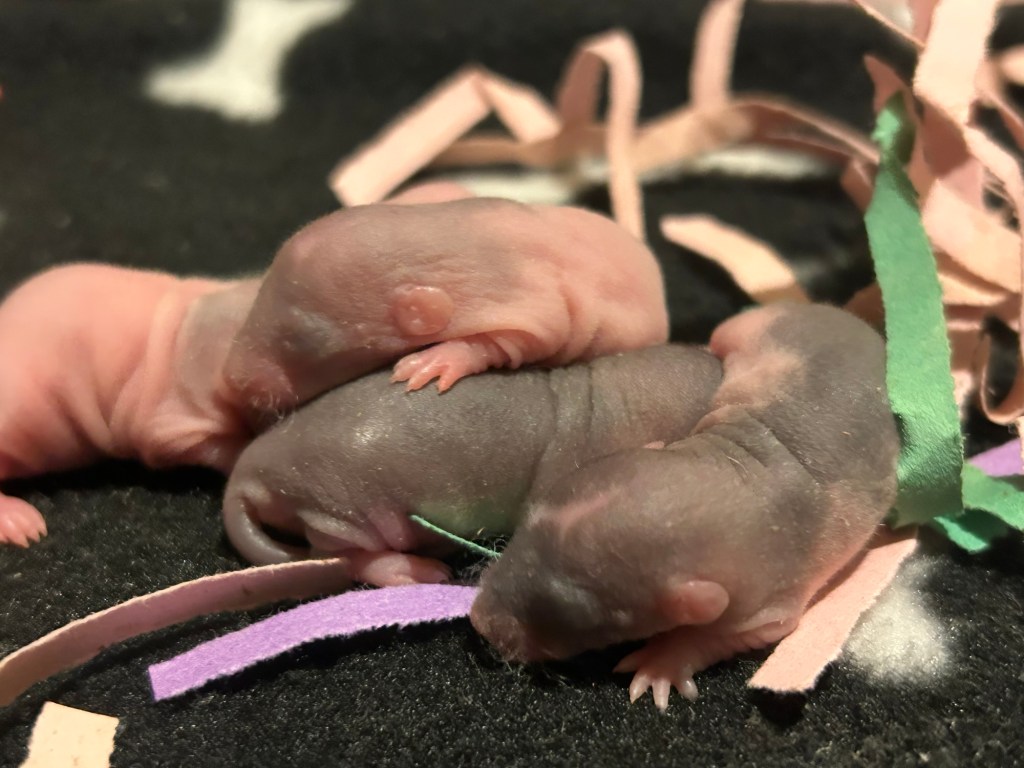
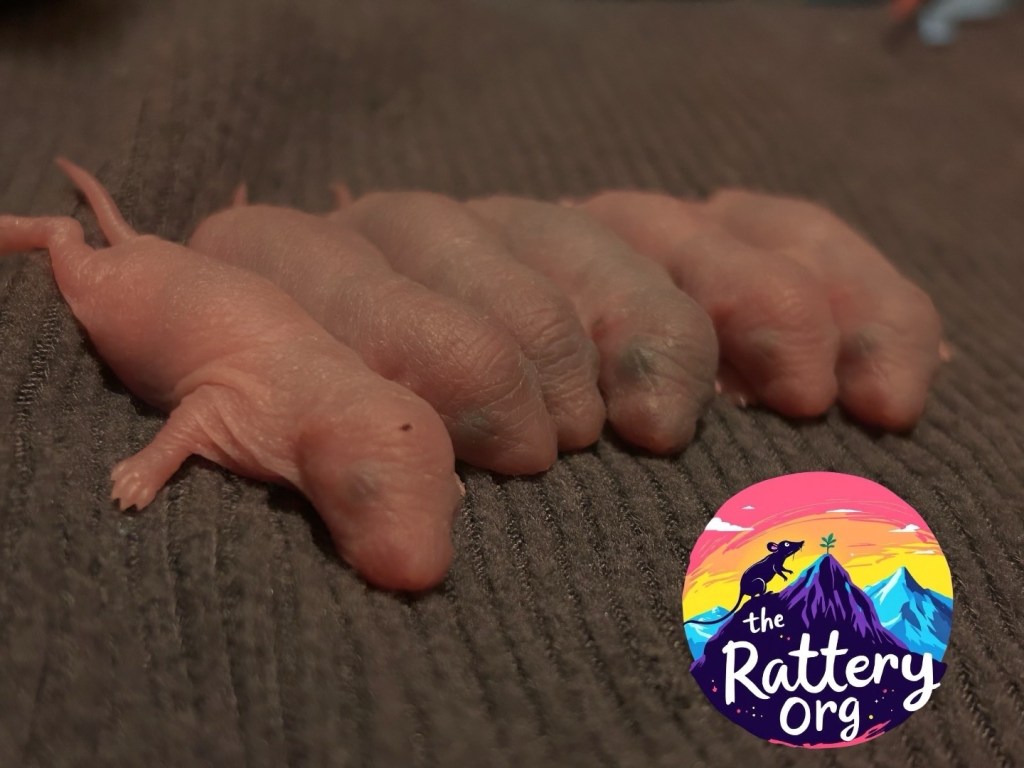
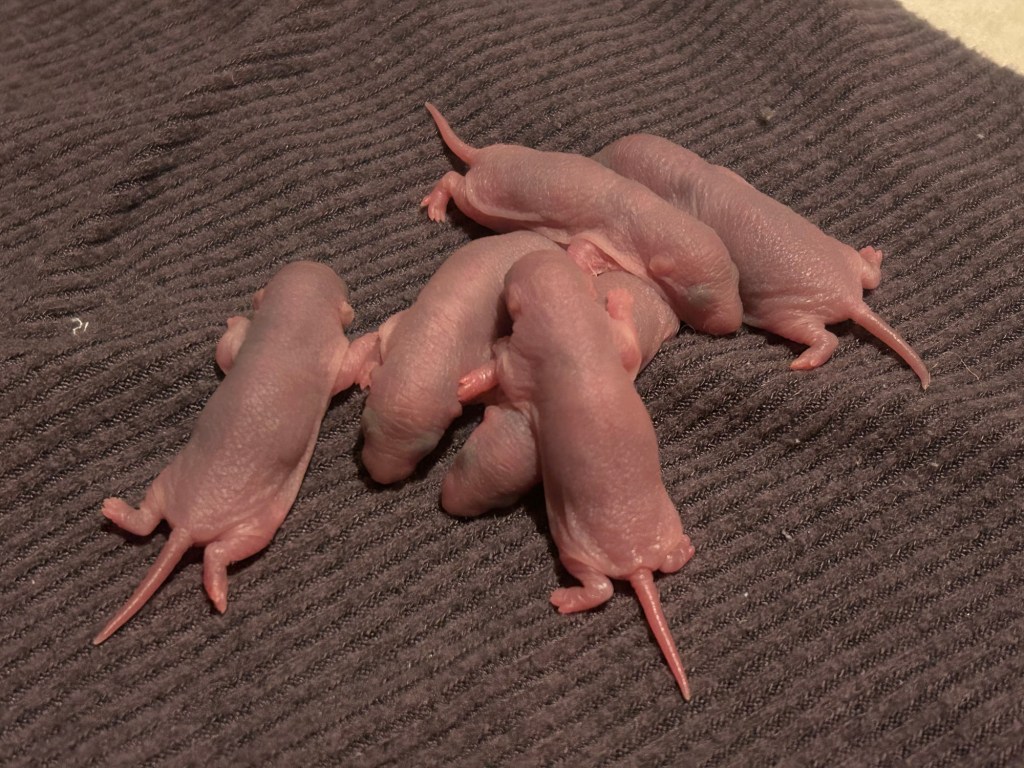
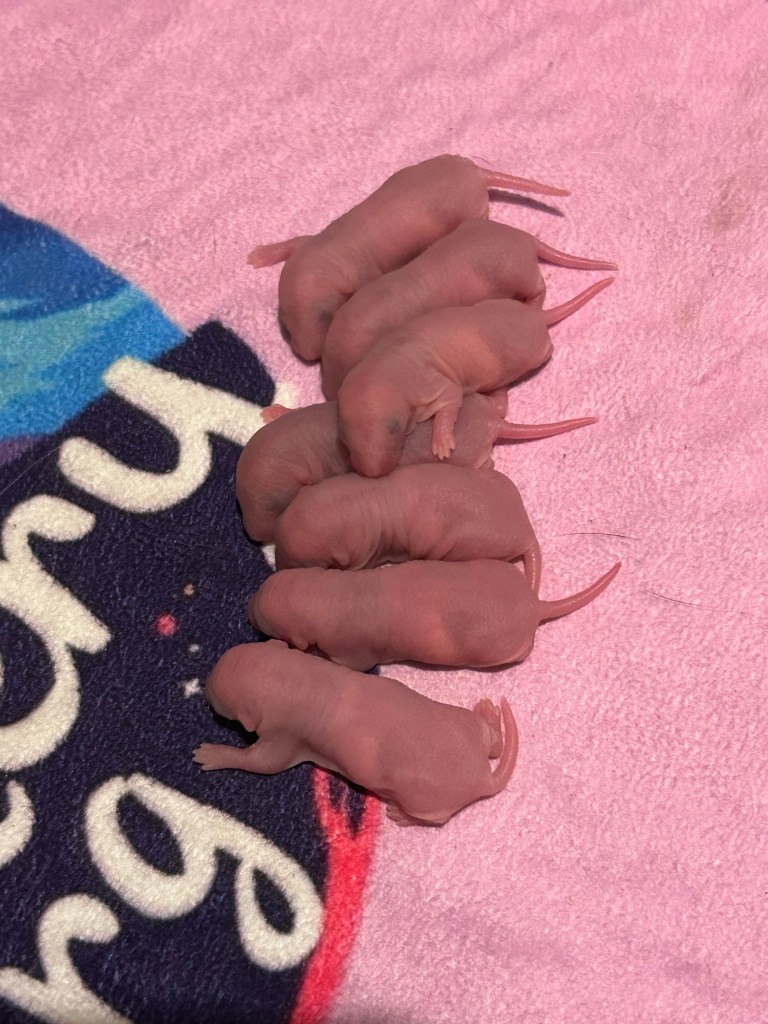
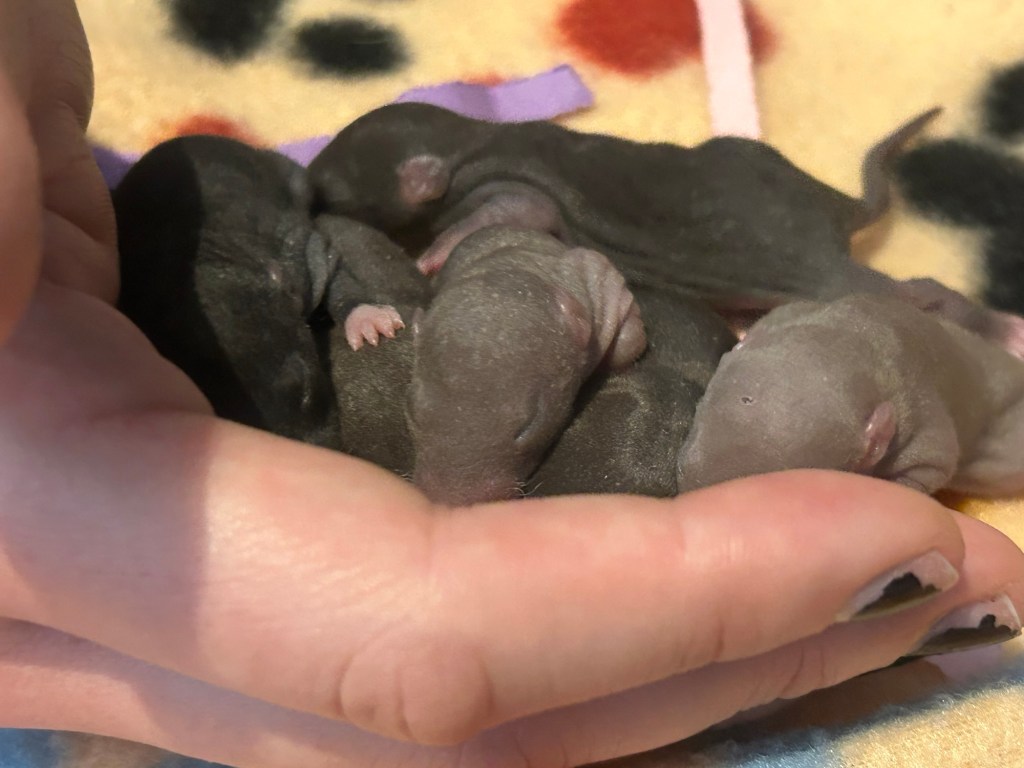
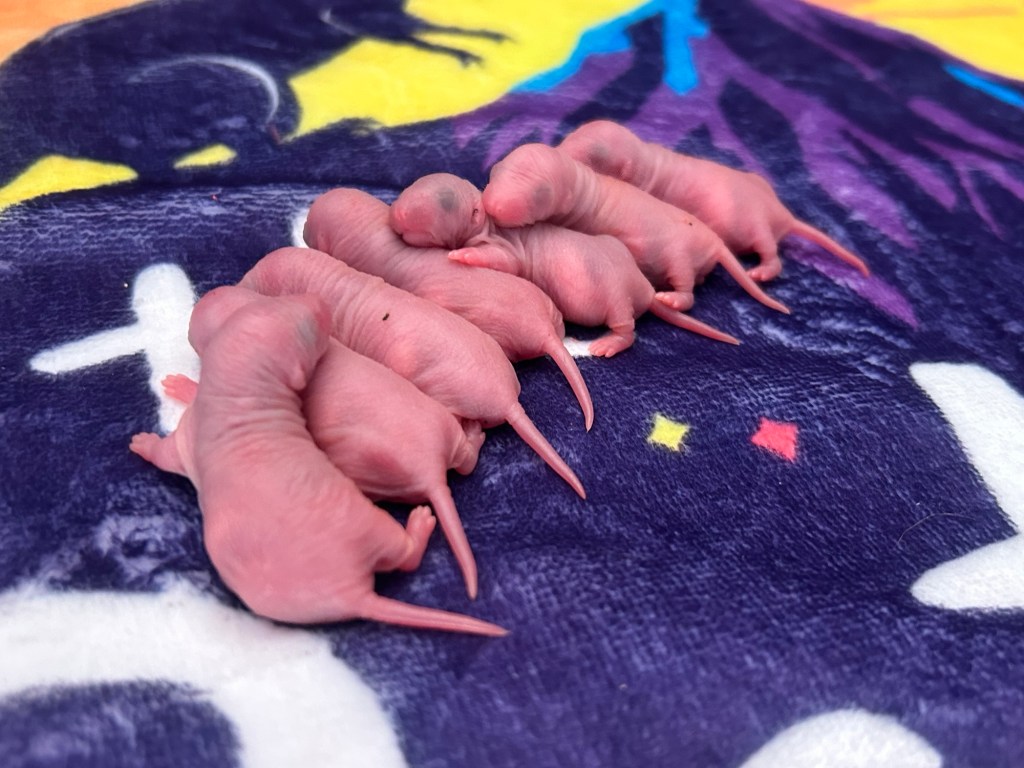
Parker had her chunky babies December 13th, 2025.
Parker’s GirlsBonding with themParker’s BabiesParker’s Girls ~ one week old Parker’s boys ~ one week old
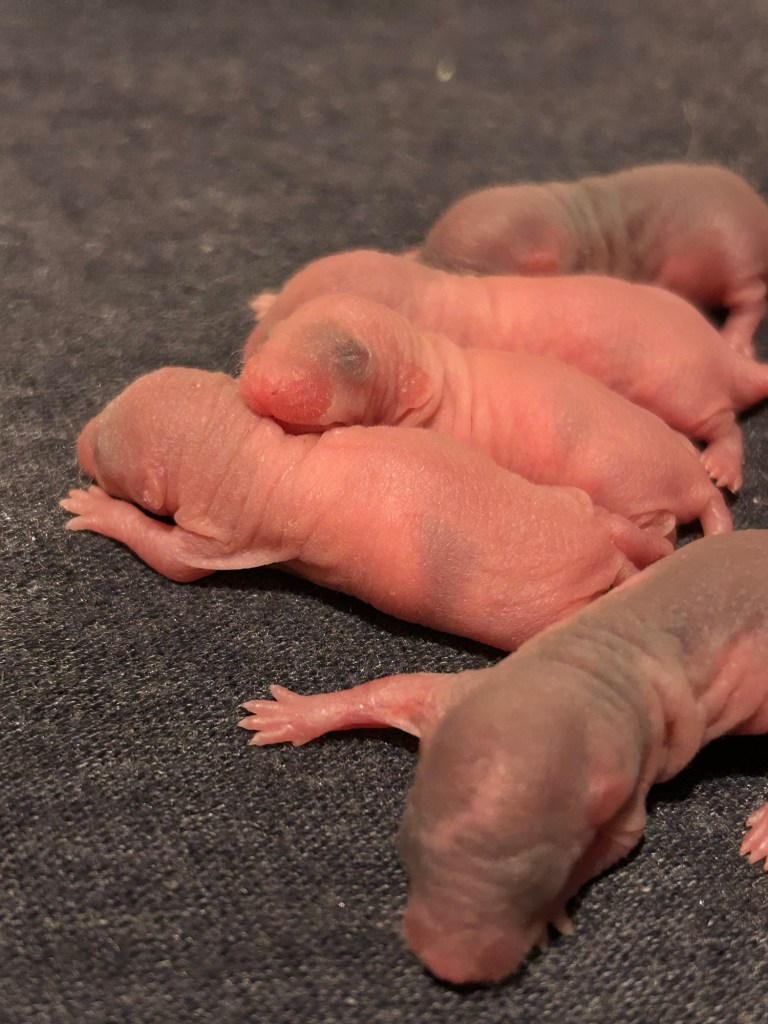
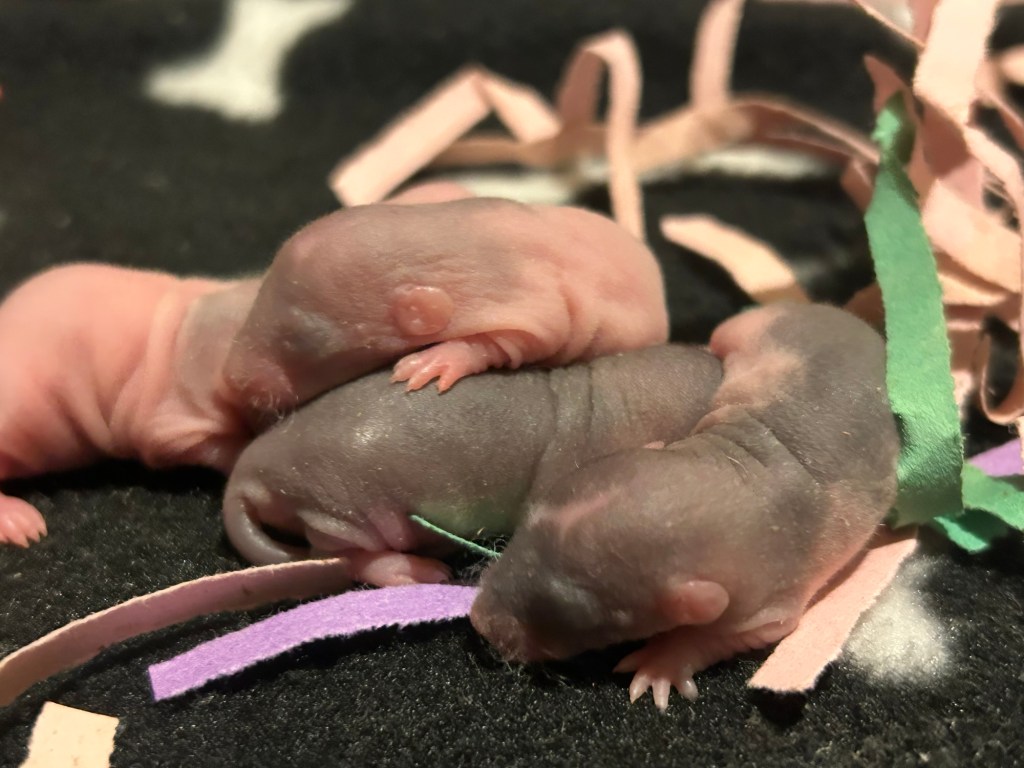
Pipsqueak x Poe
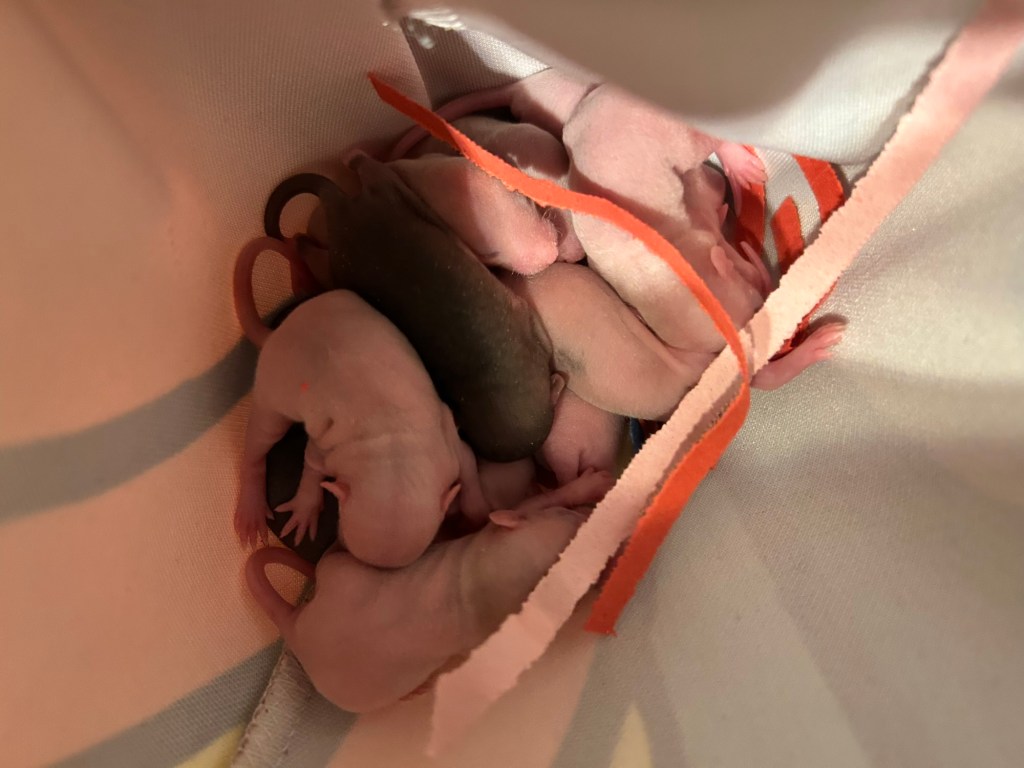
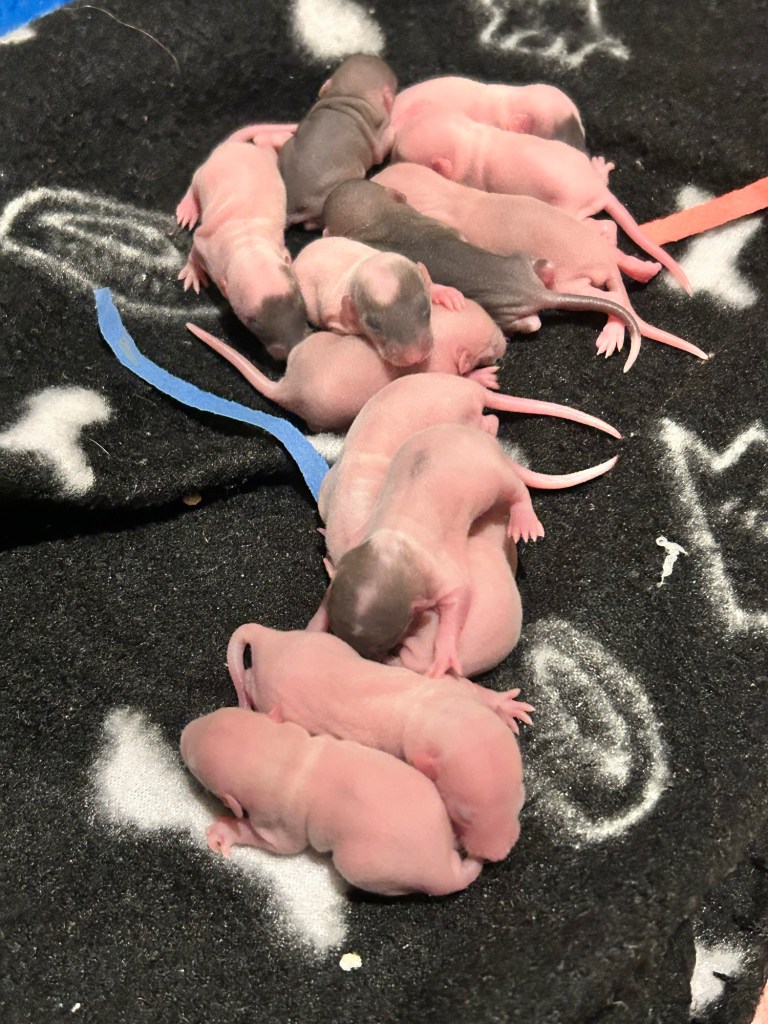
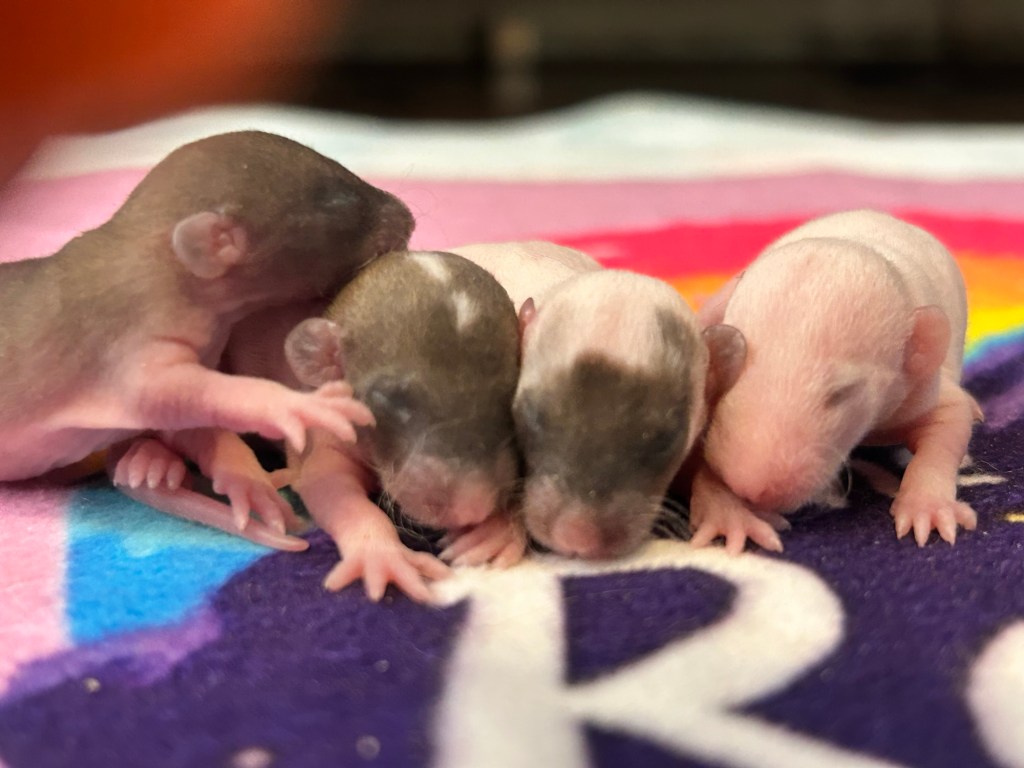
Pipsqueak had her 10 babies just after Parker on the 15th of December. She is doing a fabulous job with mothering her healthy offspring.
Pipsqueak’s BabiesPipsqueak’s Boys
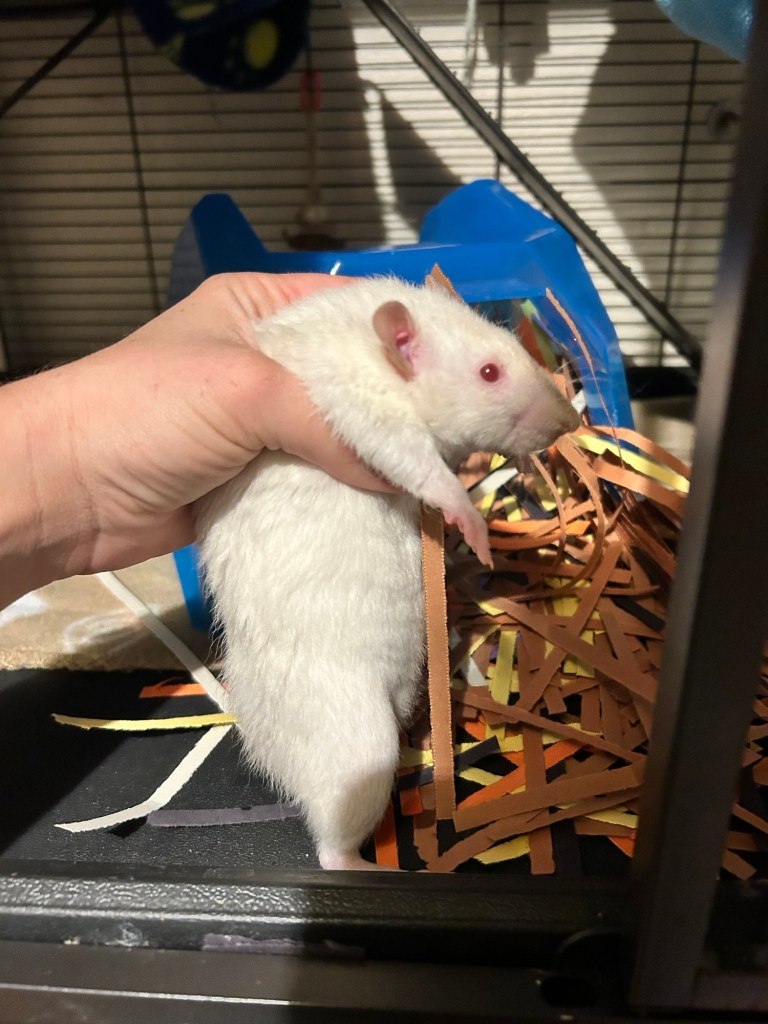
Aurora x Humphrey
Breeding began December 3rd as soon as Humphrey’s breeding test panel came back clear for 11 different rat illnesses. So he is ready to go!
You can always check out their profiles and such at adoptarat.com, too.
What is a Substrate Box for Rats and How to Use It
A substrate box, often known as a digging box or foraging box, is a container filled with a deep layer of rat-friendly material that’s perfect for digging. This setup is a fantastic way to enrich their environment, encouraging behaviors that are crucial for their mental and physical well-being.
What is a Substrate Box?
A substrate box provides a special spot for your pet rats to dig, burrow, and forage. These activities are instinctive for rats, as they naturally burrow for shelter and search for food. A digging box offers a safe, stimulating way for them to express these natural behaviors.
Key Benefits
Mental Stimulation: It engages their curiosity and becomes a fun challenge when treats are hidden inside.
Physical Exercise: Digging and burrowing are excellent physical activities.
Behavioral Outlet: It helps reduce unwanted behaviors like digging at cage corners.
How to Use a Substrate Box
Using a substrate box is easy and can be fun for you and your rats!
1. Choose a Container
Pick a container that is:
Deep: It should hold a substantial layer of substrate for digging, ideally 4-6 inches.
Easy to Clean: Options include a plastic storage bin, a large sturdy cardboard box, or a deep food-safe Tupperware container.
Accessible: Place it in the cage if there’s room, or use it during supervised free-roam time. Some people create an access hole in a plastic bin lid for easy cage access.
2. Select a Rat-Safe Substrate
Fill the box with a substrate safe for rats. It should be low-dust and good for burrowing. Consider:
Shredded Paper/Cardboard: Non-toxic shredded paper or small cardboard pieces.
Paper-Based Bedding: Unscented, natural paper bedding.
Sterile Coco Coir/Soil: Coconut husk bedding or sterile, organic topsoil (ensure it’s free from chemicals). It can be slightly damp to reduce dust and support tunnels.
Hemp Bedding: Hemp bedding is absorbent, low in dust, biodegradable, and safe for your rats to dig into.
3. Add the Enrichment (The Fun Part!)
Get your rats excited about the box:
Scatter Food/Treats: Hide small treats like seeds or Cheerios deep in the substrate.
Add Hiding Spots: Bury small, rat-safe items like cardboard tubes or small boxes for them to find.
Create a Planted Box: For added fun, plant rat-safe herbs or grass in the substrate for them to explore and nibble (supervise closely).
4. Introduce the Box
Place the box where your rats can easily reach it.
Supervise initial use, especially if you include food items that might mold.
Watch your rats as they sniff, dig, tunnel, and enjoy their hidden treasures.
Mix it up! Try new things to encourage natural enriching behaviors.
RECIPE: Easy Honey Treats for Rats
These are very easy to make treats that you can make if you don’t have fresh, organic fruits or vegetables.
Supplies:
Whisk, fork, or food processor for mixing
Cute, heat resistant silicone mold
Foil or parchment paper
Baking sheet
Oven mit
Dehydrator (optional)
Ingredients:
1 Egg
1 TBS Organic, Raw Honey
4 TBS Quinoa Flour
1/4 Water
1/2 tsp. Olive Oil
Dash of Baking Soda
1 tsp. Crushed Rosemary (natural and safe preservative)
Step 1: preheat your oven to 325 degrees Fahrenheit.
Step 2: mix all your ingredients together until blended smooth.
Step 3: get out your baking sheet and cover with foil or parchment paper.
Step 4: wet your silicone mold and shake dry. Place on your baking sheet. Pour the mix into the silicone mold.
Makes approximately 45 treats
Step 5: bake for 30 minutes* (*depends on the mold you are using, this is in reference to the mold above)
Step 6: let cool completely!!! before removing from the silicone mold.
(Optional) Step 7: dehydrate for 6 hours at 170 degrees Fahrenheit. This is to help prolong freshness and make them crunchier.
Otherwise, serve at room-temperature to your pet rats!
You can always try doubling this recipe!
RAT SPOTLIGHT
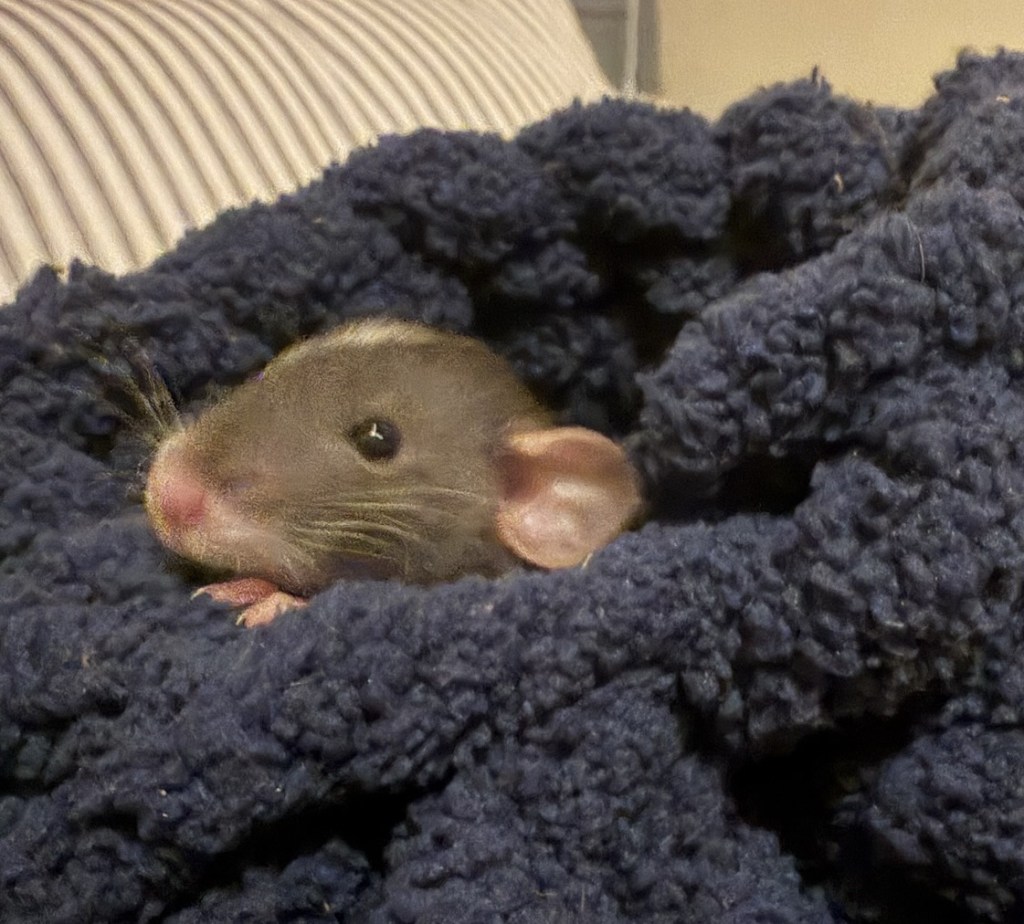
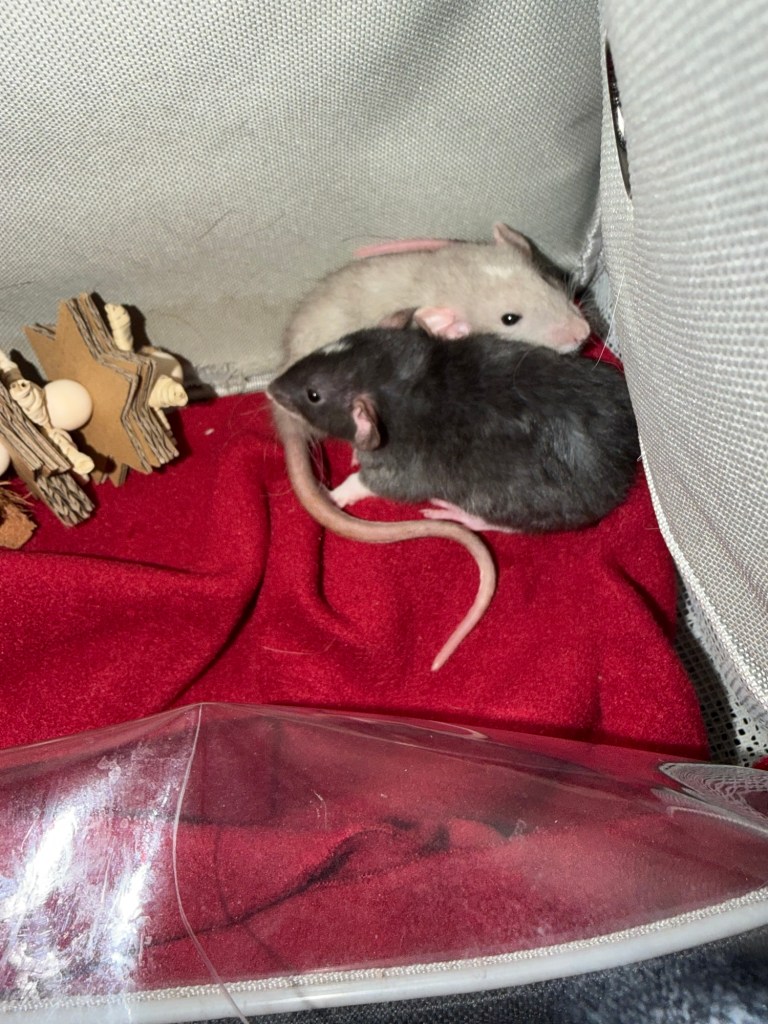
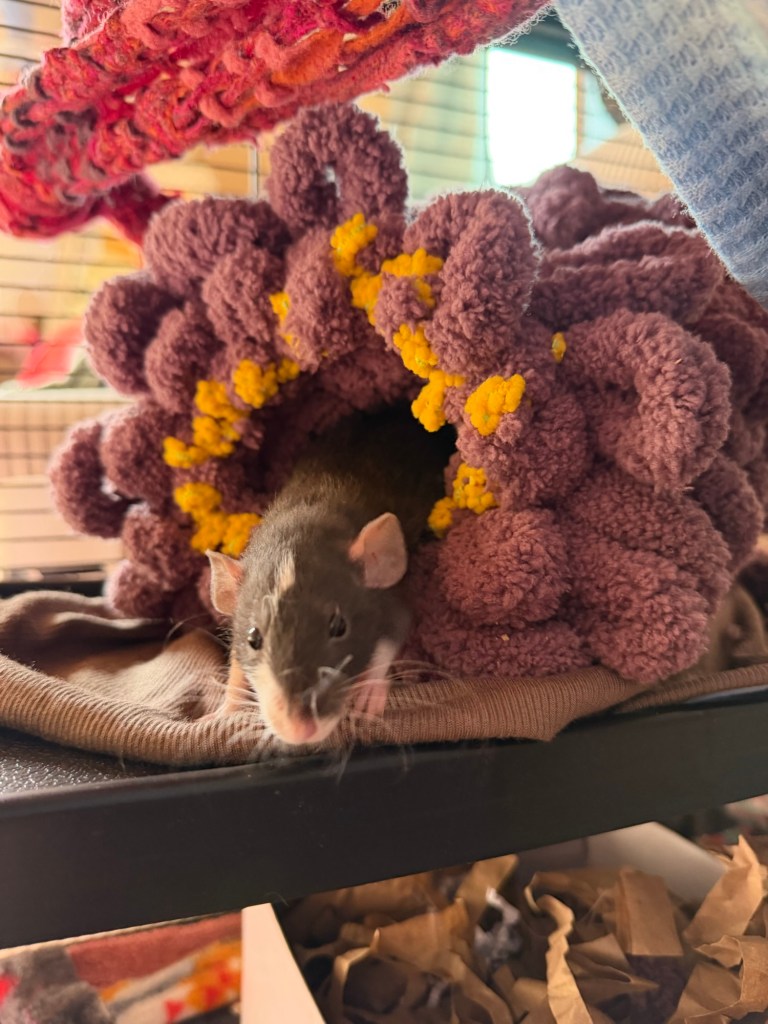
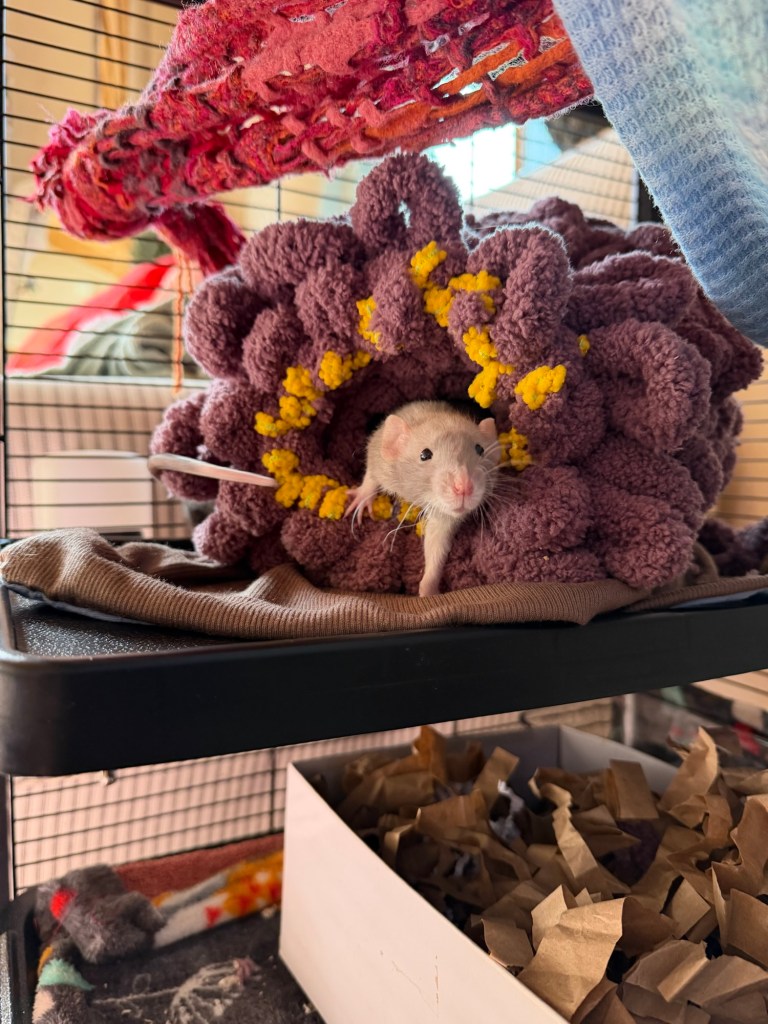
Meet Sage and Pepper! Two girls adopted by a wonderful family from Mounika x Smudge.
“Their personalities are definitely coming out. Pepper is rambunctious and curious and Sage mellow and cuddly.”
“The girls are so sweet and getting more comfortable with us every day. I’m spending time every day letting them come to me on their own terms but building a relationship is going a slower with Cypress as she has less patience and just wants to cuddle them on her terms – it’s a learning process.”
PepperSage
Is there a Personality Difference Between Dumbo and Standard Ear Rats?
Something I’ve been asked more than once is will a Dumbo ear rat get along with a standard ear rat?
The answer, yes, they will get along. The only difference between a dumbo and standard ear is the placement of the ears on the head.
Anything that has to do with overall temperament, came from breeding good (or poor) genes.
They are indeed the same size and body weight. Care requirements are identical. And they all crave socialization with humans and rats.
Dumbos and Standard Ears are pet rats, or fancy rats, not a different breed or species. They may seem or act different because of lineage, handling, and genetics.
Having a Dumbo eared rat doesn’t make them sweeter, but boy, it sure does make them look cute!
Litter Box Training Tips for Rats
Relax, most rats will pick up using a litter box at almost any age.
Use a friendly litter that is inviting, like fresh news litter. It’s soft and absorbs the smell.
Never take away the option of a litter box. Sometimes you can try adding more than just one! Especially if your cage is larger.
A litter box can be anything you make it out to be!
Try adding a pee rock. It can be any smooth, medium sized rock with no sharp edges obviously because the idea is, they are going to drag themselves across the rock, leaving a small urine trail. This also acts as a communication hub for the rest of the rats in the cage. (I like to boil my rocks for 10 minutes before introducing.)
Whatever you end up using for litter, you wanna make sure that it is very distinctively different from the rest of their bedding or nesting that you’re using.
Try using their spots. If you picked out spots, you thought they might like move the litter box around don’t be afraid to try a different spot. You can always go back to the old one.
I say routine cleaning is key. Right after a deep clean, they obviously have fresh litter for the next couple of days. I only change their litter to help reinforce that their cage can be clean if they’re using their litter box.
It’s strange, some rats who have never used a litter box will take to it right away and some rats that have had litter boxes around for a long time… seem to be going nowhere with that habit. Don’t worry it’s not on you! Just remember patience and consistency should pay off in the long run.
You could even try changing the litter you’re using or even the litter boxes you’re using to see if they prefer something else. 
Lastly, just remember rats prefer to be clean it’s given the opportunity to do so they will try.
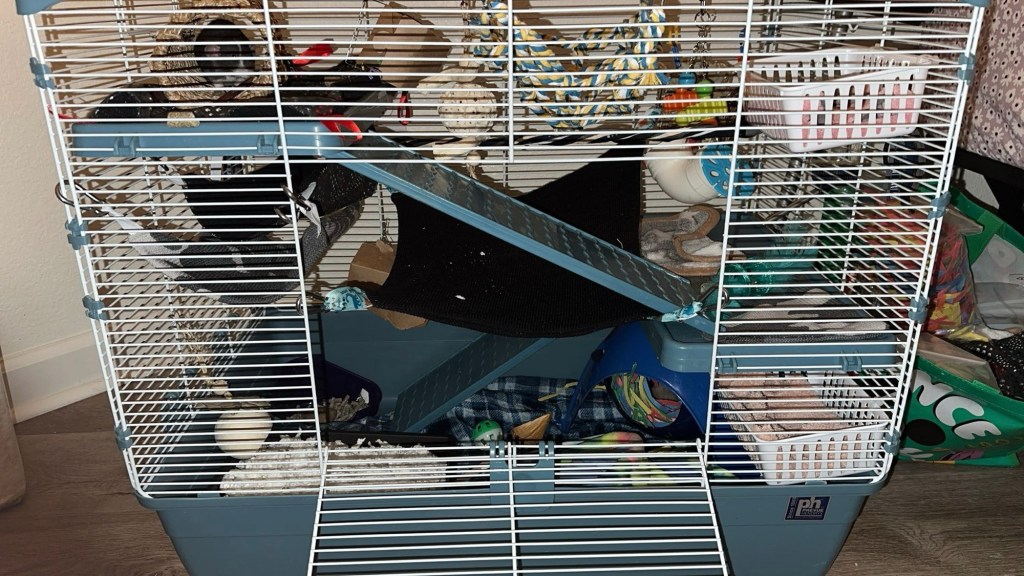
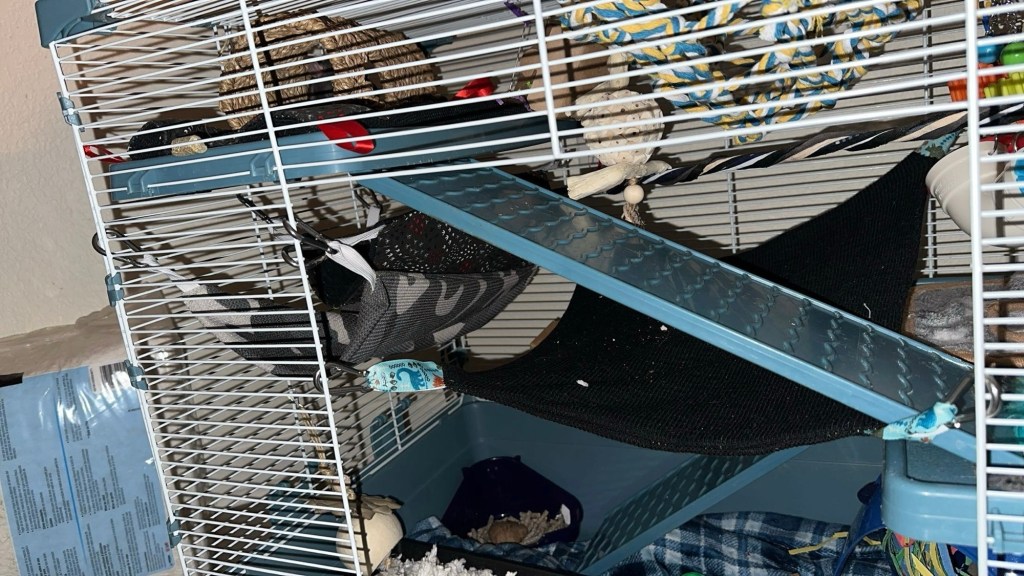
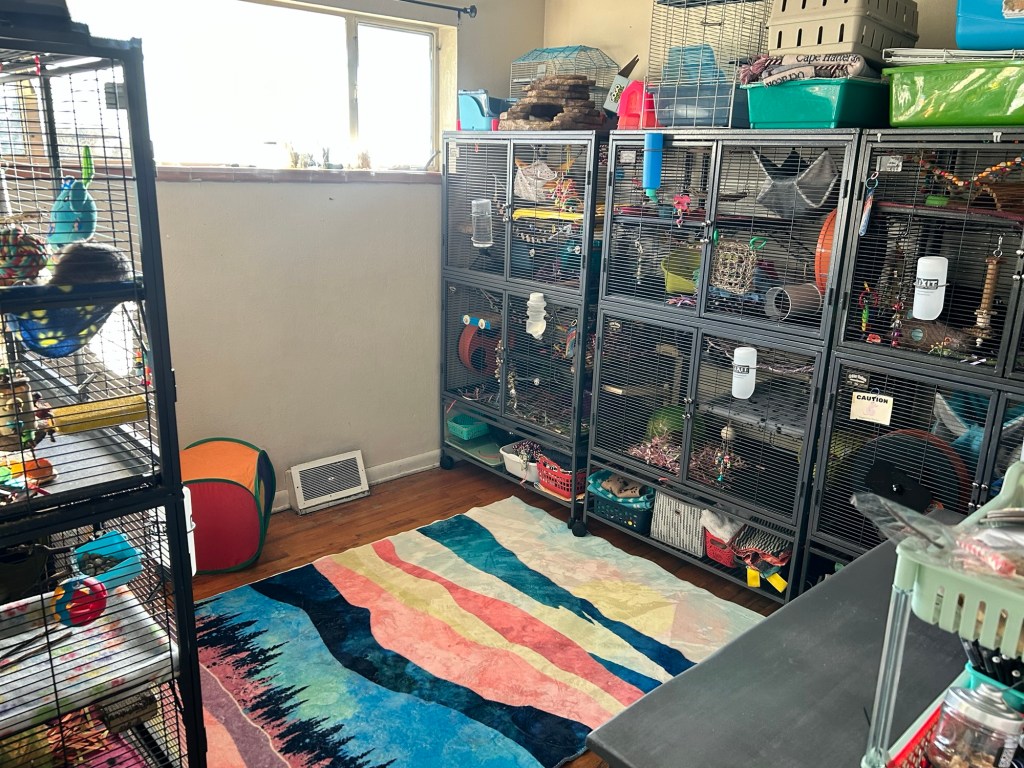
FEATURED CAGE OF THE MONTH
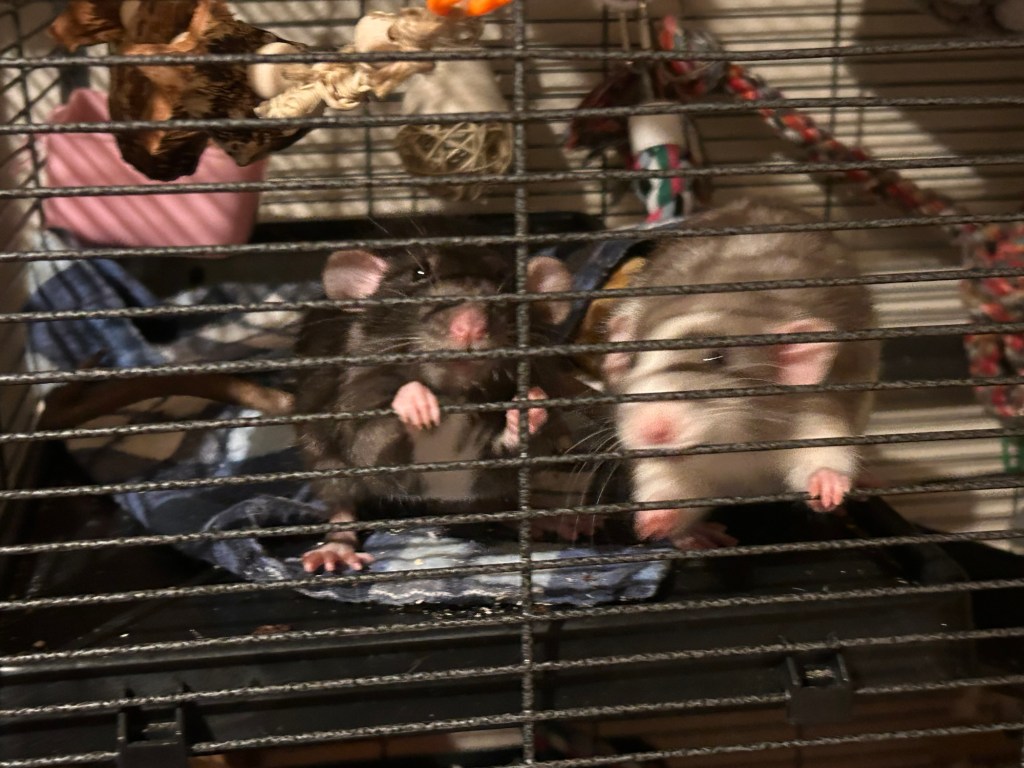
I chatted with Hannah, a devoted rat parent, who shared her routine with her charming pets. She loves finding deals for her “little chaos potatoes,” who bring joy with their antics. Hannah supports small businesses first.
Every morning, she checks on her rat babies, providing breakfast, a treat, and morning kisses. There’s a midday check-in, and if possible, the rats enjoy some adventurous roaming. Evening time is set aside for at least an hour of free roaming.
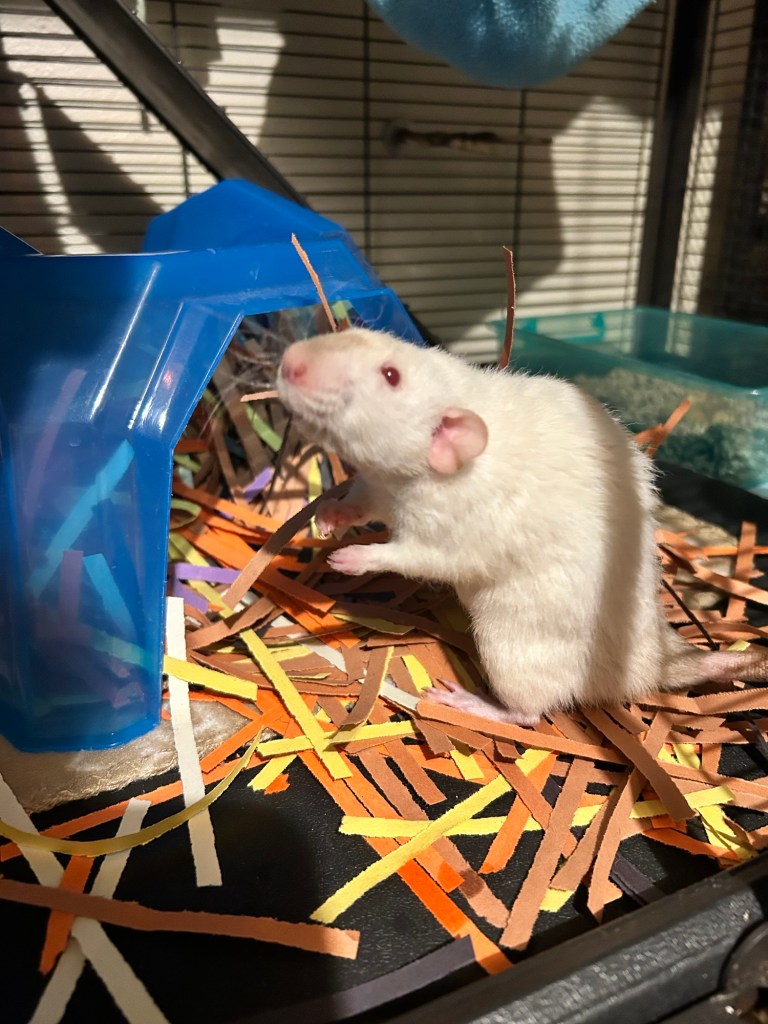
Dinner is served after tidying the cage, with food scattered to encourage foraging, aided by toys. The enclosure features paper bedding in a bin, doubling as a dig box. She occasionally changes the setup to keep it new and exciting.
Yet, Hannah plans on getting a Critter Nation as soon as she moves!
<if you wish to be featured in our newsletter, send a photo of your rat or cage to support@rattery.org>
Please reach out to submit articles, artwork, and more to be featured and accredited to you in our monthly newsletters!














 The Rattery
Leave a comment