Mischiefs Managed
How to Make Safe Rat Toys
Recipe for Rat Treats
Rat Spotlight
What We Use for Bedding
What is Pea Fishing?
Featured Cage
MISCHIEFS MANAGED
You can catch up with last month’s mischiefs, here.
Zoe x Ernest
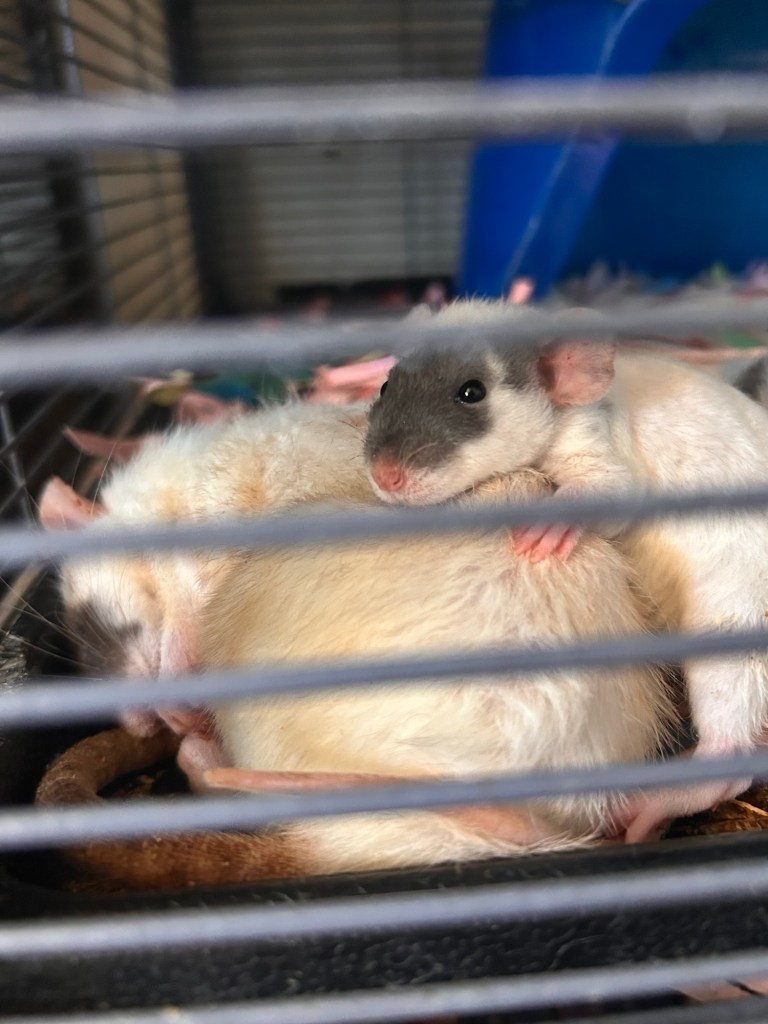
Zoe, now retired after her second litter, lives with two of her daughters from her first mischief.
Auggie x Kokomo
The boys growing up:
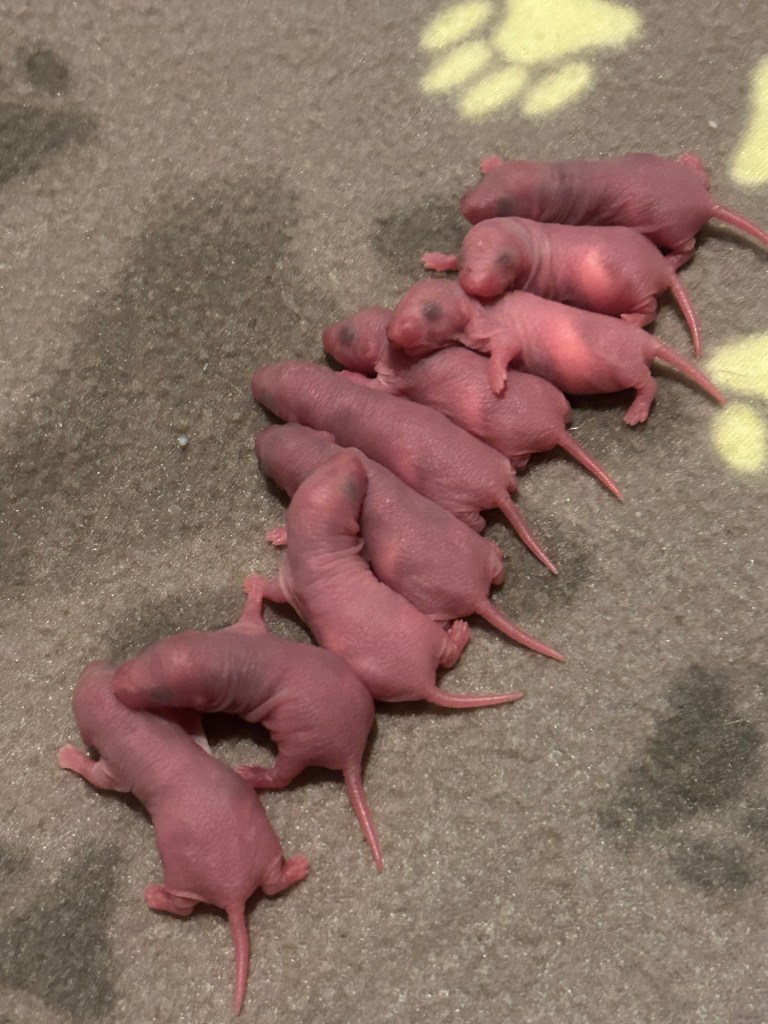
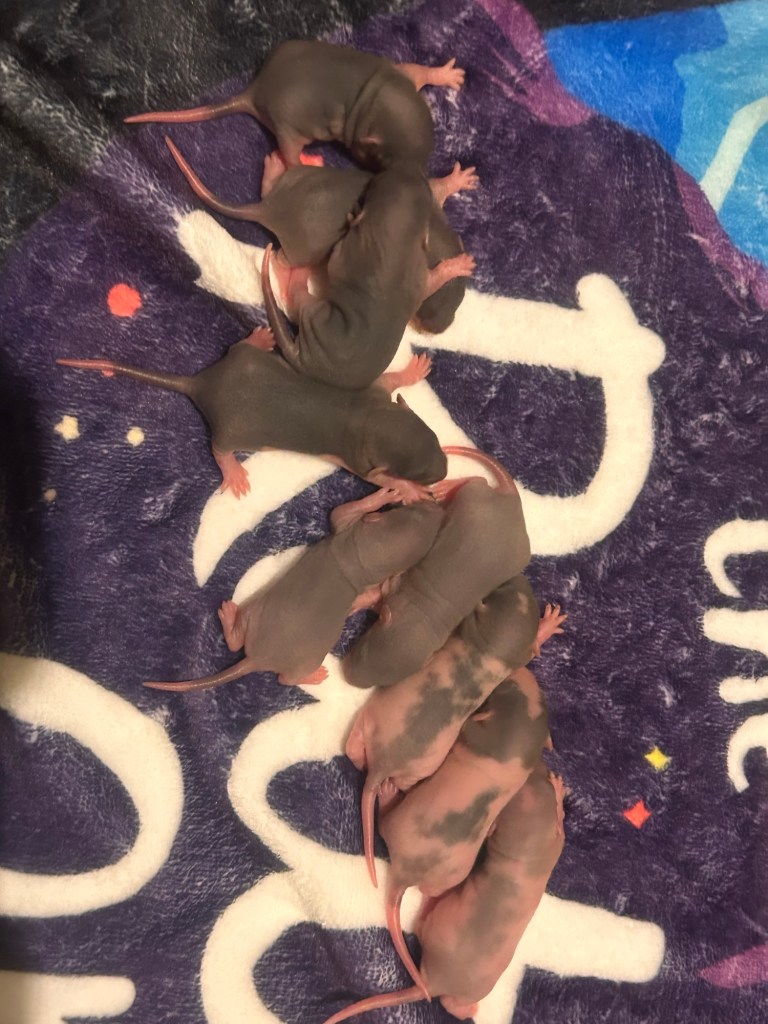
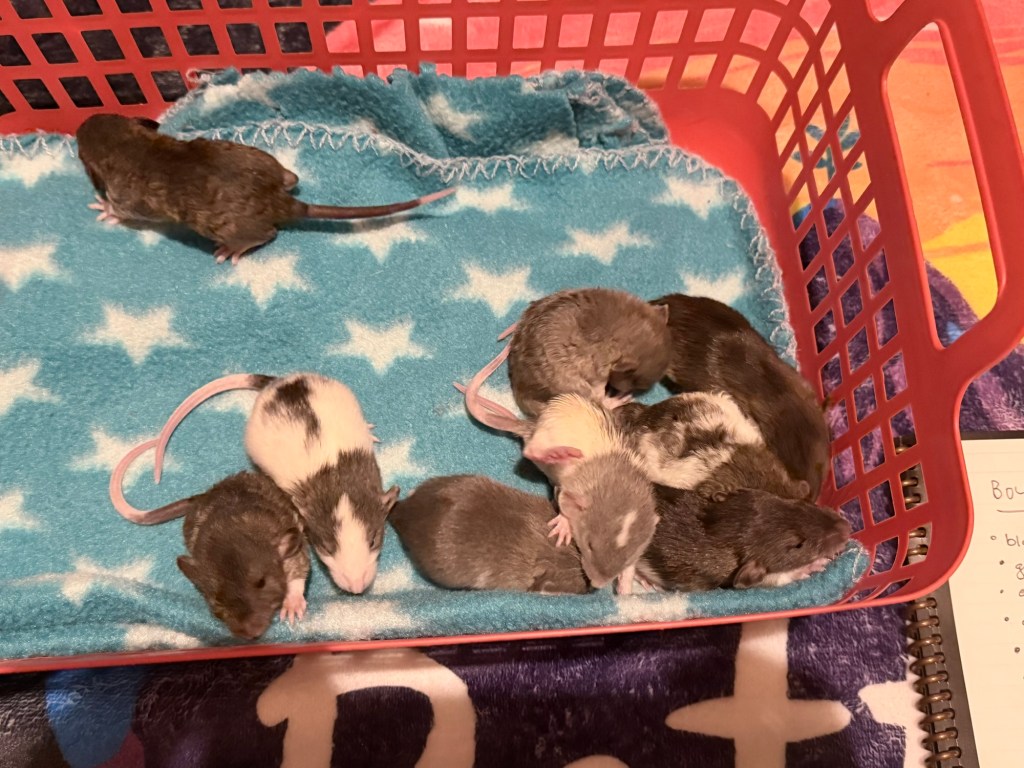
Not super surprising, but Auggie has been just a fantastic mother. She has been quaint and courteous. Attentive and patient. Truly, she took on this task with much pride and it shows. The babies will be going home April 14th.
Aurora x Ernest
These two love birds started breeding March 2nd. They are still together and it’s March 10th. They will remain together until day 15 or so. This gives mom at least a week to relax, but also, so she isn’t alone for a prolonged period of time. Then Ernest, will go live with the rest of the stud muffins.
Welp, since then, Aurora got into a fight with Ernest over some cat food. Ernest, wounded, is now retired and off living his life with his litter brother, Humphrey (also retired).
Aurora, is humongous, probably the biggest rat (who is pregnant) so far is my breeding adventure.
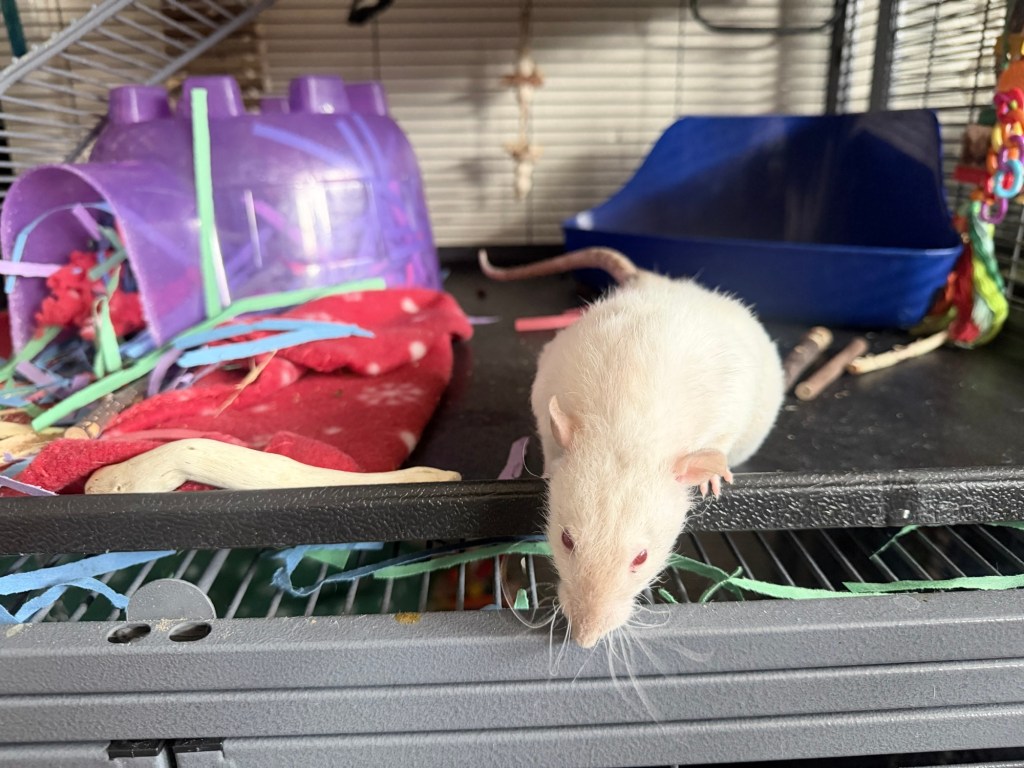
Aurora is having her babies as I write this! It’s 3:00 PM, March 24th. This is her second and final litter (since we only breed our girls a max of two times).
Video Trigger Warning: Some Blood
Lavender x Sparrow
Breeding started on March 12th. I have chose to breed these two adorable weirdos because I know there pups with be curious, yet kind-hearted. This waitlist is full at the moment.
Honey x Nosferatu
Oh boy will these babies be fun! Honey is Rex, while Nosferatu is a double Rex. She is a honey coat and he has dark skin. The babies should be a beautiful array of colors, with of course, stellar temperaments to match. Breeding began March 24th.
You can always check out their profiles and such at adoptarat.com, too.
How to Make Safe Rat Toys
I do have a blog post about this already, that you can find, here.
I have been making rat toys now for over 4 years. I have an Etsy pet shop with over 1000 sales (ratteryorg.etsy.com). I cannot tell you exactly how many toys I have made for rats, but it’s been quite a few.
It’s important to make your rat toys safe and nontoxic. With the advantage of Google, it’s important to make sure that each item you’re using is safe. If you’re unsure, it’s best to leave it out.
The good news is, rats are usually smart enough to avoid digesting non-food items. This means, you can essentially make rat toys out of almost anything!
When making your toys, you should focus on making them able to hang. This helps prolong your toy and avoid contamination from the cage floor.
You may find it easier to make toys using a drill. This way you can put holes into items easily. I use yarn needles to pull my string through tricky items.
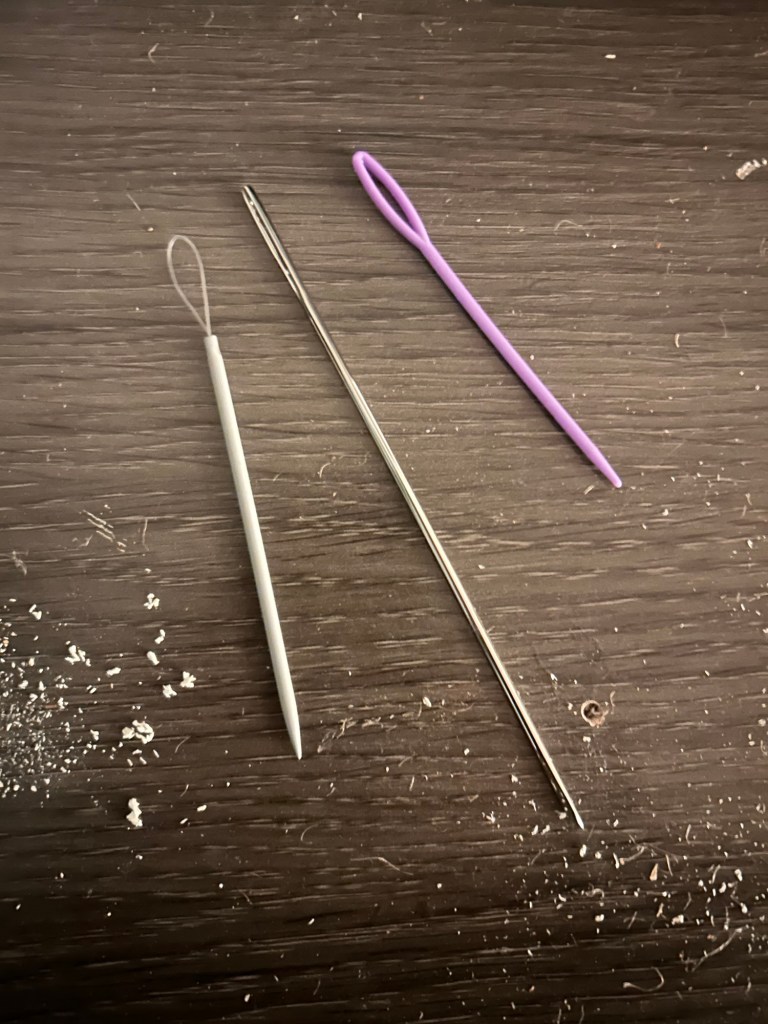
I’m just trying to say, there are tools that are quite useful for making effective, durable, and safe for making these toys. For example, a small crochet hook can be used to pull a string through a large bead.
Please see my blog for the full list of safe strings, wood, and materials you can use.
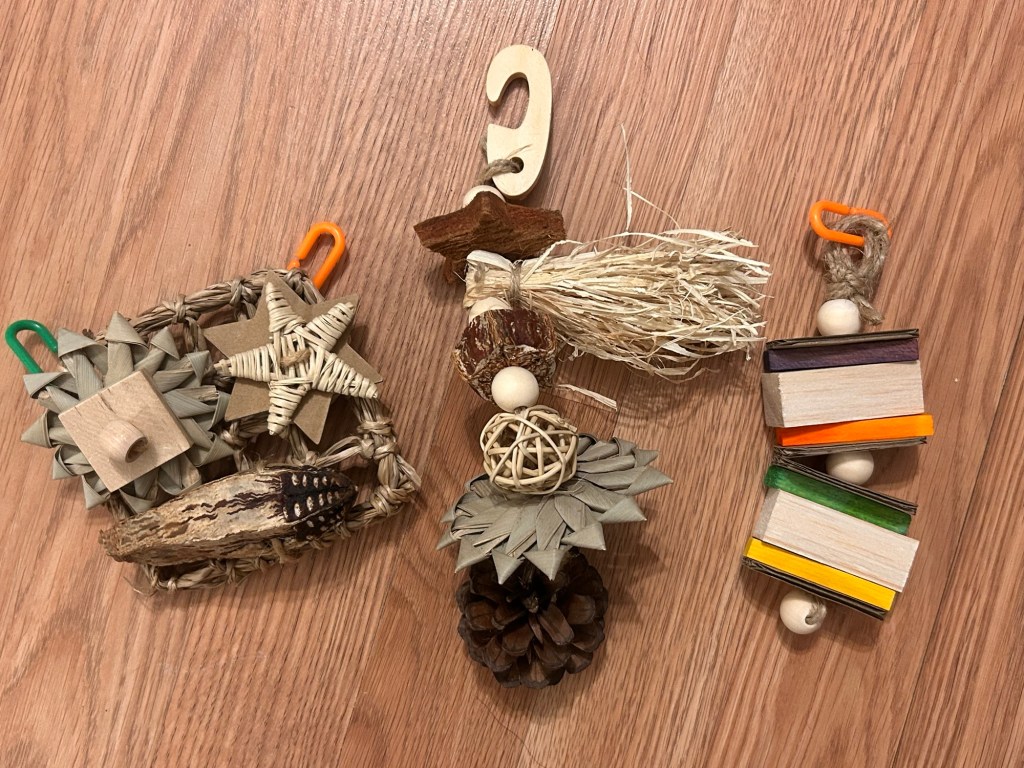
Would you like to know the secret to making these beautiful rat toys?
https://makeyourownbirdtoys.com/
But there, you can find lots of natural parts for crafting your own rat toys!
You can find another list I made on Amazon: https://www.amazon.com/shop/jaxyfox/list/1D3DNDP2MG7WT?ref_=aipsflist
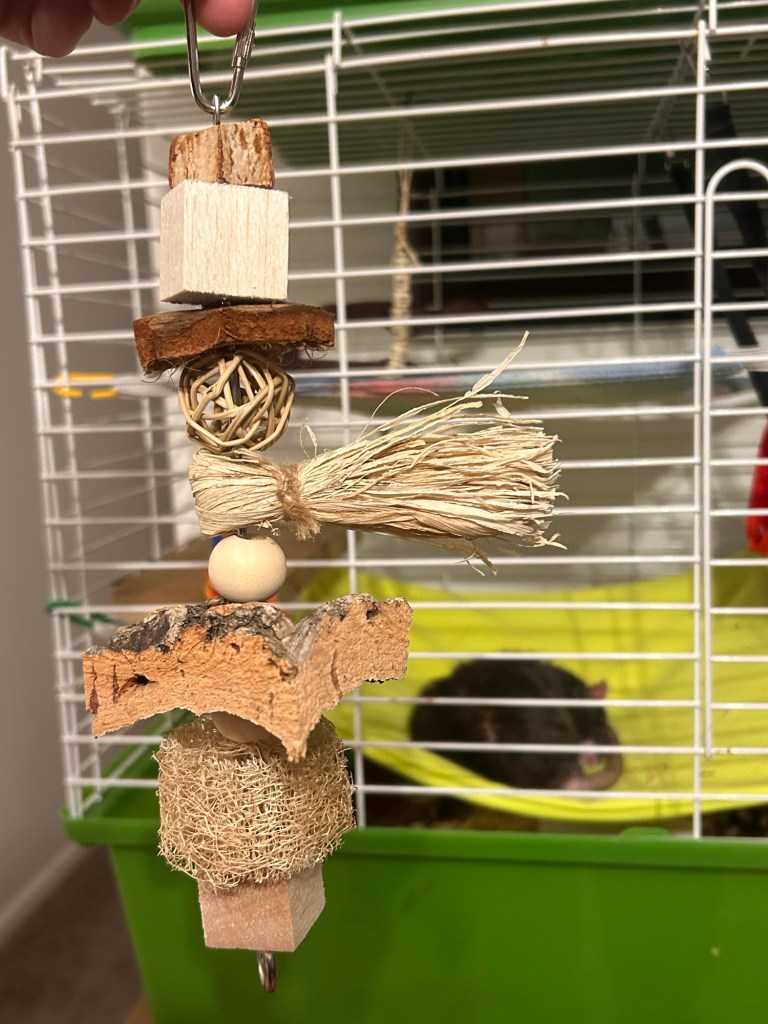
Making your own rat toys should be creative and fun! Here are some tips:
- Try using a hanging, metal, safe skewer for your rat toys. This makes the base indestructible and you can keep refilling it with their favorite chew items. (https://amzn.to/3ZWOj1y)
- A drill really will be your best friend when it comes to making the ultimate rat toys!
- Jute string may seem frustrating at first, but it’s very tough and safe to use! It also likes to shed, but you get used to it. (I used to change my clothes after using it, now it’s just the vibe lol)
- A metal clip will make your toy easier to hang and makes it look professional. There are a variety of clips you can use, but my default are lanyard clips.
- Try crocheting your sting to make it thicker if using cotton string.
- You can use certain plastics! Like bay spoons or rubber ducks for the bath tub. Just make sure you see pieces scattered after introducing so you know they aren’t eating it.
- Balsa wood and sola wood are two of their favorite things to shred.
- It’s easy to make toys out of a lot of common house items, like toilet paper tubes, and boxes.
- I use a lot of knots. Never glue.
- Remember to always observe your pet when introducing new items and to remove immediately if ingestion occurs. Monitor them and if necessary, follow up with a vet visit.
RECIPE FOR RAT TREATS:
Supplies:
- Food Processor
- Foil
- Whisk
- Spoon
- Bowl
- Silicone Mold (heat resistant)
- Oven & Mit
- Dehydrator (optional)
Ingredients:
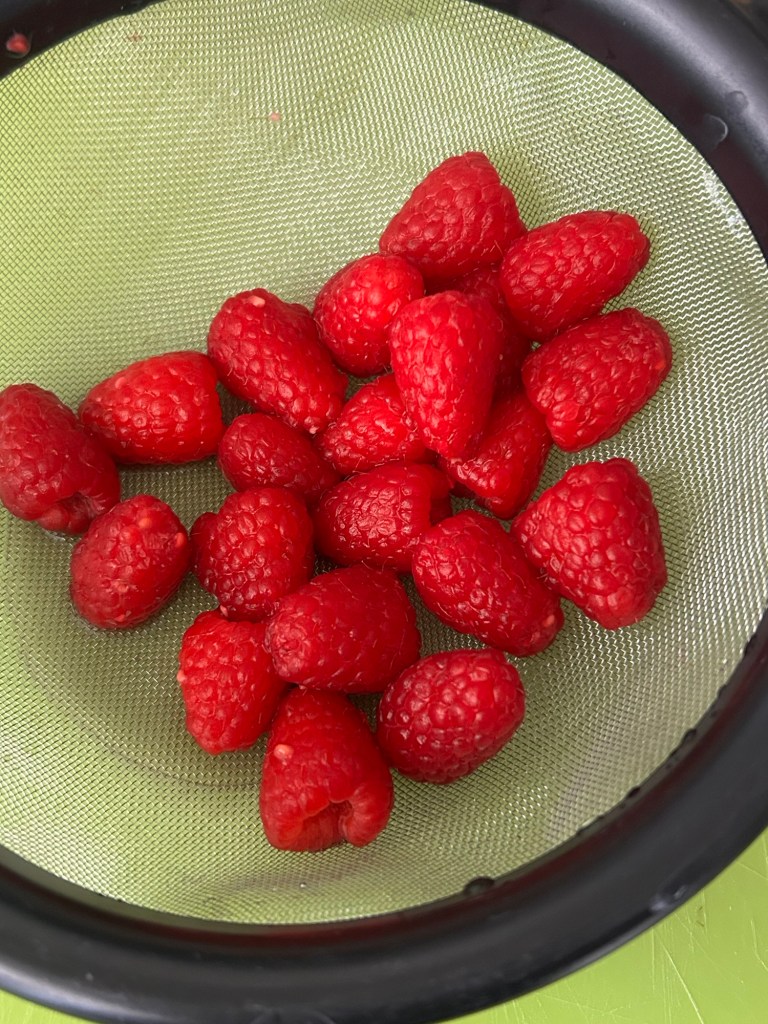
- 3oz Raspberries (about 21 berries)
- 1 tsp. Coconut Oil
- 3 TBS. Purified Water
- 2 Eggs
- 4 TBS. Quinoa Flour
- Sprinkle of Baking Soda
- 1/4 tsp. Rosemary (ground up with processor)
You can always cut this recipe in half.
Directions:
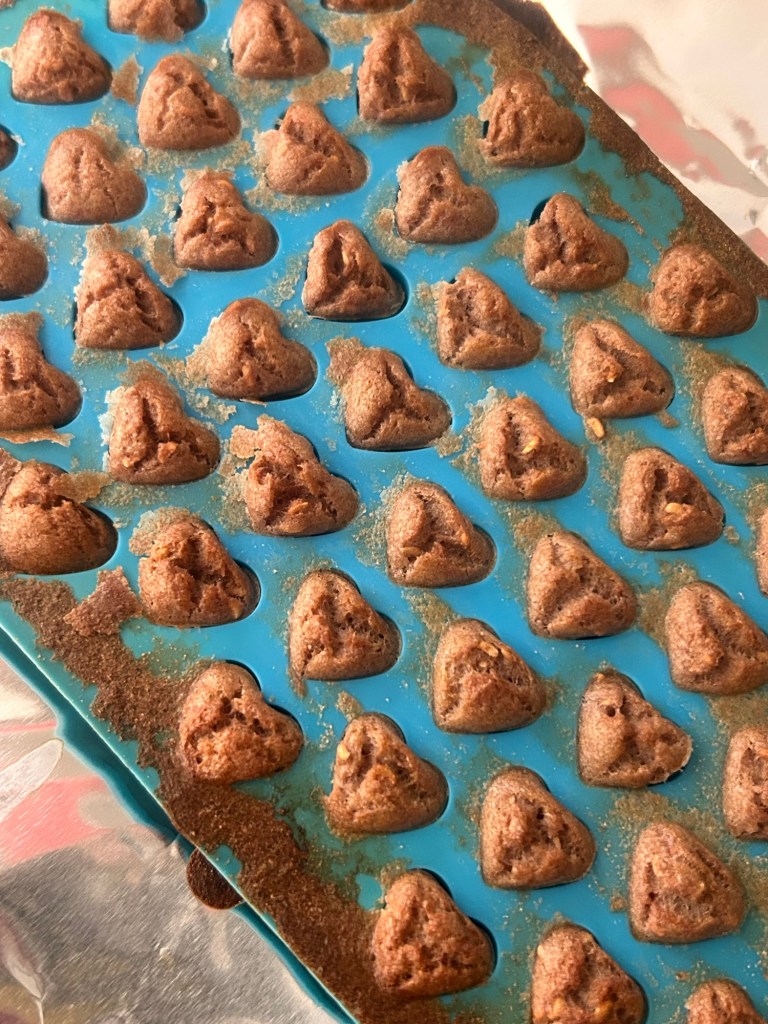
- Preheat your oven to 350 degrees Fahrenheit. Place a piece of foil underneath your silicone mold to make it easy to transfer in and out of the oven. Be sure to wet and shake dry your silicone mold (it helps to remove the treats after baking).
- In your food processor, blend raspberries, eggs, coconut oil, baking soda, and rosemary.
- Once blended, add half of your quinoa flour and blend.
- Move your mixture to the bowl. Add the remaining quinoa flour and water. Whisk well. Adjust water and flour as needed.
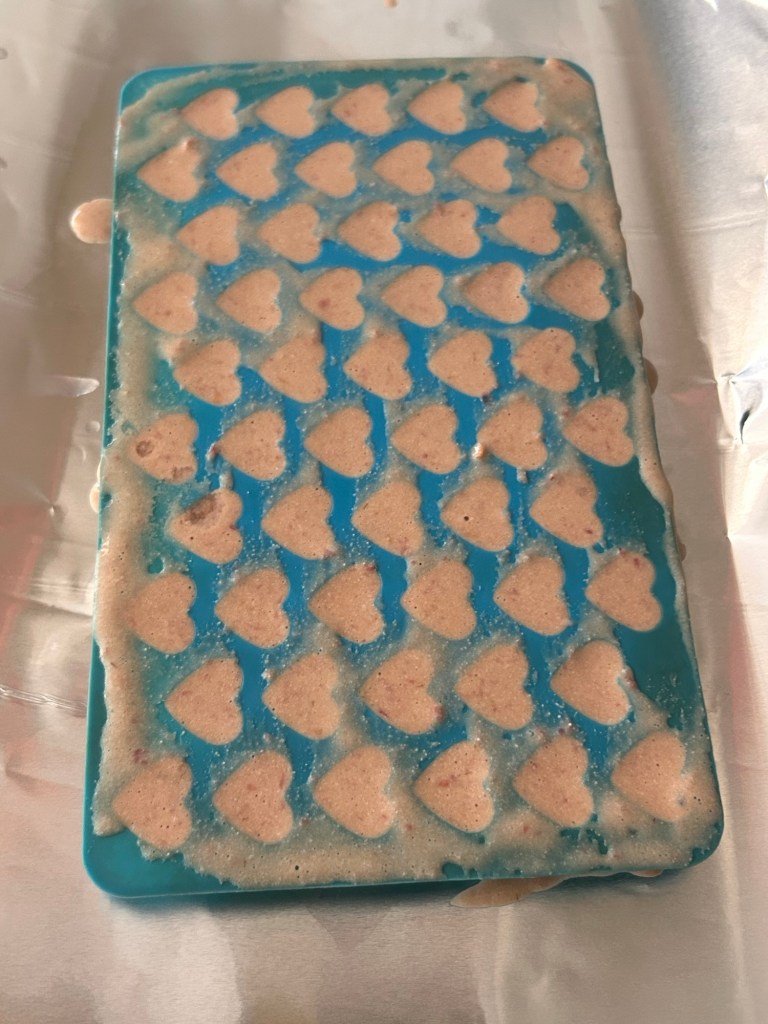
- Once blended into a batter, you can fill your silicone mold using a spoon.
- Safely, transfer your treats to the oven using the foil.
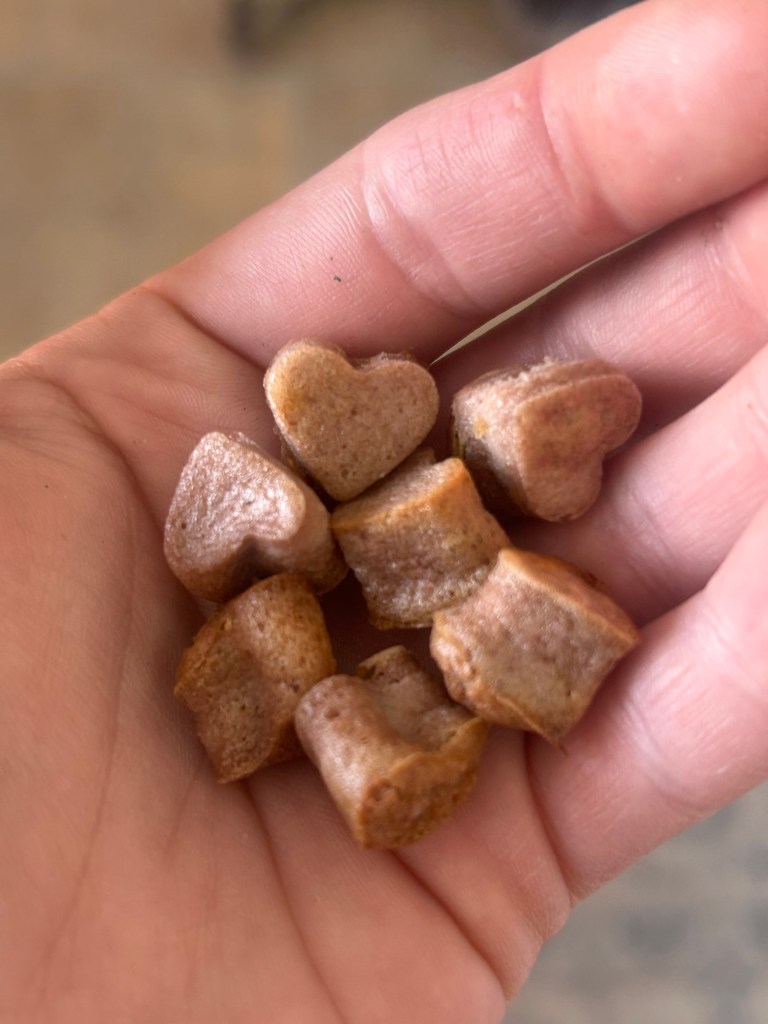
- Bake for 30-35 minutes, depending on the mold you are using. You want them to be golden brown.
- Always let them cool completely before removing from silicone mold. You can still check one to make sure they are done.
- If not serving within two weeks, you should dehydrate your treats at 170 degrees for 4 hours.
RAT SPOTLIGHT
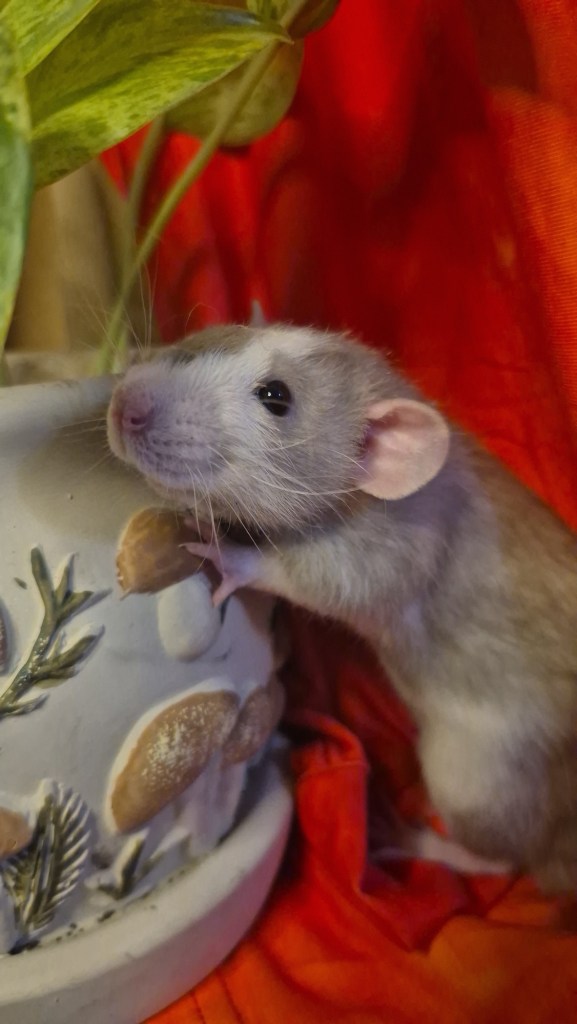
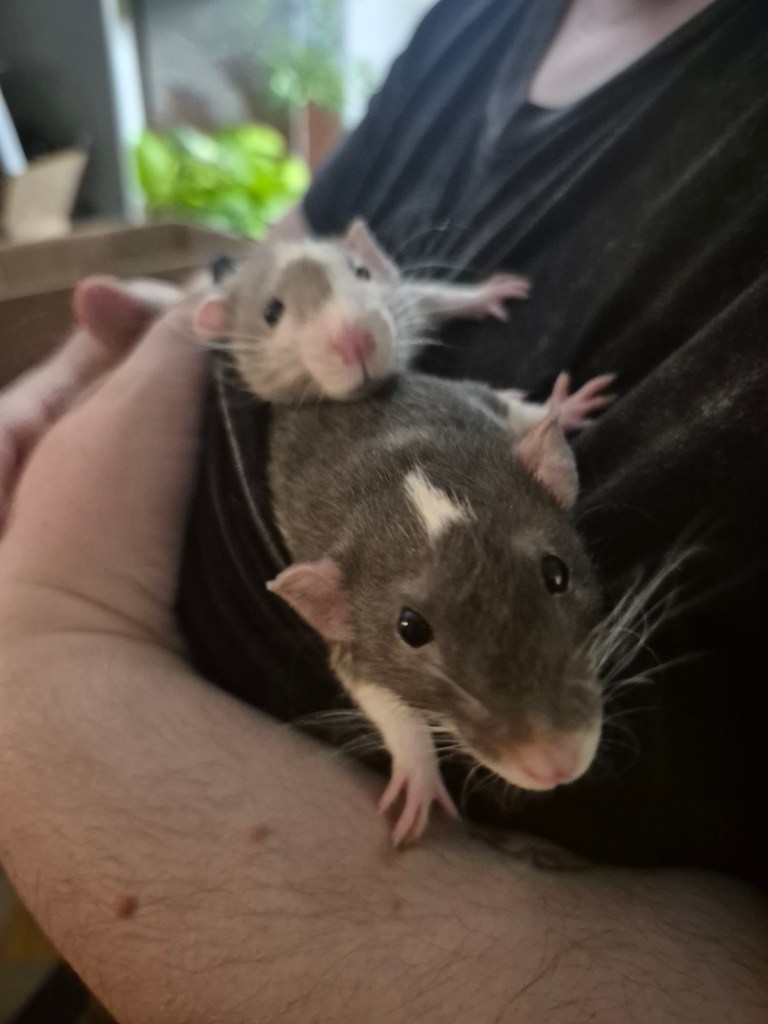
Stanley is the beige one. He loves to climb! He has been a little shy at first, but really started to open up! He has very good manners and takes his treats so nicely. He likes sitting on his mama’s shoulder.
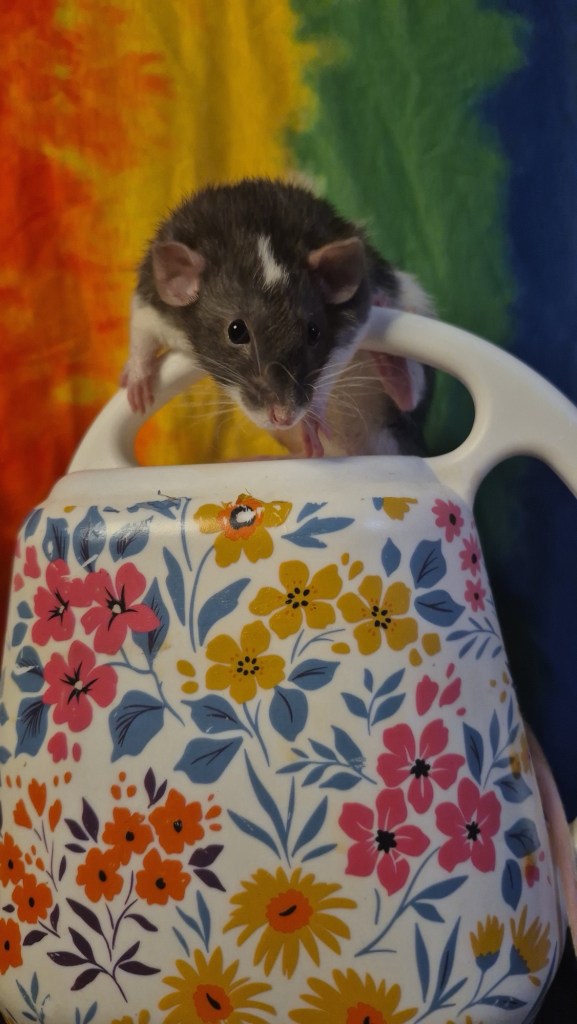
Ralphie is the black one. He loves to wrestle with his brother and their new big brothers. He runs on the wheel all the time and is very brave (just like the run reading said 🥹).
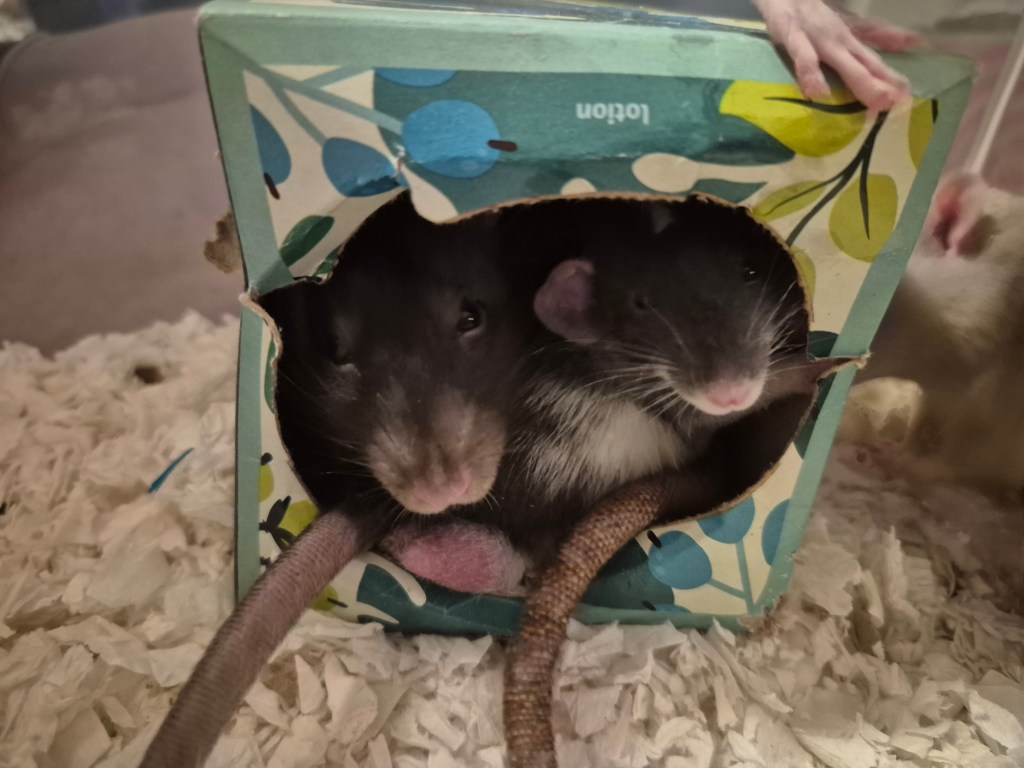
They both really enjoy pouch time and snuggling with our senior rat, Bowie. They are very sweet 💕
What We Use for Bedding & Why
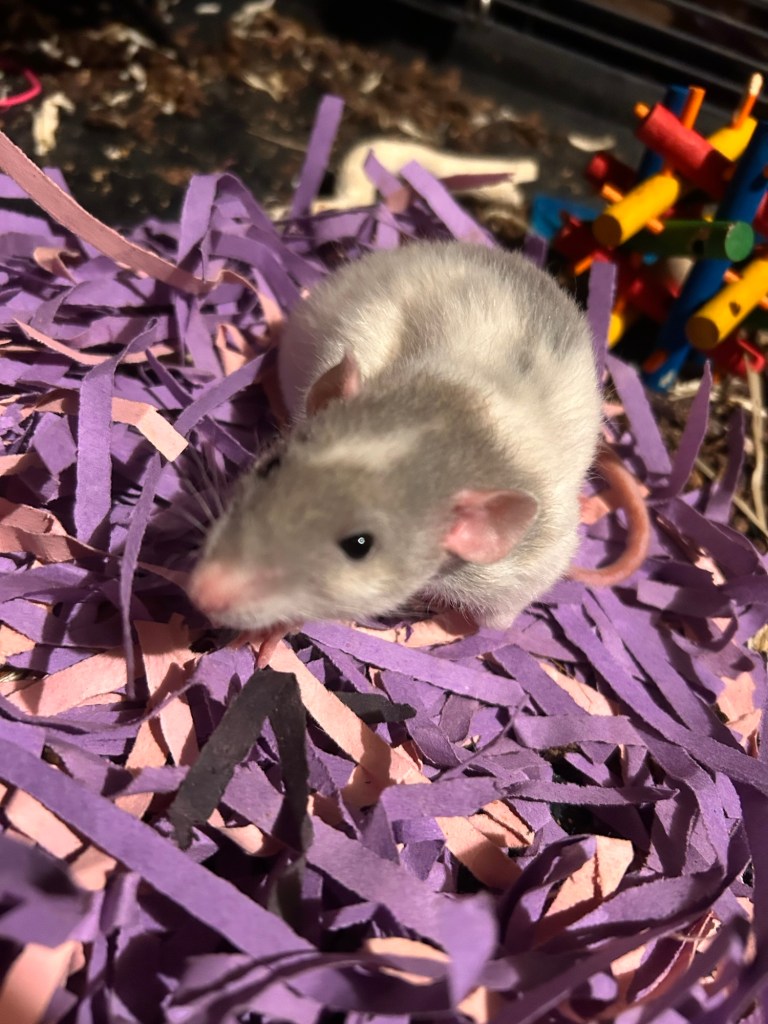
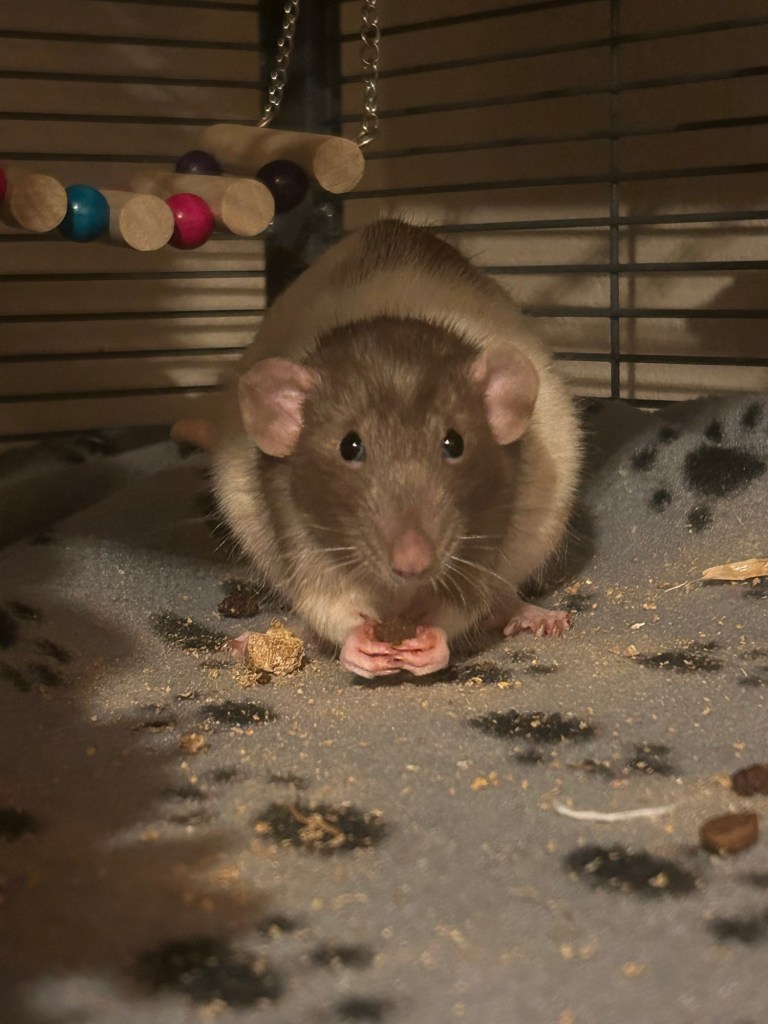
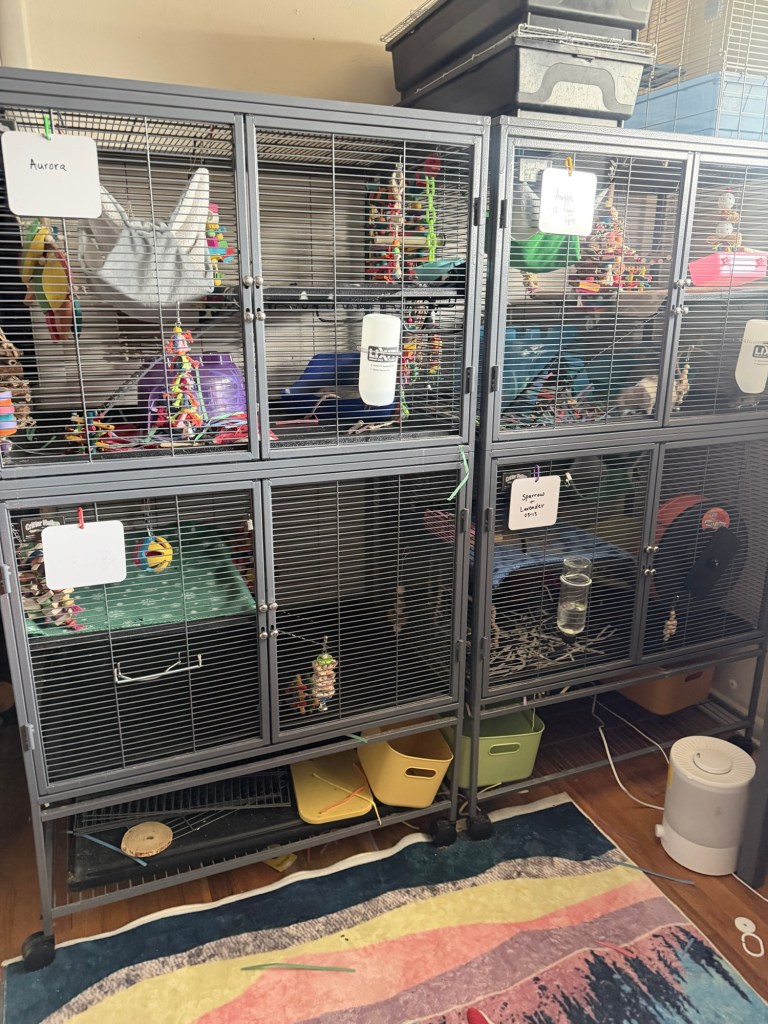
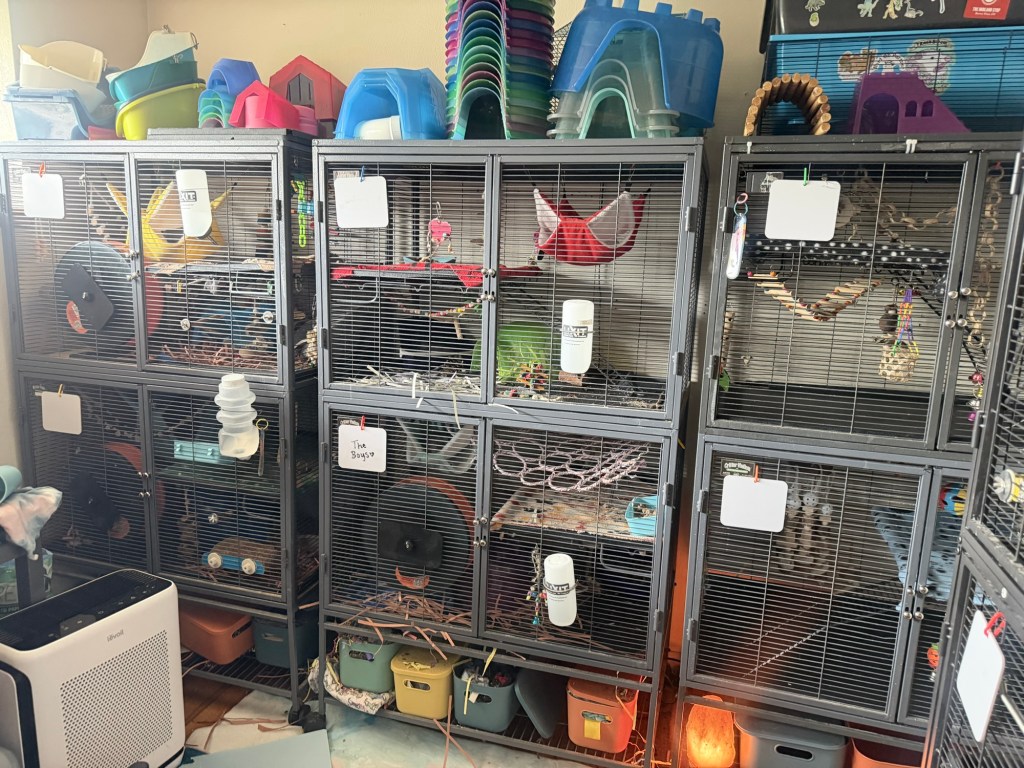
I get asked quite often what bedding I use. Well technically, I don’t use bedding. I use fleece blankets and shredded construction paper.
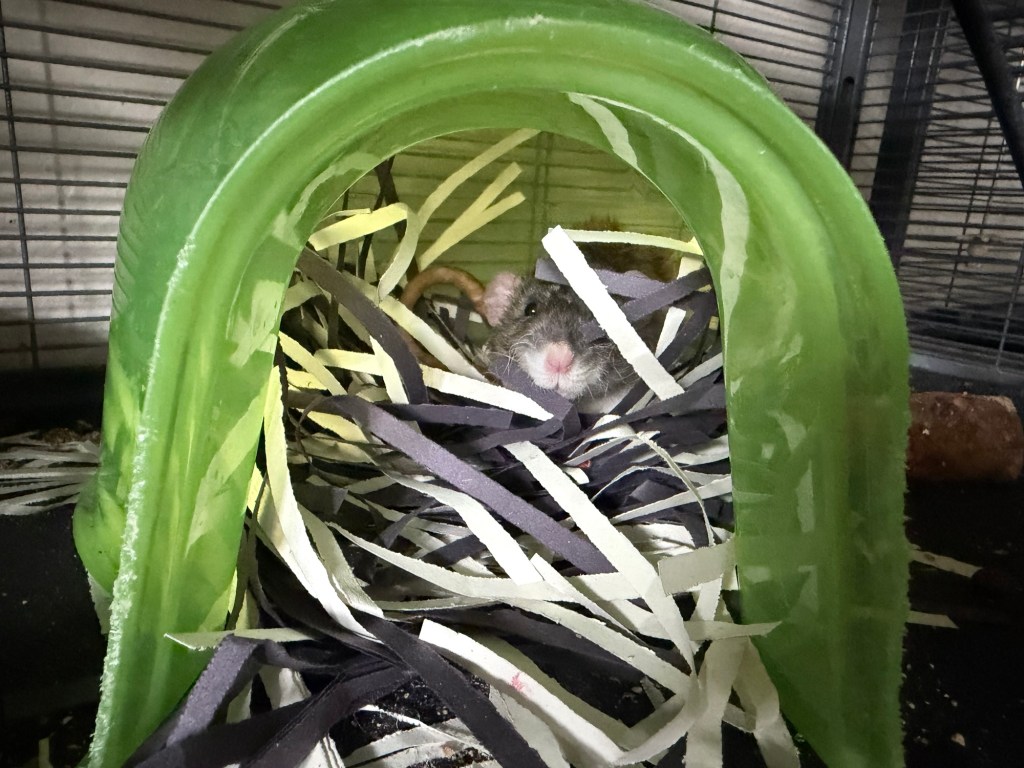
The fleece blankets I use to line my trays and provide comfort. Under each hideaway is one blanket, and on top a handful or two, of shredded construction paper.
Unlike other paper products, construction paper does not stick to newborn rat skin. Which is why I prioritize using it.
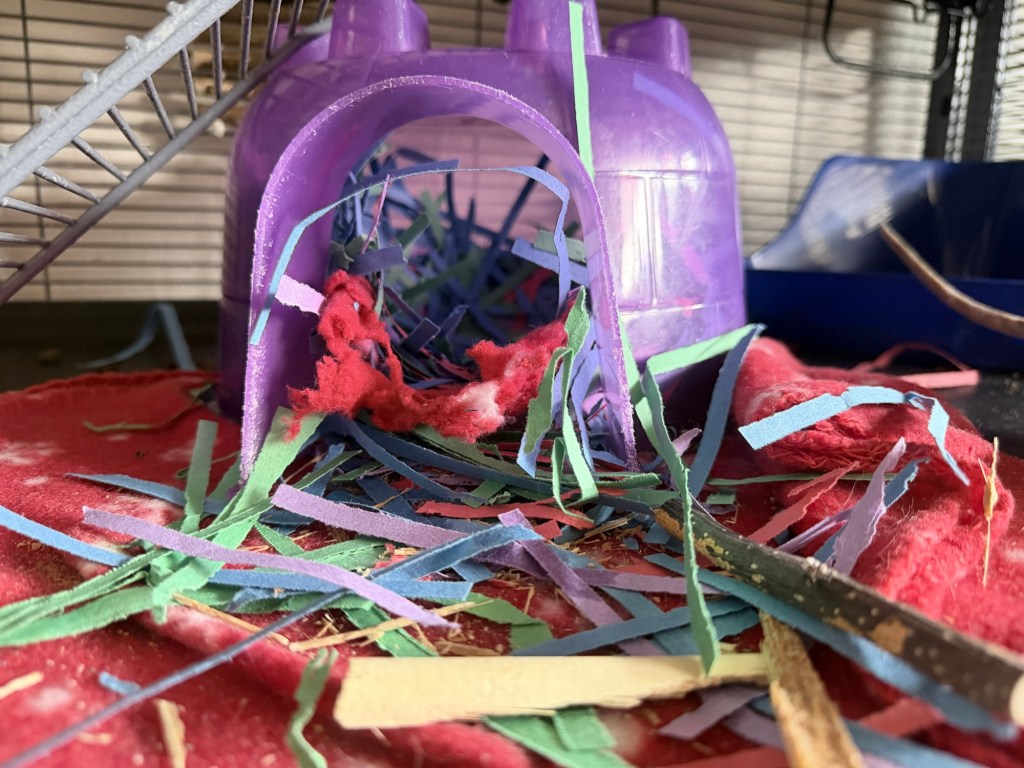
Shredded paper also makes great nesting material. Unlike hamsters who like to burrow, rats like to make nests like birds. They will burrow and not to say they don’t enjoy the dig box! But in their hideaway or sleep spot, they like to make it their own.
Offering them shredded paper allows them to design their nest following each cleaning. All of my rats are using this method.
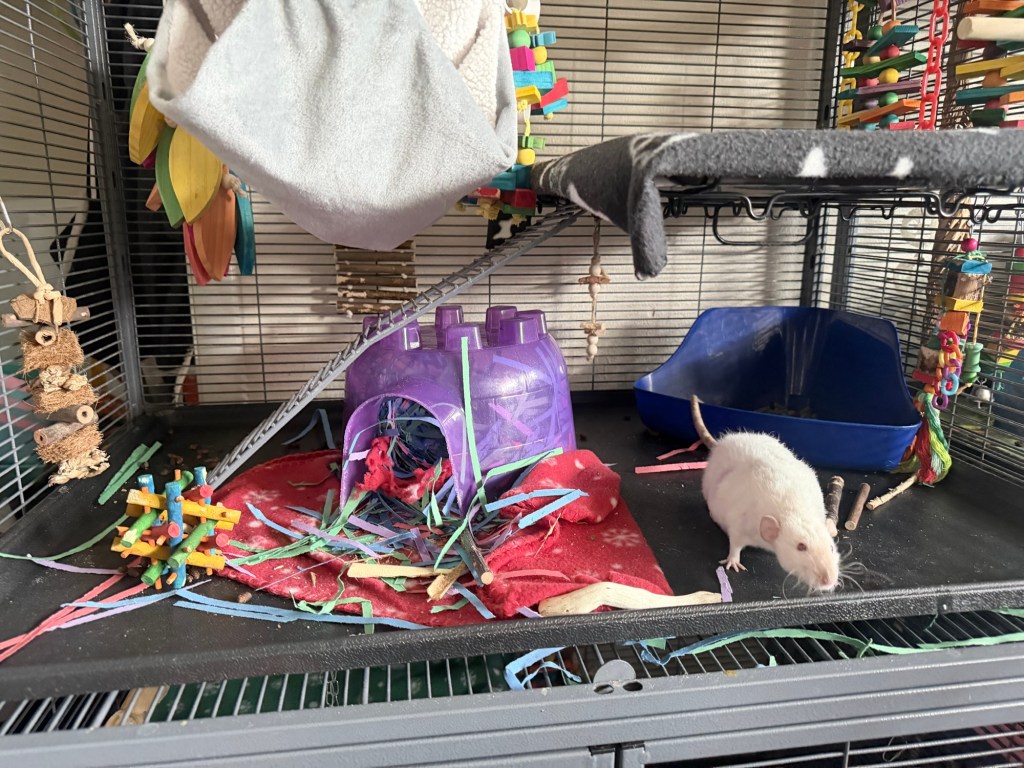
It depends on the cage you have, but for me, I have the standard double critter nation. The trays are not deep enough to truly hold a bedding, though some will.
Of course, all of this is made possible with litter training. Without my litter boxes, I’m not sure this method would work as it would be quite messy. You can look into litter training, here.
What is Pea Fishing?
Pea fishing is the ultimate enrichment for your rats. It’s simple, healthy, and hilarious to watch. Here’s how to set up their favorite “water sport.”
The Setup
• The “Lake”: Use a heavy, shallow dish (like a ceramic pie plate) so it won’t tip.
• The “Fish”: Frozen peas. They float, they’re healthy, and rats love them.
• The “Pier”: Place a towel under the dish. It will get messy.
How it Works
1. Fill the dish with an inch or two of cool water.
2. Drop in a handful of frozen peas.
3. Watch the chaos.
What to Expect
• The Splash: Rats will start by tentatively “hand-fishing.”
• The Dive: Braver rats will dunk their entire heads underwater to grab the best peas.
• The Groom: Expect a long, adorable drying-off session afterward.
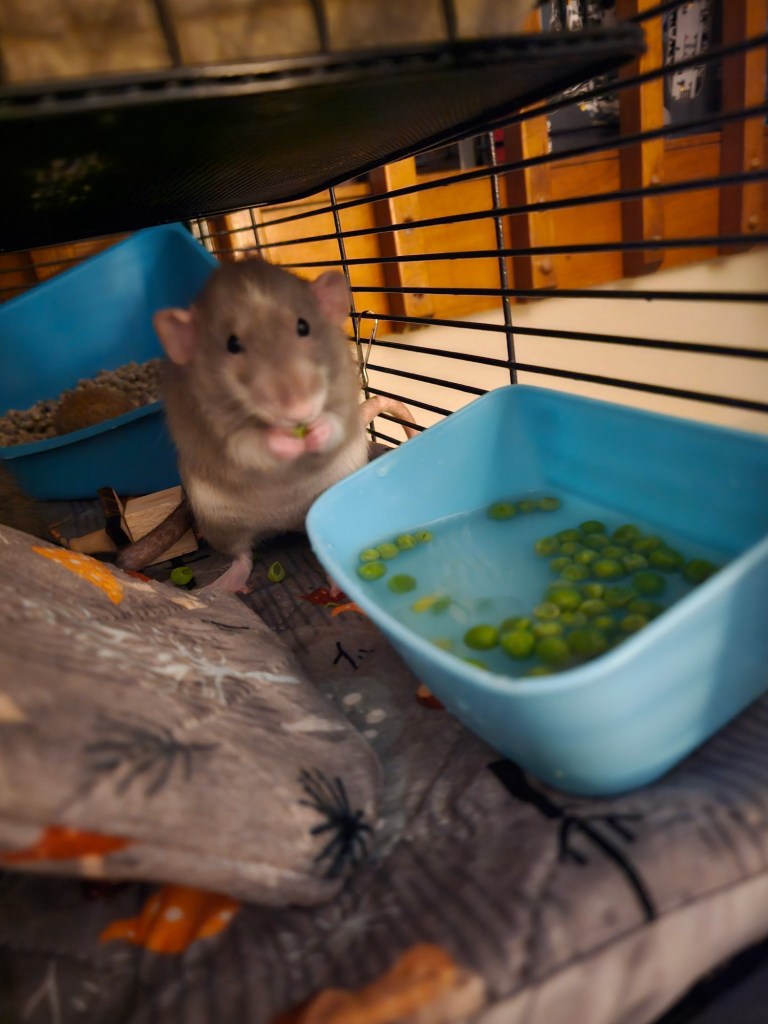
Why do it? It mimics natural foraging, keeps them hydrated, and provides mental stimulation to prevent boredom.
FEATURED CAGE OF THE MONTH
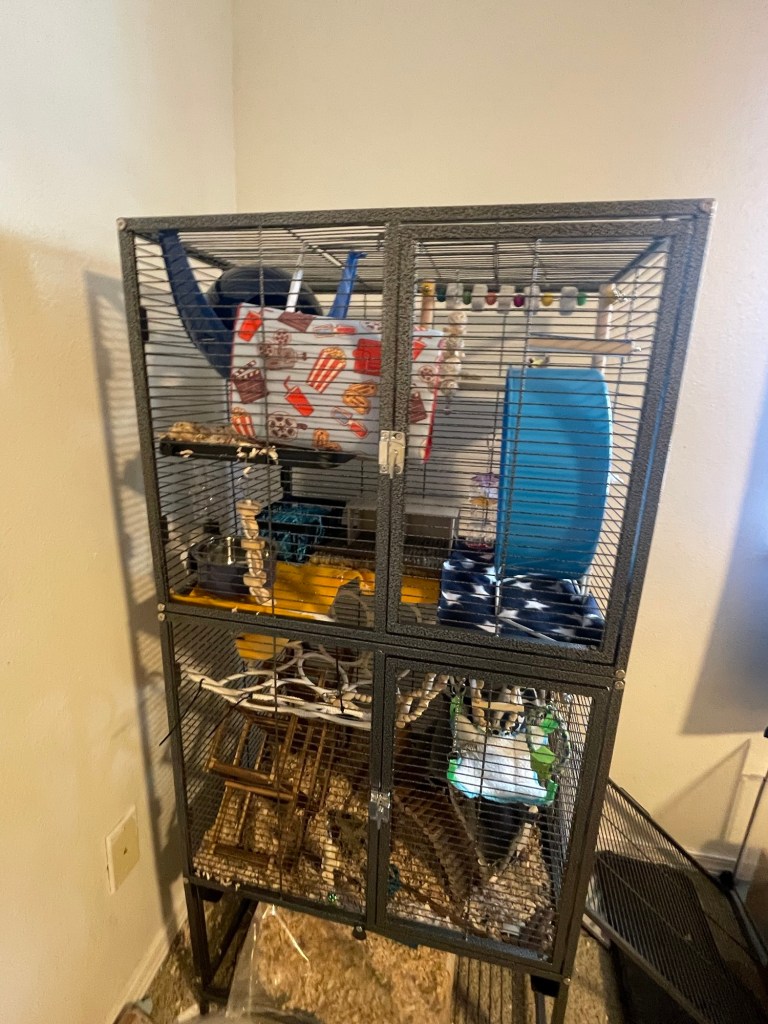
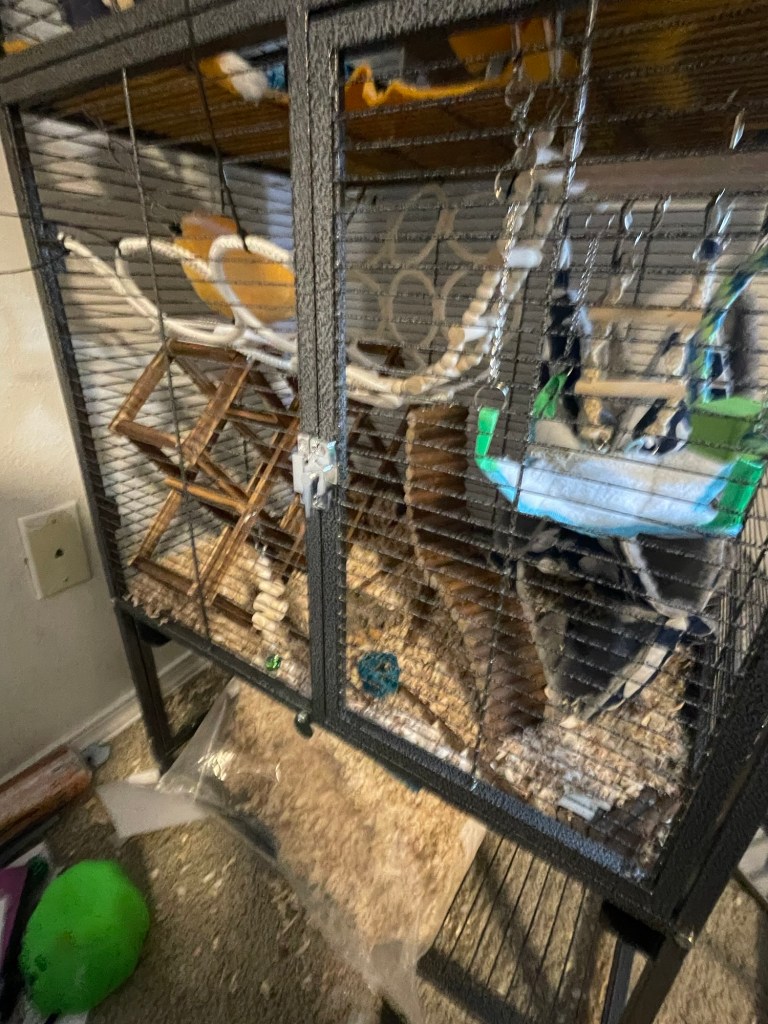
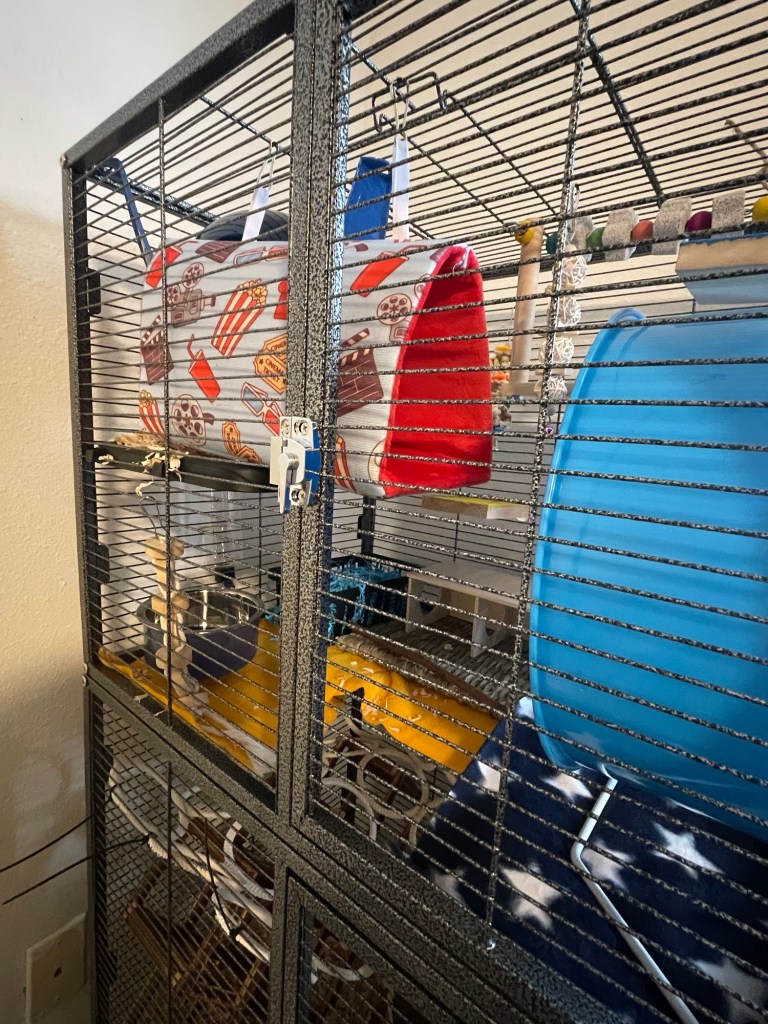
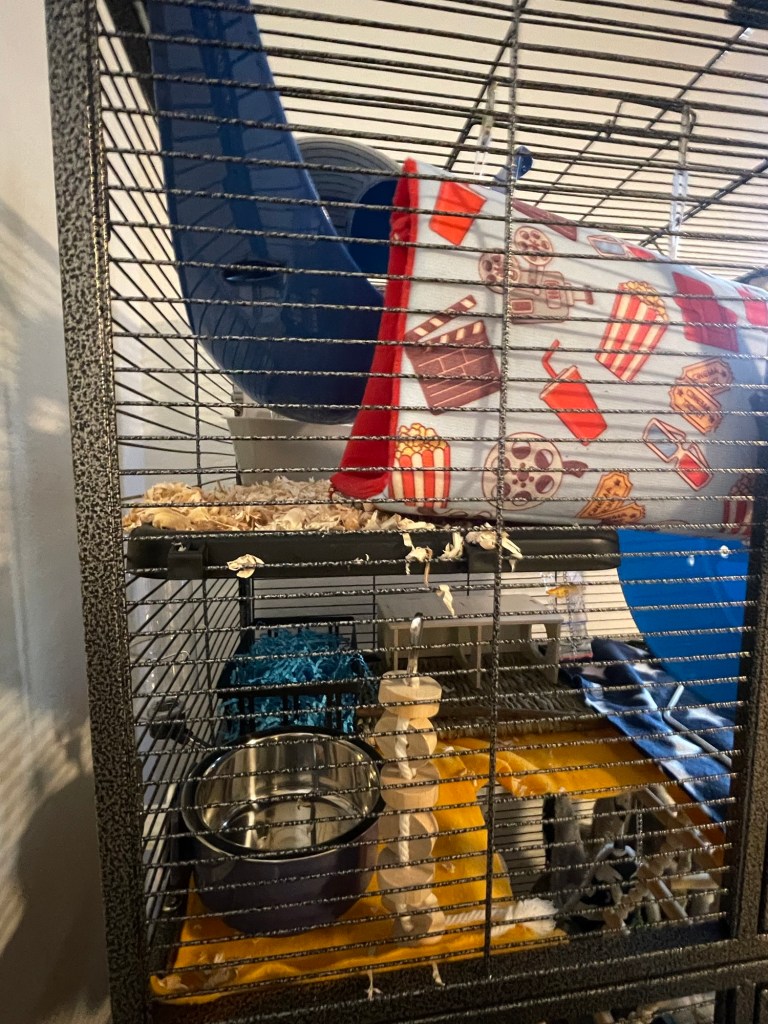
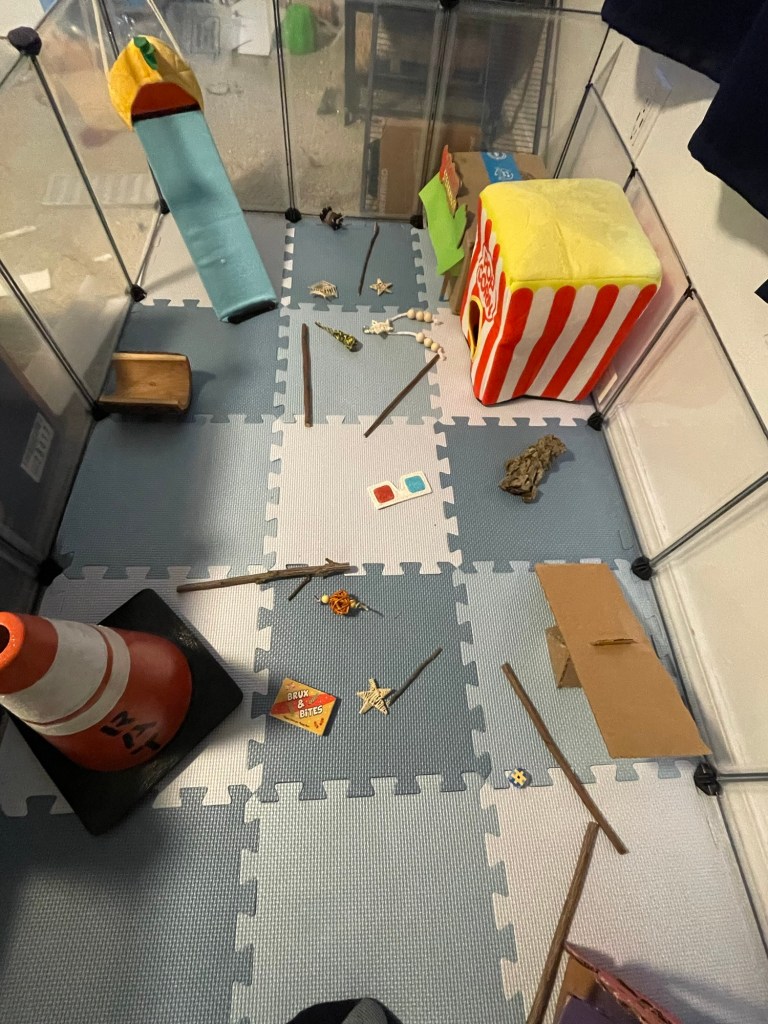
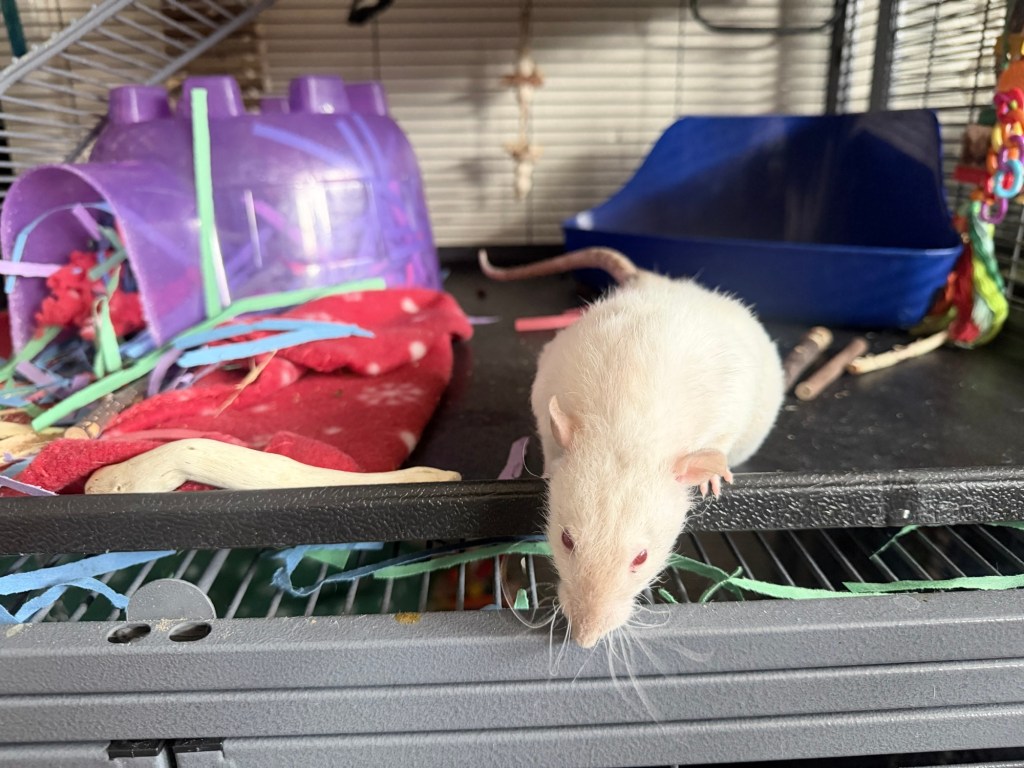
This is Rowan’s awesome cage! He has yet to add his litter box to the cage, and a pea fishing pond in his play area.
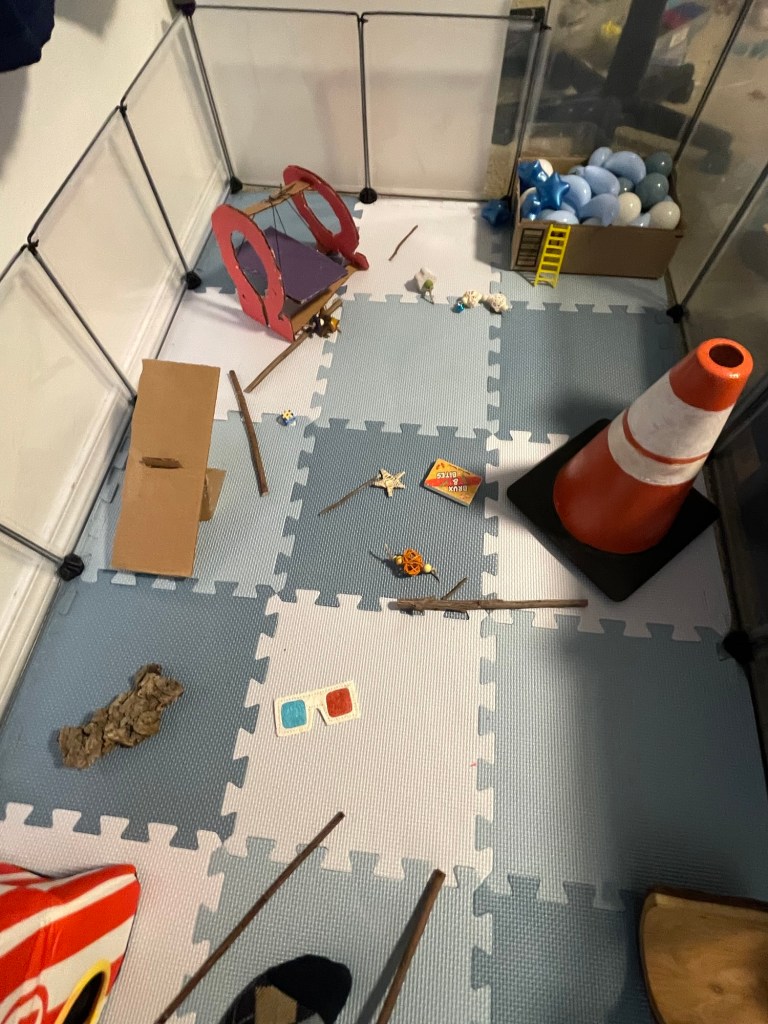
<if you wish to be featured in our newsletter, send a photo of your rat or cage to support@rattery.org>
Please reach out to submit articles, artwork, and more to be featured and accredited to you in our monthly newsletters!
ALL RIGHTS RESERVED. NO COPYRIGHT ALLOWED,
– The Rattery, LLC

 The Rattery
Leave a comment