Mischiefs Managed
Rings on Rat Tails? Are They Normal?
Recipe for Rat Treats
Rat of the Month
5 Signs Your Rat is Happy
DIY Rat Toys from Household Objects
Featured Cage
MISCHIEFS MANAGED
We are expanding! I have adopted a few new rats who have very promising genes. The newest rats being: Mama, Peaches, Annie, Winter, and Kokomo.
We will be having lots of babies next year! I implore you to jump on our waitlist now for adorable, dumbo rats!
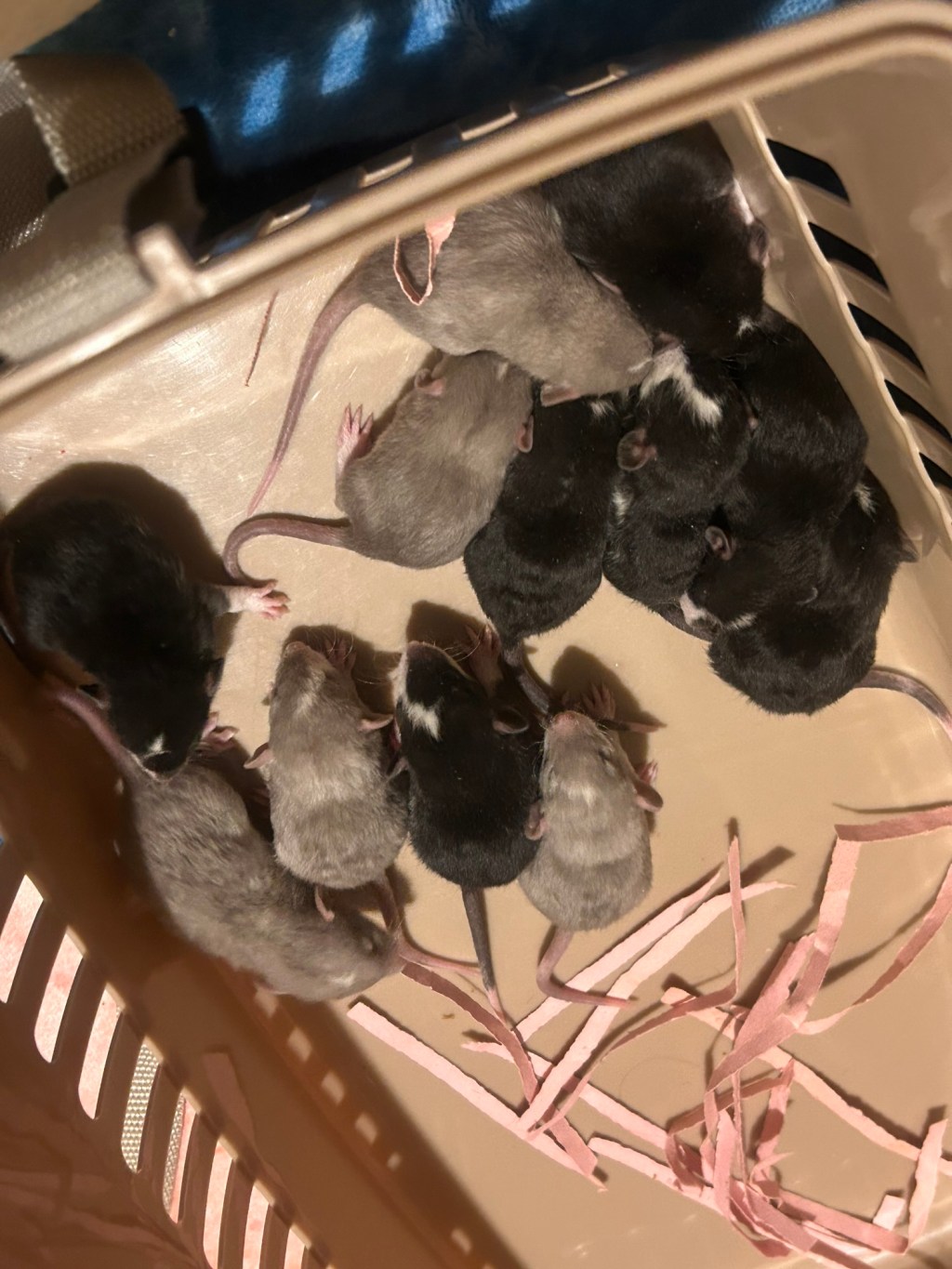
Mounika x Smudge
Her babies were born in our November Newsletter.
Parker x Poe & Pipsqueak x Poe
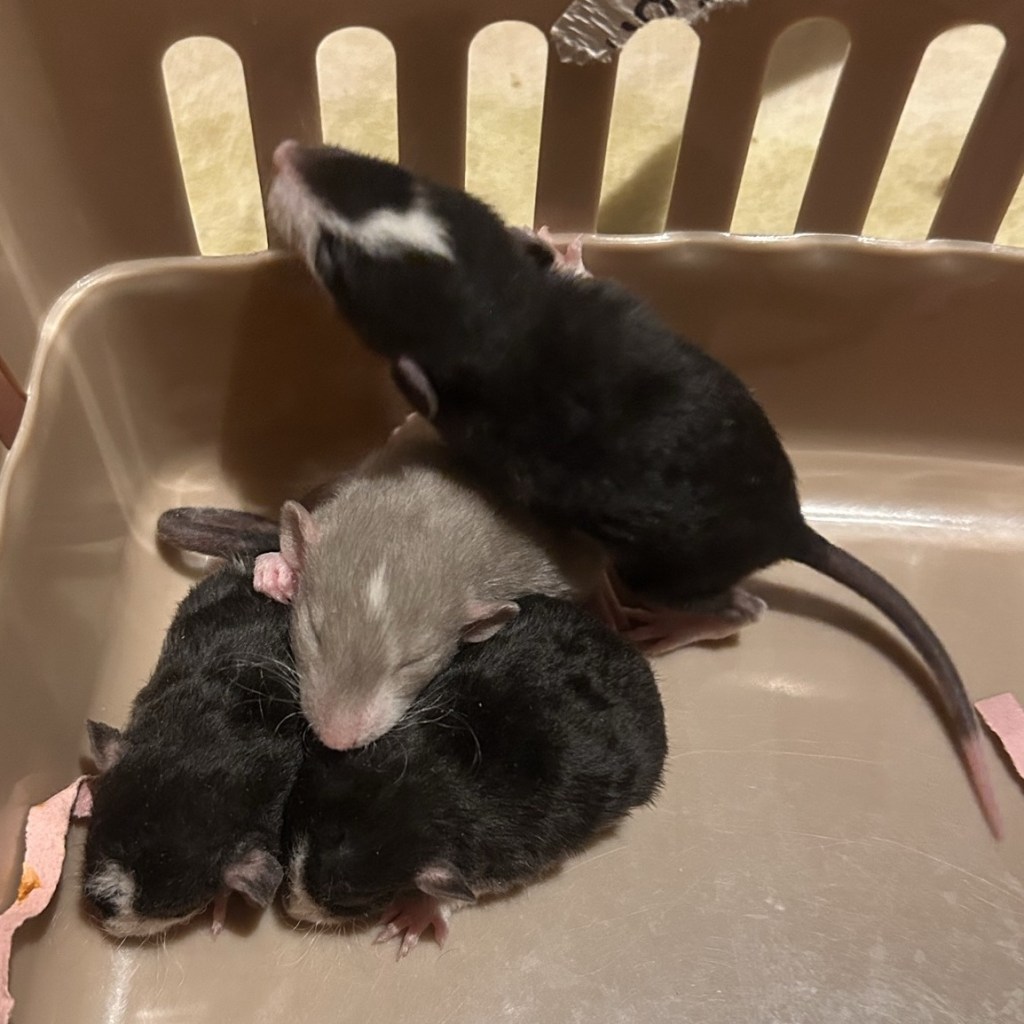
Breeding began on November 19th. A little ménage a trois happening. I didn’t want to seperate Paker and Pipsqueak, who are litter sisters. It makes a lot of sense to me.
These babies are to be expected to hatch close to December 17th. They become available as soon as I separate the males and females at 5 week.
The waitlist for females is CLOSED. Until birth.
Aurora x Humphrey
They will begin breeding around the 1st of December. The waitlist is currently open, with female spots filling up quickly.
We are expecting three varieties of coats with this mischief: standard, Rex, and hairless (double Rex).
We will be keeping one double Rex boy for future breeding.
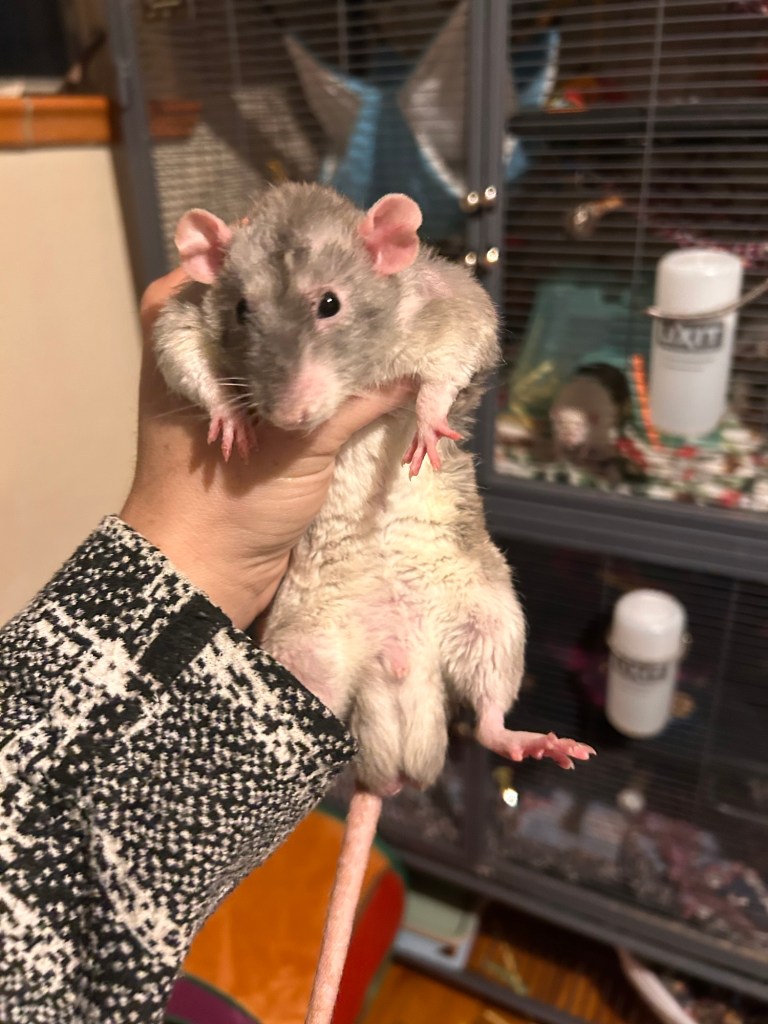
I am having Humphrey zoologically tested before breeding. He came from a hobby breeder, like me. The zoological test will cover 11 different possible diseases or ailments he may be carrying. So let’s hope he tests negative for all 11! And we’ll be clear to breed.
Raven Claws x Ernest
This waitlist is wide open. Breeding will begin mid-late December.
Mama x ?
We adopted her as an “already pregnant” rat though it isn’t confirmed yet. She has an amazing temperament, and she is very young yet. She has already had one litter 😔 and if she is preggers this will be her first and only mischief with us.
Peaches x Kokomo
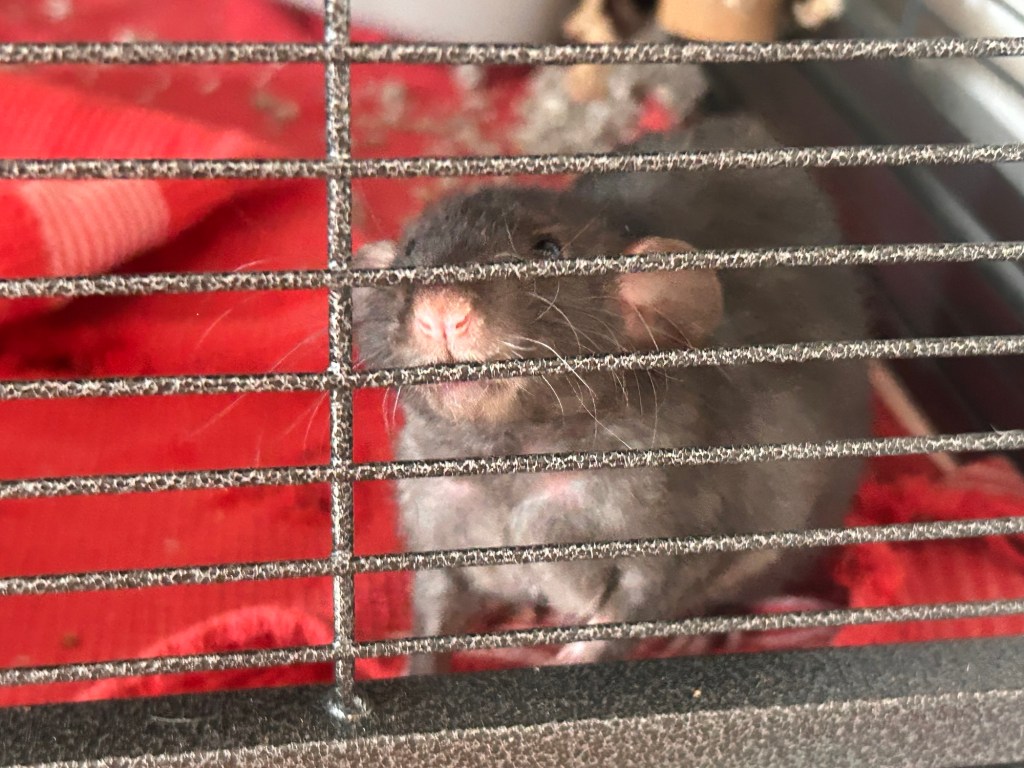
Breeding started November 23rd. Takes anywhere from 1–12 days to get pregnant; as the female rat is in heat every 4 days!
Once she is pregnant. The gestation period is 21-24 days. So her babies should be here around the 28th of December.
We let our babies fly from the coop, as long as they are in pairs or trios, around 5-6 weeks of age (or February 1st).
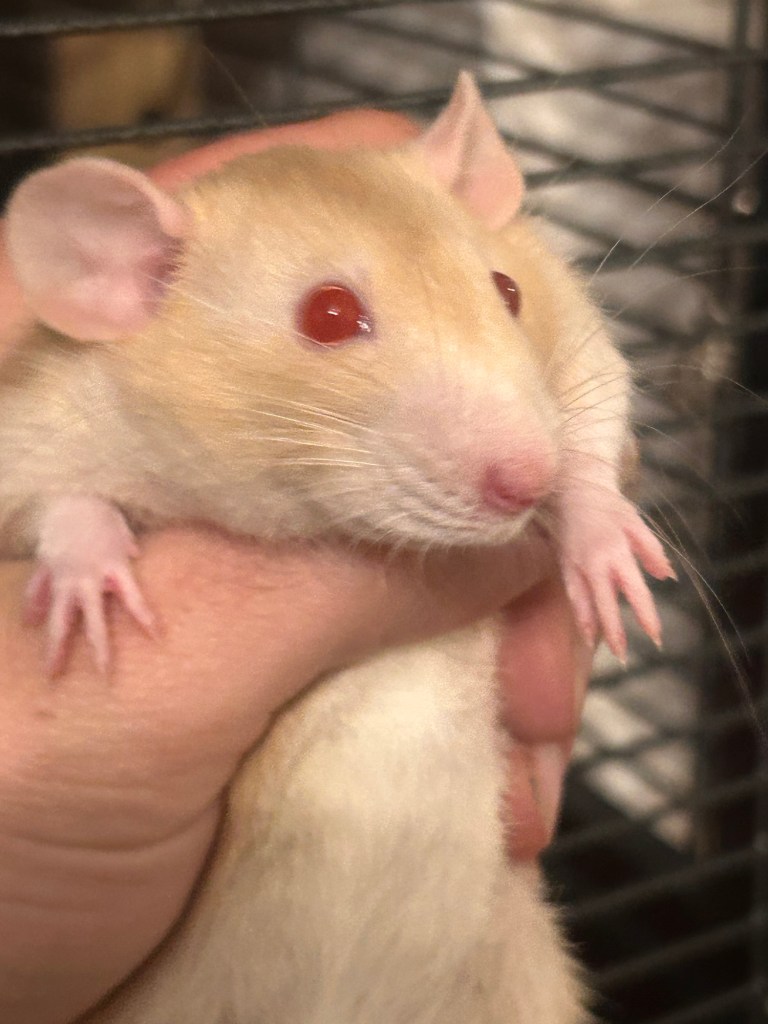
See our Available Rats AKA “The Waitlist.”
You can always check out their profiles and such at adoptarat.com, too.

What is Rat Ringtail?
Hey there! So, let’s chat about something called “ringtail,” which is basically a not-so-great condition that affects a rat’s tail. Imagine tight little rings forming along the tail—yep, that’s what happens, and trust me, it’s not normal.
The main culprit here? It’s dry air. When the humidity drops below 20%, the skin on the tail loses moisture and elasticity, and those pesky rings appear.
Now, what does this mean for our furry friends? Well, the rings can restrict blood flow, causing swelling and inflammation. If left unchecked, it can get serious, leading to tissue death and sometimes even the need for amputation.
But don’t worry, there are ways to help! If you notice these rings, reach out to a vet ASAP. The first step is to crank up the humidity to at least 50%—a humidifier works wonders. Also, applying something like mineral oil can help rehydrate the tail and loosen the rings, but do this under a vet’s guidance.
To prevent this from happening, keep the environment humid and comfy for your rat. Let’s make sure they stay happy and healthy!
RECIPE: for Squash Cakes
Supplies:
• Stovetop and Pot
• Food Processor or Blender
• Cute “heat resistant” Silicone Mold
• Oven & Oven MIT
• Whisk (or spoon)
• Dehydrator (optional)
Ingredients: (always organic if possible)
- One Kuri Squash – 1
- Quinoa Flour – 1/8 cup
- Egg – 2
- Purified Water – 1/8 cup add more if needed
- Olive Oil (dash)
- Baking Powder (small pinch)
- “Rattery Seed Mix” 1-2 TBS [ground flax seed, chia seeds, hemp hearts, and sesame seeds]
- Rosemary – 1 tsp (natural preservative)
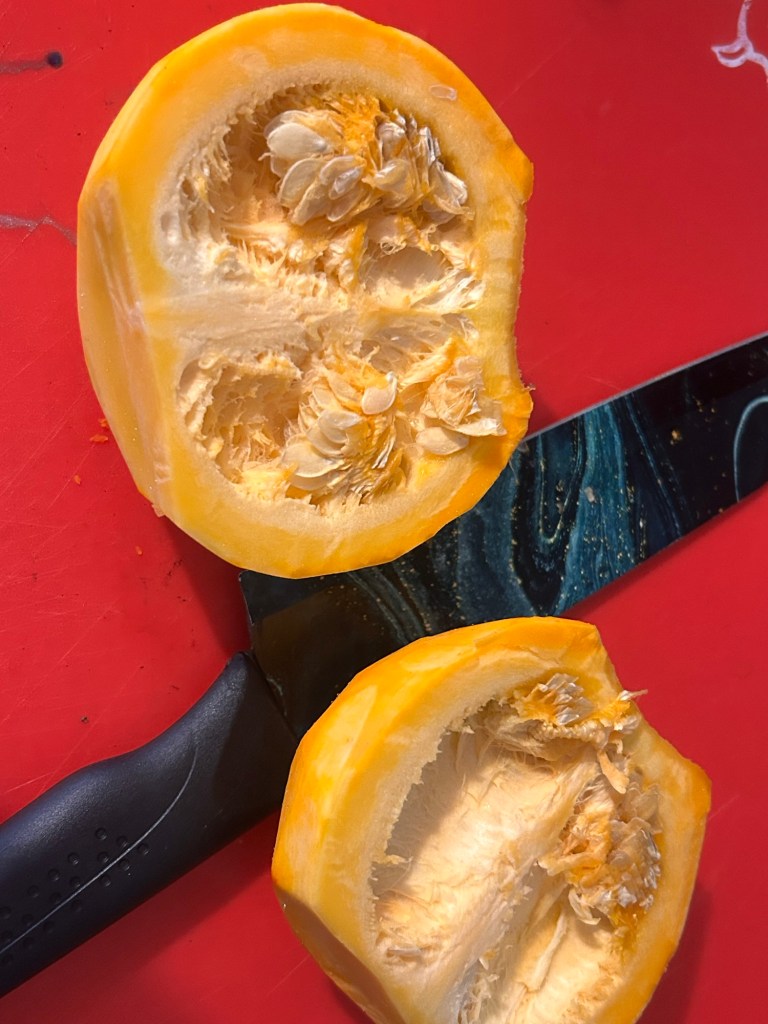
- Preheat your over to 350 degrees Fahrenheit.
- Peel your Kuri squash. Add to boiling water for 10 minutes to cook it.
- While your squash is cooking, add to a blender or better yet, food processor the following: eggs, rosemary, seed mix, baking powder, and olive oil.
- Once you can (safely) move your squash to the processor, do so, and blend with mix.
- Pour squash mix into a separate bowl. Whisk in the quinoa flour first, then the water. You want a good batter consistency. Adjust water as needed.
- Pour into the silicone mold of your choice. (Get your silicone mold wet first and shake dry to make it easier to remove treats at the end).
- Bake treats for about 25-30 minutes. (I’m at a higher altitude and usually bake for 30 minutes.
- Keep your batter in the fridge between baking. It has egg!
- Let your treats completely cool before removing them from the silicone mold.
^ this recipe will make you a lot of treats! You can always store your batter in the fridge (sealed) for up to two days.
** I also recommend dehydrating your treats at 170 degrees for 5 hours. This will make your finished treats last longer.
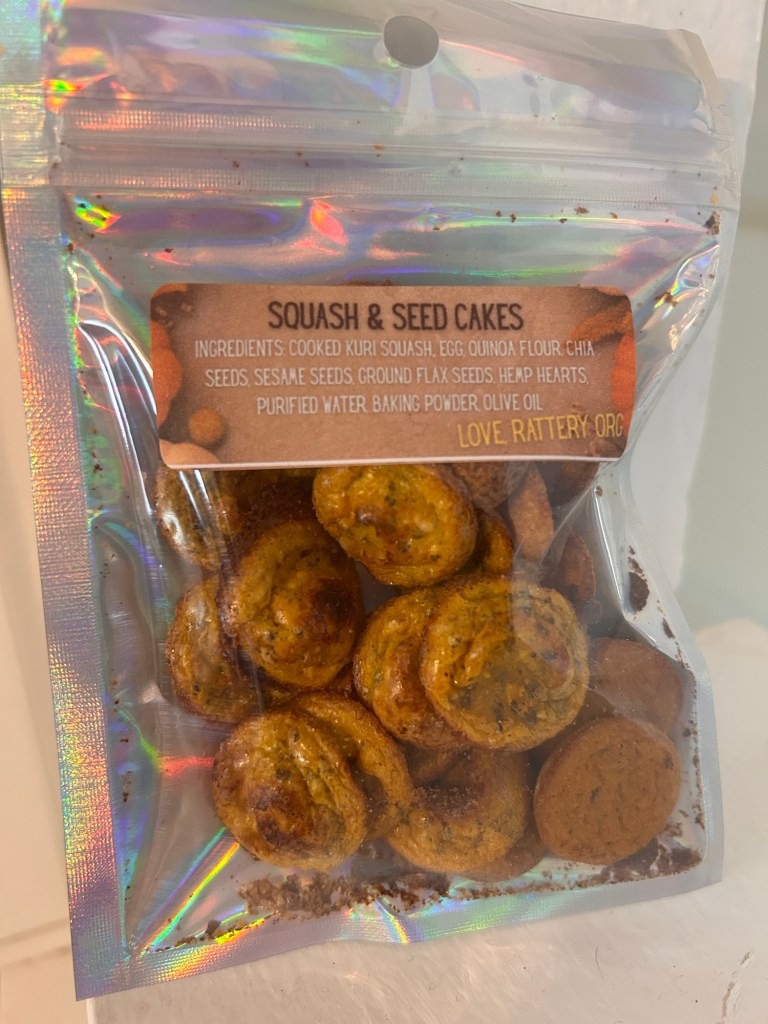
THESE ARE HUMAN GRADE, GLUTEN FREE, NO ADDED SUGAR, TREATS FOR RATS!
RAT SPOTLIGHT
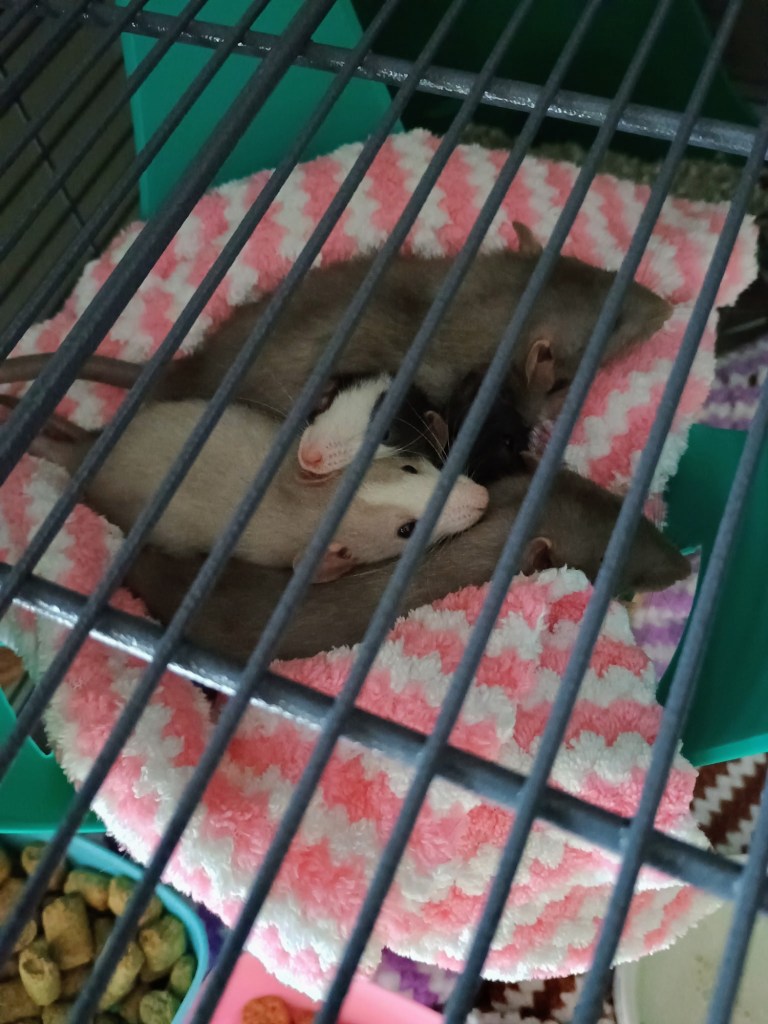
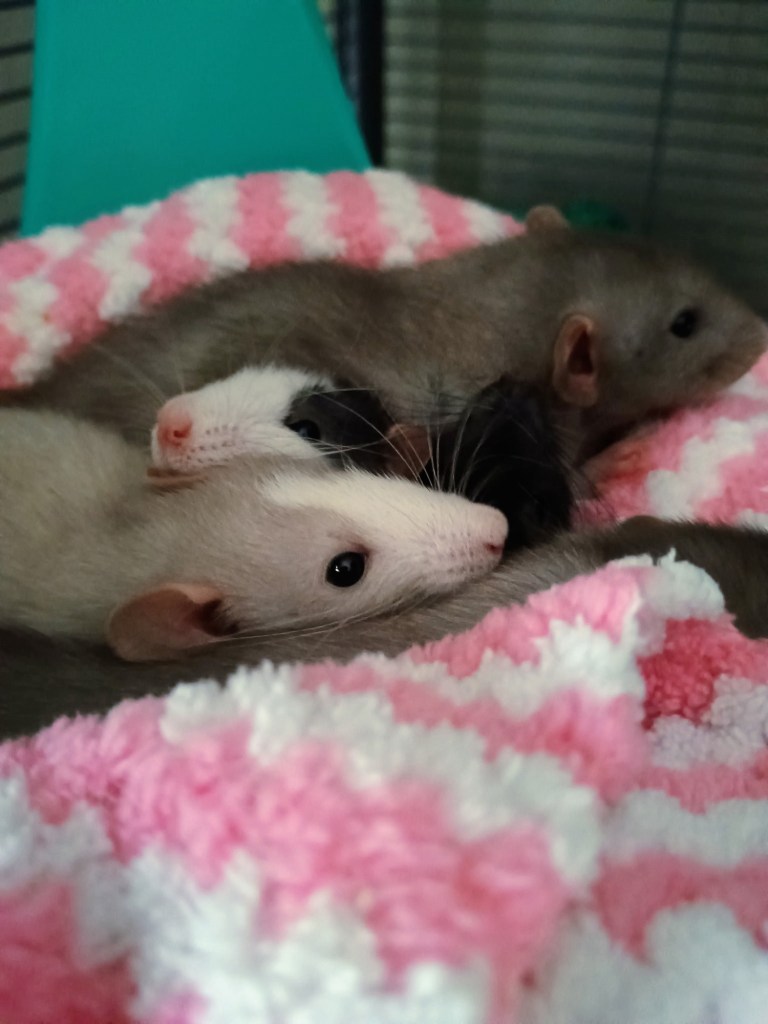
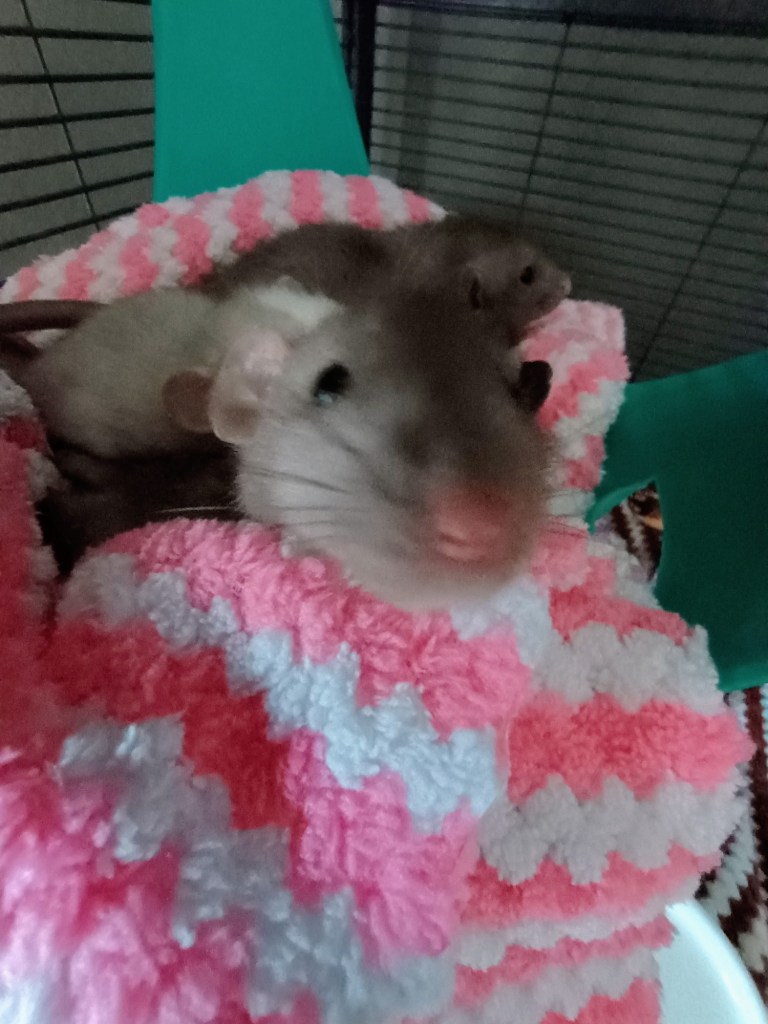
These are Zach’s fruit basket of ladies! He adopted five from Bunny x Eragon!
They’re named after Jelly Beans: Cream, Honey, Licorice (Licor), Marshmallow (Mallow) and Butters.
5 Signs Your Rat is Happy
Here are five signs your rat is happy:
- Bruxing and Boggling
Bruxing is a grinding sound rats make with their teeth when they’re content – similar to a cat’s purr. Sometimes bruxing is so intense that their eyes actually vibrate or bulge in and out, which is called “boggling.” This often happens during petting or cuddling sessions. - Popcorning (Excited Jumping)
Happy rats will sometimes jump straight up in the air or do little sideways hops when they’re excited or playing. This playful bouncing behavior, often called “popcorning,” shows they’re feeling energetic and joyful. - Licking and Grooming You
When your rat gently licks your hands or arms, they’re showing affection and trust. Rats are social groomers, and grooming you means they consider you part of their family group. - Relaxed Body Language
A content rat will have:
• Ears forward or relaxed to the sides (not pinned back)
• Loose, relaxed body posture when being held
• Willingness to sleep or rest in your presence
• Lying stretched out rather than hunched up - Active and Curious Behavior
Happy rats are engaged with their environment. They explore, investigate new items, play with toys, and eagerly come to the cage door when you approach. A rat that runs to greet you is definitely a happy rat!
DIY Rat Toys from Household Objects
Here’s how I like to keep my rats entertained with some DIY toys:
- Cardboard Creations
- Toilet paper rolls: I stuff them with shredded paper, hay, or treats for a bit of foraging fun.
- Cereal boxes: By cutting holes, I create tunnels, hideouts, or multi-level play zones.
- Egg cartons: I hide treats inside each cup, letting the rats dig them out.
- Shipping boxes: I stack or connect them with holes to make a cardboard maze.
- Paper towel rolls: I thread them with string and hang them for swinging tunnels.
- Fabric & Rope Fun
- Old socks: I fill them with paper or fleece scraps to make a soft toss toy.
- T-shirt strips: I braid them into ropes for tugging, climbing, or hanging bridges.
- Fleece scraps: I tie them together to create hammocks, snuggle mats, or chew knots.
- Old pillowcases: I cut and tie them into tunnels or cozy sleeping sacks.
- Natural Chew Toys
- Apple tree branches (untreated): They’re great for gnawing and keeping teeth healthy.
- Pinecones (baked to remove bugs): My rats love to roll, chew, and toss them.
- Coconut shells: I clean and sand them smooth for climbing or hiding spots.
- Corn husks: I dry and twist them into chewable braids.
- Foraging & Puzzle Toys
- Paper cups: I stack them with hidden treats for a digging challenge.
- Muffin tins: I place treats in cups and cover with ping pong balls or paper.
- Paper bags: I crumple them around treats for shredding play.
- Small boxes: I nest them with treats hidden inside each layer.
- Plastic bottle caps: I scatter them for the rats to flip and explore
- Climbing & Exploration
- Cardboard tubes: I tape them together to form tunnels, bridges, or mazes.
- Wire cooling racks: I use them as climbing walls or platforms (no sharp edges).
- Plastic bottles (cut safely): I turn them into tunnels or hanging toys.
- Old ladders or wooden spoons: I create climbing structures or ramps.
- Hanging baskets: I line them with fleece for a cozy elevated hideout.
- Noise & Movement Toys
- Plastic Easter eggs: I fill them with a few dry beans for a gentle rattle toy.
- Ping pong balls: They’re perfect for rolling, chasing, and batting around.
- Small bells (secured safely): I add them to hanging toys for sound stimulation.
- Bottle caps on strings: I hang them for the rats to bat and spin.
- Sensory & Enrichment Ideas
- Dig box: I fill a shallow container with shredded paper, rice, or dry pasta for digging.
- Scavenger hunt: I hide treats around the cage or play area to encourage exploration.
- Hanging treat mobiles: I thread treats or veggies on string and hang them at different heights.
- Mini sandpit: I use chinchilla sand or clean play sand for rolling and grooming.
Safety Tips:
I always use non-toxic, clean, and untreated materials, avoiding sharp edges, paint, glue, or metal parts. Rotating toys regularly keeps the environment stimulating for my rats.
FEATURED CAGE OF THE MONTH
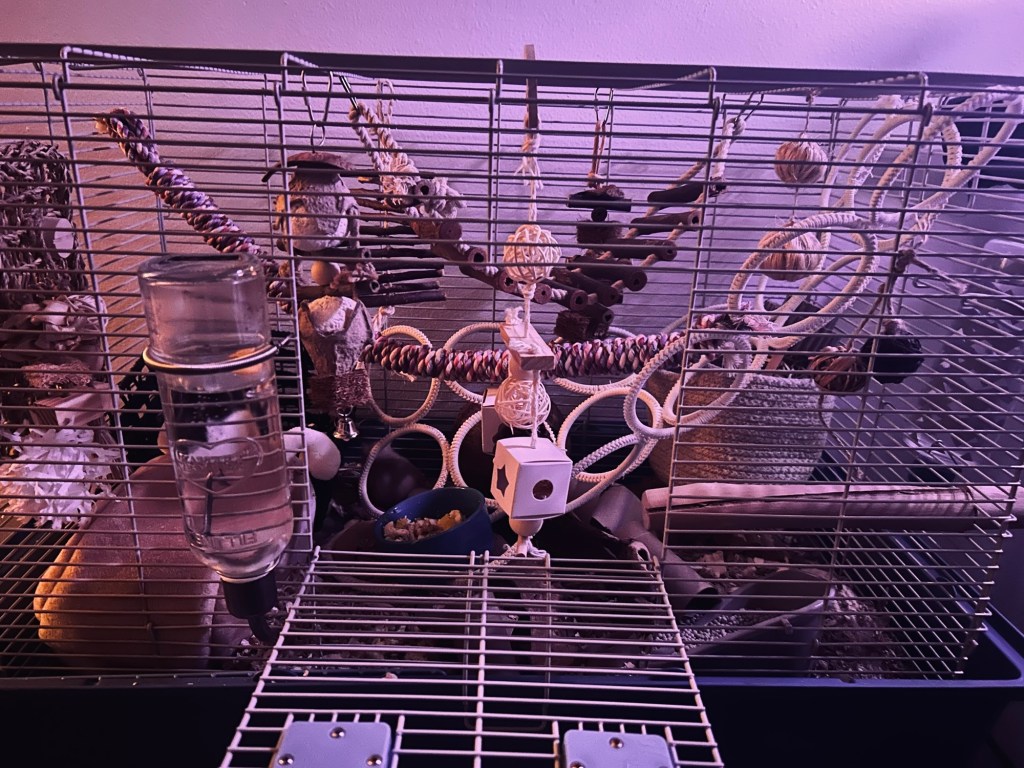
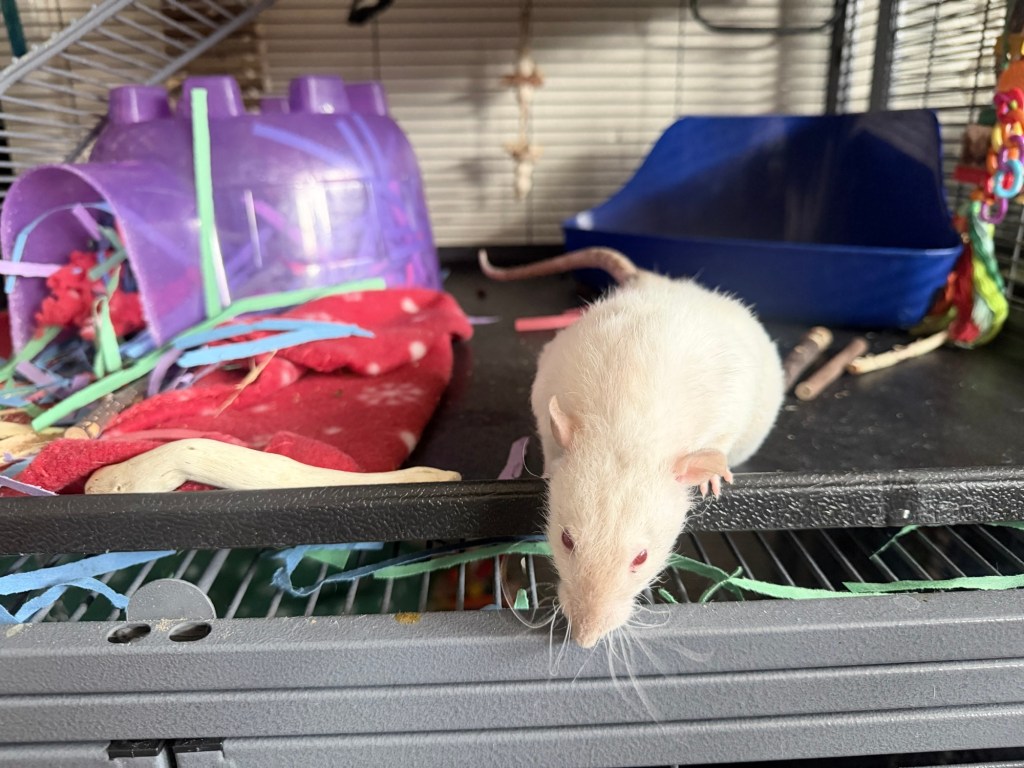
This fabulous cage belongs to Hannah! She is still waiting on some homemade hammocks to arrive. And she scatter feeds!
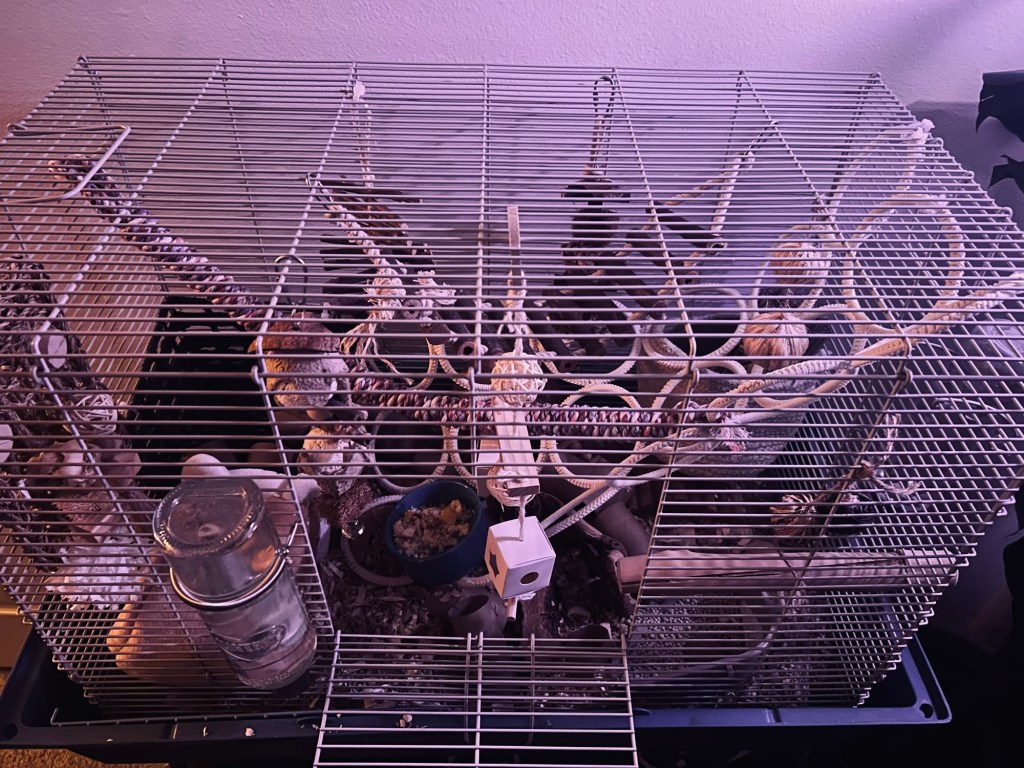
Scatter feeding for rats is a great enrichment opportunity. You literally just hide the food and “scatter” it for them giving them something to do and eat! It can be a bit messy- meaning cage cleanings may happen more frequently.
<if you wish to be featured in our newsletter, send a photo of your rat or cage to support@rattery.org>


 The Rattery
Leave a comment